Alternative light and anti-tank guns, 1935-45 (1 Viewer)

Ad: This forum contains affiliate links to products on Amazon and eBay. More information in Terms and rules

French 47mm ATG was overweight, now by how much?
By at least 200 kg.
See the M.1942 Soviet 45mm ATG, with it's long barrel, was 400 kg lighter. Barrel seems to be very thick-walled (French vs. Soviet).
Perhaps the French could have used better steel in the carriage or perhaps the barrel.
Or used a muzzle brake to cut down on recoil forces allowing for a lighter carriage.
Muzzle brake - definitely. That will allow for a lighter carriage. Also the lighter barrel.
For my money, I'd try and install the gun on a tank or some other AFV, where the weight of the AT 47mm ordnance will not be a thing.

The 3.7cm Pak 36 is a big lie. It should be called the Pak 26 or Pak 28 or ????
They had licensed production to the Soviets in 1930-31. It was a pretty good gun in 1928-30. In 1936? not so much. Not mass producing a replacement in 1939 was a huge mistake.
And this is why just about everybody (Italians excepted) had a better AT gun than the Germans did in 1939-40.
Agreed all the way.

We can ask what the Germans could have done to improve the Pak 36 and/or we can ask what could they have made to replace the Pak 36. A light gun that could be moved by men (or one/two horses) and deal with most tanks of 1940-42.
The better, more powerful gun is a must. Don't muddle the waters with two different guns, but make a gun that can make a difference, especially once the Czech 47 is ... acquired.

As for the 37mm pak and what to do with it - depends on when the better, more powerful gun is available. If it is the historical situation, hot-load the gun within reasonable limits, stick the muzzle brake, adopt the pseudo-APCR and full-on APCR shots for it.
( we have axed the squeeze bore guns together with their tungsten-tipped ammo, ditto for the AT rifle an it's ammo)
If the number of 37mm guns is lower because the better gun is being made more early, don't over-produce the expensive ammo.
In the same time (1939 = best, 1940 = still good, 1941 = a must) have the 600-700m/s 75mm guns installed on the Pz-IVs, Stugs and Pz-IIs-turned-into self-propelled mounts.
 
E Elan Vital - how well you are acquainted with this Belgian AA gun, that looks suspiciously close to the 'French 75' mounted on the AA carriage? Re-bored to accept the Belgian ammo, for 700 m/s.
I'm not sure the picture actually shows the gun after the conversion, and I suspect that if this happened it rather meant using the 75mm Mle 1928 gun just like French conversions of older AA gun mounts (the ABS Mle 1932 which was a new mount used said piece without a muzzle brake).

I actually went down a rabbit hole about this, because I remember the Swiss Flab Kan 38 L/49 was a Schneider design (I suspect the S.A.A 800 due to the muzzle velocity of HE). By the looks of it this was a new firing piece which boosted service pressure to 2800-2900 MPa (exactly what I conceptualized), which resulted in an HE MV of 805 m/s and AP MV of 840-860 m/s (with 5.94kg AP weight instead of 6.4kg, which for the same muzzle energy would require 809-828 m/s). This served as the basis for some tank destroyer guns with some trying even higher service pressures. Not sure if the case is the French 75x518R. If I understood it right this means French Schneider had access to yet another class of 75mm guns the French could eventually use for tank/AT use if need be.

Incidentally, I figured out the Schneider S.A.A. n°4 tested by the French did have 750 m/s MV. However the wear was too fast and resulted in high dispersion so it wasn't successful in French testing and the French instead looked at using the Mle 1932 gun on the Schneider platform which had a number of qualities. The 75mm CA Mle 1940 which was to be adopted is normally derived from the Swiss gun, so probably uses the S.A.A. 800 piece unless it reused the standard Mle 1932 piece.

More info about Swiss late-war/postwar AT gun designs as food for thought: Viewer des Bundesarchivs
 
I haven't translated every document and organised them in order, but some tidbits on the Swiss tank/AT gun projects as of 1945, finally catching up with the needs.

The 75mm AA gun L49 (with ballistics of a Schneider design, possibly applied to 75mm CA Mle 1940), reached 840-860 m/s at 280-290 MPa service pressure. The Swiss tested up to 360 MPa (possibly to see how it goes at higher temperatures), gaining 30 m/s every 40 MPa of extra pressure. The shorter L42 PaK/tank gun needed 40 extra MPa to match the velocity of the longer gun, but was still quite powerful. When using the ammo of the field gun (resulting in a propellant volume of 2L instead of 2.5), it lost 40 m/s at a given pressure.

The picture on the right showed results of firing trials with the 75mm L70-L73 PaK, a counterpart to the German 75 L70, depending on propellant volume and pressure.
They ended up recommending 290 MPa and 1050 m/s MV at +10°C so that it would be 1080 m/s and 340 MPa at +40°C and 1090 m/s and 360 MPa at +50°C. This translated at +10°C in a 10% increase in muzzle energy over the German gun. This required a 5L propellant volume. It was suggested to make a 90mm barrel instead.
1766567597924.png
1766567885885.png


In the end, the Swiss ended up looking at the adapted FlaK L49 gun, the 75mm L73 (here with an anticipated MV of 1100-1150 m/s), and a 105mm L63 in the ballpark of foreign very long 100-105mm guns, giving 1050-1100 m/s. Also note the service pressures given for the German guns, 240 MPa for 7.5cm L48, 250 MPa for L70 and 275 MPa for 88 L71. This might check out as Panther1944 website gives a barrel life of 2000 (AP?) rounds for L70 and over 10 000 for L48.
1766568043575.png
 
Last edited:
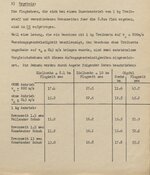
German calculations on the 'mildly rocketized' 8.8cm Flak L56 ammo. An 1kg rocket engine (nitroglycerin as the fuel, 2000 m/s speed of exhaust gasses) replaces part of the explosive payload. The 1st row is for a case when the rocket fuel is not igninited (basically, this mimics the 'normal' shell). 2nd row is for a case when the rocket engine is removed, so the shell is lighter by one kg and thus with a higher MV.
3rd row is for the 1.5 sec duration of the motor, with all of it's contens expended, the thrust is falling from max to zero in a diminishing curve roughly akin to this shape.
4th row is also for 1.5 sec duration, but for the constant thrust.
5th row is for 13 sec duration, constant thrust.
All in the table is for the max elevation.

Unfortunately, the max ranges are not noted, although the ceiling (Gipfel Hoehe) is. Also, unfortunately there is no listing of the speeds achieved.

rak flak.jpg

Note how much the flight time is reduced, and the ceiling is incresed. Even the reduction of the shell weight from 9kg to 8 kg improves these values.

What all of this has to do with killing the tanks? The long-duration rocket propulsion is obviously superfluous for this task, even if it does good for an AA gun, or for the field artillery (and surprisingly good considering that the rocket engine is actually small; also the range with the lighter shell).

Short-duration rocket engine makes more sense. Obviously, start with a small engine and short duration, say half a second, and work upwards until a satisfactory result is achieved.
On the 75-90mm 'classic' AT guns and aplied on the good APCBC ammo, it might've extended the ranges where penetration is achieved by at least 500m, if not by 1000m? Best-case, the US 76mm gun and the Pak/Kwk 40 might've came close to the 17pdr/Panther's guns; the Soviet 85 and Tiger's gun giving the Pak43 a good run for it's money.
On the lower end, the French 75 and the ZiS-3 matching the Pak/Kwk/40 and the US 76mm?

Keeping the projectile speed above the 500 m/s range, let alone above 300-450 m/s range reduces the drag by a good margin:

rak flak2.jpg
 
What all of this has to do with killing the tanks? The long-duration rocket propulsion is obviously superfluous for this task, even if it does good for an AA gun, or for the field artillery (and surprisingly good considering that the rocket engine is actually small; also the range with the lighter shell)........

There are several problems with this. Maybe more for the Germans.

Armor penetration is force (mass X velocity squared) vs diameter of hole to be punched and thickness of armor.
If you lighten the shell by 10% (9.5kg for German 88mm) You are getting 10% less penetration at the same velocity. Yes, the rocket shell will be traveling faster and will penetrate better but not the gain the change in velocity suggests.
I really wonder about the change in payload for the HE shells and wonder somewhat about the change to AP rounds.
The 88mm AA/HE shells only held about 0.87kg of HE to begin with.
Plain steel is 4.75 denser than TNT (grams per cubic centimeter). If you want to fit in about 1 kg of something close to TNT in density you have to take out over 4.5kg of steel or make the shell much, much longer which screws up other things.
We could argue about the exact density of steel alloys and the different HE and rocket engine materials ( and I seriously doubt anybody was using nitroglycerin although nitroglycerin based is a very strong possibility, like cordite.)
If you are doing research and trying to figure out the effects of rocket motors using standard shells to hold rocket engines is one thing. Turning that knowledge into workable military projectiles is going to take a lot more work. The whole idea of AA shells (or ground Artillery) is to get a quantity of HE close to the target. Reducing HE content is kind of counterproductive.
With AP there is a lot of space to hollow out and fit in the rocket engine but with too light a projectile things start to complicated. HE style shells tend to crumple on impact which is why they used nearly solid shells. 88mm AP shells held about 0.155 kg of HE.
Germans liked to have a HE burster in the AP shells to kill the crews and/or damage the insides of the tank that the shell penetrated. Trading the buster for a small rocket engine would increase penetration but decrease the damage behind the armor (assuming the fuse functioned).
And then we have the very real problem for anti-tank work of rocket engines in the tail of the shell decreasing accuracy. All shells wobble in fight a little bit. As long as the wobble stays centered around the direction of flight everything is fine. Once you stick a rocket in the tail adding a thrust vector as the shell wobbles things get real interesting in a hurry.
Rocket assisted artillery shells have had two periods of popularity since WW II. Neither period lasted very long (more than few years) as the practical problems became known (or were relearned) and a 3rd period of sorts came in when a very small rocket engine was used as a gas generator to just add a bit of pressure to the hollow behind the projectile to reduce drag. It never increased the velocity of the projectile
see
 
It might have worked somewhat for AA use. Will the shorter time of flight make up in accuracy (getting the shell/s into the same area as the bombers) for the smaller bursting radius?
The post war periods of popularity for NATO seem to have been for longer ranged ammo to be used in existing (cheap) guns. Ammo makers offered it, how many armies bought it?
A number of armies bought longer gun barrels that would fit on some of the older carriages during the 1950s, 50s and 70s.
With NATO standardization there was a large market for improved performance of 105mm and 155 howitzers and guns at minimal cost.
Missiles had taken over the AA market the 1950s leaving only long range artillery as a market for rocket assisted gun fired shells.
tank APDS/heat shells had run into a range limit with sighting systems. Optical range finders and/or sighting rifles/machine guns could be easily out ranged by the guns/projectiles themselves and it was the laser range finders that allowed for increased fighting ranges if the terrain allowed it.
 
With AP there is a lot of space to hollow out and fit in the rocket engine but with too light a projectile things start to complicated. HE style shells tend to crumple on impact which is why they used nearly solid shells. 88mm AP shells held about 0.155 kg of HE.
Germans liked to have a HE burster in the AP shells to kill the crews and/or damage the insides of the tank that the shell penetrated. Trading the buster for a small rocket engine would increase penetration but decrease the damage behind the armor (assuming the fuse functioned).
Germans didn't bothered with the HE burster in their cored shots, so they can live without it in a full bore/full weight shot. The 8.8cm shot will ruin the day of the tank crew that felt safe behind the thick armor, even if there is no HE burster around.

And then we have the very real problem for anti-tank work of rocket engines in the tail of the shell decreasing accuracy. All shells wobble in fight a little bit. As long as the wobble stays centered around the direction of flight everything is fine. Once you stick a rocket in the tail adding a thrust vector as the shell wobbles things get real interesting in a hurry.
The report I've quoted is nit be-all end-all doctoral disetration, but a start of something new, namely of the anti-aircraft artillery ammo with extra rocket engine. A good deal of experimenting and testing (what engine size/weight/percentage of total weight, thrust, timing of the trhust) will be needed before it bears the fruit.
Let's recall that the cored ammo was inaccurate beyond 500-1000m, depending on the shell type and calibre, and people were still making it (provided they had tungsten).
 
Germans didn't bothered with the HE burster in their cored shots, so they can live without it in a full bore/full weight shot. The 8.8cm shot will ruin the day of the tank crew that felt safe behind the thick armor, even if there is no HE burster around.
This is true. It also sometimes requires a change in thinking/doctrine. British gave up on HE bursters with the 2pdr due to the high rate of fuses failing (fuse often popped out of it's cavity while penetrating but before detonating the charge. British often replaced the HE charge in American 75mm AP shells with sand in North Africa. Germans took a lot longer to give up on the HE burster in AP shells. But cored shot offered new challenges. Like a small charge and trying to get the HE part of the projectile to stay with the penetrator. AP projectiles/penetrators often slewed as they penetrated with only one side of the projectile/penetrator hitting the side of hole as it punched through. This was known in WW I if not before and the AP ammo the day (WW I) had a very high dud rate with either fuse failure or fuse separation. Often did not stop navies and armies was buying AP rounds with HE bursters. Also a lot of research into a good explosive for HE bursters. Some high energy bursters tended to go off while penetrating and something a little less powerful but less sensitive was wanted.
Damage that was wanted behind a 25-50mm plate from a 37-50mm projectile was not the same as what happened when a 50-75mm plate was penetrated by a 75mm projectile. A lot more metal from the hole itself was blown into the tank at high speed for more and larger fragments flying around.
The report I've quoted is nit be-all end-all doctoral disetration, but a start of something new, namely of the anti-aircraft artillery ammo with extra rocket engine. A good deal of experimenting and testing (what engine size/weight/percentage of total weight, thrust, timing of the trhust) will be needed before it bears the fruit.
Yes it is just a starting point. Yes research got put on hold in the 1940s and early 50s. But rocket/missile motor technology did not. Experiments/development of rocket engines for artillery shells got a definite spill over benefit. Expecting any real payoff during WW II depends on a lot of things going very well and/or the war lasting longer.
Let's recall that the cored ammo was inaccurate beyond 500-1000m, depending on the shell type and calibre, and people were still making it (provided they had tungsten).
True, APCR was generally just as accurate or close to full bore shells. It was the APDS that was the problem. Getting the sabots to separate cleanly was a real trick.
The soviet attempt at using a rocket propelled AT shell from a tube was a genuine disaster (BMP-1) at long range but it combined just about everything bad into one gun/system.
They still built thousands of them (10s of thousands). It looked good (scary) on paper though.

And "doctrine" often trumped actual results for many years in the 1950s. NATO could not agree on tank ammo until the late 50s (1958-59) or after (France stuck with shaped charges in their non NATO 105mm tank gun). A lot of disagreement on what happened after the armor was penetrated. British took many, many years to agree that that HEAT was useful, maybe they still don't ;)
 
Damage that was wanted behind a 25-50mm plate from a 37-50mm projectile was not the same as what happened when a 50-75mm plate was penetrated by a 75mm projectile. A lot more metal from the hole itself was blown into the tank at high speed for more and larger fragments flying around.

I've been musing with the 'normal' 88mm, like what the Tiger was firing. Will not equal the long 88mm, but might've add extra oomph to the penetration capabilities against the Allied heaviest stuff at the longer ranges come 1944.

Yes it is just a starting point. Yes research got put on hold in the 1940s and early 50s. But rocket/missile motor technology did not. Experiments/development of rocket engines for artillery shells got a definite spill over benefit. Expecting any real payoff during WW II depends on a lot of things going very well and/or the war lasting longer.
Yeah, stuff needs time.

True, APCR was generally just as accurate or close to full bore shells. It was the APDS that was the problem. Getting the sabots to separate cleanly was a real trick.
At 1500m and beyond, the full-bore 88mm was about 50% more accurate than the APCR. See here.
There is also a thing of Germans having far less of tungsten than they needed, and it is not like the other countries were actually awash in tungsten-tipped ammo.

The soviet attempt at using a rocket propelled AT shell from a tube was a genuine disaster (BMP-1) at long range but it combined just about everything bad into one gun/system.
They still built thousands of them (10s of thousands). It looked good (scary) on paper though.
I don't think that the gun was a disaster. The 'no free lunch' rule applies as ever.
 
Something I missed while discussing the 47mm Mle 1939 AT gun (the SA37 on a 360° carriage).

It's mentioned that the muzzle brake had an efficiency of 30%, and that the APX was designing a new recuperator with a "large volume of air" (e.g a high-capacity recuperator) which would increase the stability of this gun, which was already greater than the service SA37.

It was expected that the use of the new recuperator would allow the design to be lighter while retaining the same stability as the prototype; the static part which holds the "turret" in particular would be lightened the most.

I think if France had decided at a later stage to make a merely split-trail carriage but with the high-capacity recuperator, the muzzle brake and the reportedly more weight-efficient concept of the new 37mm AT gun carriage (using the gun shield as a structural element), then an extra lightweight HV 47mm could have been obtained. Reminder: 1240 kg for the 360° prototype gun.
 
The 360 degree carriage caught the fancy of a number of designers/ companies/ Armies. It may have been quite useful for some applications.
I have my doubts about using it for light AT guns. Especially for armies that did not have a good distribution of motor vehicles.
Light AT guns need to easy to dig-in or get into firing positions (doorway in building?). In some armies they had to moved by men or one horse, not two.
British 2pdr AT gun is a prime example.
2pdr004.jpg

Manhandling on flat ground is one thing, when things get rough movement takes lots of men and time.
The unit can wind up tall and tippy for motor towing and needing more time to dig in.
2pdr-ATk.jpg

For things like 105mm howitzers the 360 degree carriage makes more sense. You need a decent truck to move any short of 105mm howitzer and even a few dozen rounds.

The British had a "doctrine" that the AT guns needed 360 degree traverse because the tanks could approach from any direction. In the mid 30s with a lack of radios this might be true. With more radios for better warning (tactical knowledge) this need was less. Unfortunately for the tactic to work the guns also need close to a 360 degree field of fire which also means that the enemy can shoot at them from 360 degrees, so prewar exercises showed the 2pdrs sitting in large fields. Prewar there were also large side shields turning the 2pdrs into exposed guns in 3 sided turrets with very thin armor.
Using a much cheaper, easier to make carriage and making more of them might have been a better choice.

For the French just building simple, easy to make guns was probably a better choice than going for sophistication (being tricky).
 
The 360 degree carriage caught the fancy of a number of designers/ companies/ Armies. It may have been quite useful for some applications.
I have my doubts about using it for light AT guns. Especially for armies that did not have a good distribution of motor vehicles.
Light AT guns need to easy to dig-in or get into firing positions (doorway in building?). In some armies they had to moved by men or one horse, not two.
British 2pdr AT gun is a prime example.
View attachment 867046
Manhandling on flat ground is one thing, when things get rough movement takes lots of men and time.
The unit can wind up tall and tippy for motor towing and needing more time to dig in.
View attachment 867047
For things like 105mm howitzers the 360 degree carriage makes more sense. You need a decent truck to move any short of 105mm howitzer and even a few dozen rounds.

The British had a "doctrine" that the AT guns needed 360 degree traverse because the tanks could approach from any direction. In the mid 30s with a lack of radios this might be true. With more radios for better warning (tactical knowledge) this need was less. Unfortunately for the tactic to work the guns also need close to a 360 degree field of fire which also means that the enemy can shoot at them from 360 degrees, so prewar exercises showed the 2pdrs sitting in large fields. Prewar there were also large side shields turning the 2pdrs into exposed guns in 3 sided turrets with very thin armor.
Using a much cheaper, easier to make carriage and making more of them might have been a better choice.

For the French just building simple, easy to make guns was probably a better choice than going for sophistication (being tricky).
Hi
A trained gun team (6-7 men) could move a gun around over rough country, below is from my father's memoirs relating to mobility trials in India during WW2, the gun was a 6 pdr (so heavier than the 2 pdr) and he was in the 100th Anti-Tank Regt. (Gordon Highlanders):
Scan_20260210.jpg

Mike
 
Some stuff I was able to find in the French archives last week:

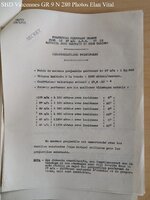
- numerical data for the Schneider 47mm AT gun which was bought by Romania. This confirms a complete weight of 572 kg, and the velocity for AP ammo which is 775 m/s for the 1.65kg solid shot (similar weight to service French 47mm ammo) and 750 m/s for an experimental 1.85kg projectile with 41.3mm diameter core (probably a jacketed projectile ala 25mm AP or some Brandt designs).

- Some docs on Brandt APCR ammo from 1935, as well as the 37mm SA16 TR modified by Brandt for AT use. This confirms my theory on its mechanism, as Brandt claims that penetration results of these rounds match the DeMarre equation if the diameter is that of the core and the weight is that of the core and carrier combined. Interestingly enough, it turns out that Brandt designed and tested versions of this round extrapolated to 47 and 75mm caliber (for the service French guns), with the following claimed characteristics and penetration results (for 37mm, on "the best armors": chromium molybdenum steel alloy) (the 75mm projectile weighs 3.5 kg):
PXL_20260212_132717985-ink.jpeg
PXL_20260212_132730277-ink.jpeg
PXL_20260212_132650522-ink.jpeg

However, trials reportedly found the Brandt 47mm "not particularly better than the service round", while the 75mm failed on 3 summarily stacked 40mm plates, possibly owing to its low weight. The 37mm was found able to perforate 40mm of armor, 30mm at 500m and was compared to an experimental 500g solid shot which penetrated 30mm in the same conditions, while the old Mle 1892-24 APHE tapped out at 20mm.
In any case, the results were sufficiently interesting that the Armament Production Directorate (DFA) recommended to cooperate with Brandt to study and improve these munitions further. Based on all the material I have, my reading of the whole story is that the 37mm Brandt APCR left things to be desired and while extensive production was made, the French sought to obtain modified or new projectiles for future (1940+) production, while 47 and 75mm projectiles didn't get to production and both Brandt and the DFA pursued more promising types. These trials also demonstrated the potential of upgrading the performance of full-bore 75mm ammunition by using more modern steels (this led to the whole sequence which culminated in the 75mm Mle 1940 APCBC).

The DFA also indicated in January 1936 that they would study another way to upgrade 37mm SA16: conical bore adapters firing subcaliber squeezebore AP and HE. This seems to have pre-existed British (Littlejohn) and Czechoslovakian attempts?

Finally, some more penetration trials from the 37mm SA38 tank gun, this time live trials of the first production guns in 1940:
- 30mm rolled plate penetrated at 30° and 400m, but 45° bounced
- 40mm plate at 0° at 600m: 1 out of 6 shots penetrated while the others almost penetrated, the perforation limit was assessed at 800m
- stacked 40 and 16mm plates at 50m and 0°: full pen
 

Attachments

  • PXL_20260212_132717985-ink.jpeg
    PXL_20260212_132717985-ink.jpeg
    1.9 MB · Views: 20
- numerical data for the Schneider 47mm AT gun which was bought by Romania. This confirms a complete weight of 572 kg, and the velocity for AP ammo which is 775 m/s for the 1.65kg solid shot (similar weight to service French 47mm ammo) and 750 m/s for an experimental 1.85kg projectile with 41.3mm diameter core (probably a jacketed projectile ala 25mm AP or some Brandt designs).
This one seems like a very interesting gun, sorta halfway-house between the two French 47mm guns (AT and the tank gun) wrt. the muzzle energy, or in the ballpark with the Czech 47 or with the Vickers 3pdr.
Also very light, again like the Czech gun.
 
Here you guys can find (select "digitalizat anzeigen" for the doc with many KwK guns) blueprints for the 75mm L33 and L38 guns briefly intended for Panzer IV in early mid 1941, various solutions for the gun that became the KwK 42 L70, among other guns:
https://invenio.bundesarchiv.de/invenio/direktlink/fbae3f2d-56c5-444c-a078-73fd1cf35263/

Meanwhile this has namely 75mm L33 and L38 casing dimensions, as well as other ammo blueprints:
https://invenio.bundesarchiv.de/invenio/direktlink/32d7ddb6-2c84-45d7-bebe-a2eb4fd316f5/

Interestingly enough, it seems that in 1941 Krupp studied many APCR projectile designs which were reminiscent of French experimental designs from 1940, e.g subcaliber cores with rather heavy bases which aren't necessarily much faster than fullbore ammo:
1773342610423.png

1773342636621.png
1773342649630.png
1773342659807.png
1773342668220.png


I don't know if this was convergent solutions or Krupp continuing French studies. The latter is not inconceivable since the French blueprints I found once were captured by the Germans.
 
~75mm (medium or higher velocity) tank guns were somewhat revolutionary when they arrived on the scene. Not because the anti tank performance was somehow unexpected compared to what one would expect from an extrapolation of previous smaller tank guns, but because it was finally big enough that it was useful for shooting at soft targets as well. Which meant you didn't need separate vehicles for shooting at other tanks vs other targets.

I wonder if you could use the same argument for 75mm AT guns as well, combining the functions of the AT gun and infantry gun? I would suspect the benefit from such a dual purpose gun would be less than for tank, due to the higher importance of reducing weight to someone keep it mobile. So you might be better off with separate AT and infantry guns, if it allows each individual gun to be lighter?
The German tank originally intended for tank fight was the Panzer III, with its 3.7 cm high velocity gun.
The Panzer IV, with it's short barrel (28 caliber) 7.5 cm gun, was intended to fire slow (385 m/s) HE shells against infantry targets.
Since the 3.7 cm AT gun rapidly became obsolete, the Panzer IV was rebarreled with a 48 caliber lenght 750 m/s muzzle velocity, gun, (a derivate of the 7.5 cm Pak 40 infantry AT gun) and became the primary German Tank.
Problems of using those guns for infantry was that they were heavier than howitzers, and less fexible, due to the straight trajectory of the shell and lower elevation. They had been used as general purpose guns, but howitzers were generally better for that use.
The solution came with HEAT charges. With those, speed of the shell was no more a factor (a lower speed was even better) and even a short barreled howitzer became an effective AT gun. See, IE, the 75/18 model 34 Italian howitzer, that became the main gun of the Semovente 75/18 self-propelled gun.
 
The German tank originally intended for tank fight was the Panzer III, with its 3.7 cm high velocity gun.
The Panzer IV, with it's short barrel (28 caliber) 7.5 cm gun, was intended to fire slow (385 m/s) HE shells against infantry targets.
and the British tank at the time intended for tank fights was the 40mm 2 Pounder whilst the CS version carried a short 75mm that should have carried more slow HE to lob at infantry targets. The Panzer III was upgraded to the 50mm when the 37mm became too weak whilst, at the same time, the British tank fighters were to be up gunned to the 57mm 6 Pounder but the fall of France intervened. Those 6 Pounders could carry a useable HE shell for infantry targets too albeit below the generally accepted minimum of 75mm but later was rechambered and up barrelled to 75mm.

But the OP is about Light Anti Tank guns for which the 6 Pounder was quite useful, especially with the APDS later on and much American food and stores etc. were swapped by US 57mm crews for their HE rounds.
 
The Panzer IV, with it's short barrel (28 caliber) 7.5 cm gun, was intended to fire slow (385 m/s) HE shells against infantry targets.
Both the French and Germans tankers would've been surprised with this statement, since the Pz-IV with it's short gun and AP-HE shell was their best tank buster in 1940 (not counting the ad-hoc means, like the Flak or 105mm howitzer).
 

Users who are viewing this thread

Back