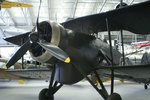
Blackburn Skua was it that bad?

Ad: This forum contains affiliate links to products on Amazon and eBay. More information in Terms and rules

The shortcomings of the example :

- it involves a fllet CV vs. light CV. So the RN has the starting advantage here.

-"The Albacores are night capable and fitted with ASV radar." - Is this fact-backed, or another "what-if"?

-"The problem for the Americans is that their fighters cannot be used for search, they lack the navigational ability to do that effectively" - Now this is a stretch. The single-seaters would be hitting Fulmars hard , so there is no much of a recon job here. And even if Fulmars manage to pinpoint the CVL, the ship would not stay at the same spot just to please FAA. In the same time SBDs would be elusive targets for Fulmars.

-"The Fulmars can. This means that the SBDs have to severely dilute their strength to just locate the British carrier, whilst the British dont." - No that much a dilution. All CVL air group would be searching for the CV, making an attack when it's found.

-"This is because the American carrier commander would almost certainly limit the search range of his SBDs so that they can undertake armed recons to try and surpise the British carrier." - The USN commander would do that to please FFA? Still 250ml (SBD armed) vs. 150ml (Albacore armed) makes armed reconnaisance possible.

-"He then closes the range and launches a full strike at full range. Scratch one flat top....and all because the Fulmar was able to do two things and the Single seat fighters in the American inventory cannot." - So again USN commander need to cooperate so FAA could get him. The only capability of Fulmar in this example would be spotting. And the night attack by Albacore at open seas vs. moving target...

I'm sure that we could bend whatever it takes to find a favorable scenario where Fulmar would shine. However, many real examples made it's spotting ability* redundant, and fighter ability barely satisfying.

*I'm not sure about that either - was radar employed to find ships in Fulmar?
 
How many of these planes were produced before the war?

About 50 Defiants were produced by the end of 1939. Even if somebody came in Jan 1st 1940 and shut the factory down, scraped every partly completed airframe in the building and all unused parts and had the plans for a great naval naval fighter rolled up in cases behind him, just how soon do you think the first "NEW" fighter would roll out the door? June? August?
How long before the factory was even making 20 month? Dec of 1940?

Well, you have Fairey factory line that would just love to produce a naval fighter...

As forthe Battle, about 1000 had been built by the start of the war and they equiped 15 squadrons. WIth more squadrons converting.

There you have it - a 1000+ prior the war.

It is all very well to say that these planes shouldn't have been built, and you are right, somebody should have pulled the plug on them before the production totals ever got as high as they did.

But you have to equip those bomber squadrons with SOMETHING. Going to war in Hawker Harts certainly wouldn't have worked. Any twin engine bomber bigger than an Avro Anson would have sucked up even more resources. Cutting the number of bomber squadrons in half might have allowed for a better bomber but it might not have made the engine supply situation that much better.

Since a 'better bomber" would require 2 engines instead of 1 per Battle, I'd say the engine situation would be equal. And if RAF had anything in numbers, that were Merlin engines..

And none of this would have made a whole lot of difference to what was available to the FAA in1939-1940.

There was nothing wrong with 1939 to late 1940 planes of FAA (Roc being an exception). The planes replacing those were the issue.

Scrap the Defiant on the drawing board and build a Naval Hurricane? great, you have 50 as of Jan 1st 1940 many of them either just out the door at the factory or in depot. one to two squadrons working up.

There would be nothing wrong with single-seat navalized Defiant. But no, they were ordered to build Rocs instead...

ANd these would be a MK I Hurricane with no armor, no self sealing tanks, and If you are lucky the DeHavillind bracket pitch prop.

Whatever you order, sir

It basicily means they they can't take on 109s on a one to one basis.

And Fulmar could take it on 109?? CR-42 was beyond the limits...

Shotround6, is there something YOU think could be done better re. FAA planes, or you think their purchase policy was/is beyond criticism?
 
Last edited:
The Fulmar was ordered in March 1938, first flew in Jan 1940, and entered squadron service in June 1940.

The Firefly design was completed in Sept 1939, was ordered in June 1940, and first flew in Dec 1941.

The Sea Hurricane was not ordered until June 1940, and then as a stopgap measure, and unlike the Firefly was not designed to FAA specs. If the FAA would have had the Fulmar and Firefly in large numbers, they would probably have not bothered with fixed wing single seat fighters.

Sorry, my goof, ordered 5/40 not 11/40. The fact that the FAA changed the requirement specs from '38 39 obviously delayed the process.

parsifal said:
I agree with pretty much everything you have said, but it is untrue to say that the FAA did not rely on the Fulmar as its mainstay fighter defence until well into 1941. It was still frontline material for the RN well into 1942 in fact.

AFAIK the Sea Hurricane was first operational in any numbers in September 1941, and the Martlet whilst available was not in large scale use until about the same time. The RN fought many of its early war battles with the Fulmar, and quite successfully I may say.

Sure the Fulmar was a mainstay of the "Fleet Defence" in '40 '41, but it did operate alongside Gauntlets Hurricanes. I suppose that it was contemplated in early 1940 of having the Fulmar as the primary fighter of the FAA, but it was soon realized that the Fulmar could not perform as well as single seaters. In practice, no FAA Sea Glad squadron was ever replaced by Fulmars (from what I can find) - They were all replaced by Martlets or Sea Hurri's.

FleetAirArmArchive.net said:
The first of the Sea Hurricanes to see service with the Fleet Air Arm arrived in February 1941 and were operating with front line unit 880 squadron from 15 March 1941. Overseas deliveries commenced with shipping in HMS Furious to 807 squadron at Gibraltar 1 July 1941 (eg V7301, V7623), Many shipped to Simonstown in SS Lt St Lonbert Brie thence to 800 squadron HMS Indomitable in July 1942

880 Squadron - Formed January 1941 as a Fleet Fighter squadron with 3 Martlet Is, intended for the still uncompleted HMS Indomitable.
The squadron was augmented with 3 Sea Gladiators and 9 Sea Hurricane IAs until replaced with Sea Hurricane Ibs in July 1941 the squadron then embarked on HMS Furious that month.
 
The shortcomings of the example :

- it involves a fllet CV vs. light CV. So the RN has the starting advantage here
.

Its irrelevant that the british have a CV....its the air capacity that is the important issue. If you want, lets use the Furious

"The Albacores are night capable and fitted with ASV radar."[/I] - Is this fact-backed, or another "what-if"?

Ah yes , its a fact....but I dont care if they were out there looking for the enemy with a flashlight, the facts that the RN carrier based strike aircraft were capable of hiting moving targets at sea at night. Dont believe me, have a look at the operations against the Bismarck, and by the Albacore and Swordfish squadrons on Malta and in the Channel.

-"The problem for the Americans is that their fighters cannot be used for search, they lack the navigational ability to do that effectively" - Now this is a stretch. The single-seaters would be hitting Fulmars hard , so there is no much of a recon job here. And even if Fulmars manage to pinpoint the CVL, the ship would not stay at the same spot just to please FAA. In the same time SBDs would be elusive targets for Fulmars.

Exactly how are they hitting Fulmars????If the Fulmars are high initially, and as the F4fs climb to intercept, the Fulmars turn and run, in a long shallow dive. The fighters are not going to catch such fast shadowers. Dont believe me, read up on how difficult it was to intercpt and shoot down such lumbering aircraft as the Mavis....

The British proved just how adept theyr were at night strike time and again, so I dont think the CVL is going to get away from a situation like this very easily at all

-"The Fulmars can. This means that the SBDs have to severely dilute their strength to just locate the British carrier, whilst the British dont." - No that much a dilution. All CVL air group would be searching for the CV, making an attack when it's found.

They cant search together...they need to spread out and search in ones and twos. If they wanted to deliever a concentrated strike, they needed to return to their carrier, refuel, bomb up and launch the strike blind, and out of range. Remember the range is beyond 200 miles, beyond the effective strike range of the SBDs, As night falls all the british need to do is to close 50 to 80 miles and launch their own strike. With luck, the US are unaware of the position of the Brit carrier and dont withdraw as night falls


"This is because the American carrier commander would almost certainly limit the search range of his SBDs so that they can undertake armed recons to try and surpise the British carrier." - The USN commander would do that to please FFA? Still 250ml (SBD armed) vs. 150ml (Albacore armed) makes armed reconnaisance possible[/I].


And beyond the effective escort range of the F4Fs. If the the Brit commander is smart he would keep 8 or so of his Fulmars back as CAP protection. 8 would be more than enough to deal with raids of two and three aircraft at a time...it would be enough to deal with 12 or 20 enescorted strike aircraft


-"He then closes the range and launches a full strike at full range. Scratch one flat top....and all because the Fulmar was able to do two things and the Single seat fighters in the American inventory cannot." - So again USN commander need to cooperate so FAA could get him. The only capability of Fulmar in this example would be spotting. And the night attack by Albacore at open seas vs. moving target...
Very possible....happened all the time against merchant shipping, less often against naval targets. Sorry, but its an inherent British advantage

I'm sure that we could bend whatever it takes to find a favorable scenario where Fulmar would shine. However, many real examples made it's spotting ability* redundant, and fighter ability barely satisfying.

The tactics I am describing are the basic tactics the British did actually employ against surface targets....I dont need to bend anything. The Fulmars capabilities were part of that system. It defeated the Axis navies time and again

What real examples are you talking about....I know the Fulmars helped the Swordfish onto the targets at Bismark, Taranto and Matapan (a daylight attack) because they were made for the job

*I'm not sure about that either - was radar employed to find ships in Fulmar?
No, not until later, but ASV MkII was fitted in Swordfish from October 1940, and Albacore from early 1941. They were used against Italian and Axis shipping in July 1941 (and earlier than that in the Channel). British were also very profieicent in the use of flares and "painting the target" as the events against teh Bismark and Taranto show

May I ask what, if any carrier operations experience you have. For the record I served in the operations room of a carrier, I know how they operate, and what they would do.
 
Last edited:
well thats a scientific appraisal. The British had the least developed Fleet air arm out of the three big navies. Compared to the F2-A, which could not effectively operate from Carriers I dont think the dsifference is that great as to be able to say "didnt stand a chance"

Against the F4-F-3 and the A6M-1 in the fall of 1940, I would still back the Fulmar....in the soupy conditions of the North Atlantic and with an airgroup of only 20-40 planes. You see, with an air group of that size, and without the multi role capability of the Fulmar, the fictitional American or Japanese carrier (say a shoho or an American CVL) is not going to be able to carry a sufficiently large air agroup of specialized aircraft, to undertake searches, provide effective CAP, and deliver effective strikers as well simultaneously , in the same way as a British carrier could....and it all gets down to the Fulmars multi role capability.
A couple of obvious questions.
a) If the FAA considered the Buffalo and CR42 to be better than the Fulmar, how on earth do you expect it to beat the Wildcat and Zero?
b) American CVL in 1941? Any names

Lets devise a what if scenario against an American CVL, versus say an Illustrious class carrier. the Illustrious class has a CAG of say 36 consisting of 16 Fulmars, and twenty Albacores. The Albacores are night capable and fitted with ASV radar.
Albacores with ASV in 1941? Even if they did the swordfish carried either an ASV or a torpedo and I suspect eh Albacore was the same. So make your mind up about the dilution of the strike.

Our American opponents have a CAG of 32, generally 16 Fighters, and 16 SBDs. The SBDs have an effective strike range of about 250 miles, and a scouting range about double that if unarmed. The Albacores have an effective strike range of 150 miles.
As mentioned before an American CAG of 32?

The problem for the Americans is that their fighters cannot be used for search, they lack the navigational ability to do that effectively. The Fulmars can. This means that the SBDs have to severely dilute their strength to just locate the British carrier, whilst the British dont.
As you have been in a carrier operation room you will know that with aircraft of this endurance to keep one on station you will need at least three to be dedicated. One on station, one going/preparing to go out and one returning/being turned around.

Almost certainly the British commander would be well appraised of the location of the US Light carrier whilst the American commander would not. This is because the American carrier commander would almost certainly limit the search range of his SBDs so that they can undertake armed recons to try and surpise the British carrier.
No you wouldn't. Once the target has been found the idea is to keep it in sight. A one plane attack would lose the entire object of the exercise and almost certainly result in the loss of the aircraft.

The British commander can use his Fulmars to their full range, to keep an eye on the US carrier until dusk. He then closes the range and launches a full strike at full range. Scratch one flat top....and all because the Fulmar was able to do two things and the Single seat fighters in the American inventory cannot.
And the US commander launches all his fighters and dive bombers against the Albacores and Fulmars decimating the attack. I love your plan, if I was USN or IJN all my birthdays will have come at once, brilliant.
 
The FAA pioneered the use of Air to Surface Vessel (ASV) radar on aircraft, and the FAA's most famous use of radar was to find and strike the Bismarck at 23:30 on May 24th, 1941. The RN planned to use ASV equipped Albacores to find and strike the IJN carriers in April 1942, in the Indian Ocean. This was the ace up the FAA's sleeve and it gave it supremacy for 1/2 of each 24 hour period in the Indian Ocean. ASV equipped aircraft were fully strike capable and could carry a torpedo.

The F2A was never a successful carrier aircraft and the FAA never used it as such, although they had the opportunity to do so.

The Fulmar flew thousands of carrier based sorties, shot down well over a hundred enemy aircraft while carrier based and served with distinction. How many aircraft did carrier based F2As shoot down...oops none!
 
The FAA pioneered the use of Air to Surface Vessel (ASV) radar on aircraft, and the FAA's most famous use of radar was to find and strike the Bismarck at 23:30 on May 24th, 1941. The RN planned to use ASV equipped Albacores to find and strike the IJN carriers in April 1942, in the Indian Ocean. This was the ace up the FAA's sleeve and it gave it supremacy for 1/2 of each 24 hour period in the Indian Ocean. ASV equipped aircraft were fully strike capable and could carry a torpedo.
I admit the part about the ASV aircraft being fully strike capable is new to me. Attached is a photo of the Swordfish with ASV. Can you tell me where the torpedo will go? They did carry rockets and radar but not as far as I am aware torpedo's.

The F2A was never a successful carrier aircraft and the FAA never used it as such, although they had the opportunity to do so.
It never went into action from a carrier so we don't know how good the F2A would have been. In the USN they were replaced by the Wildcat. The questioins still holds, do you seriously expect the Wildcat or Zero to be worse than the Fulmar? Anything to support that statement would be appreciated.

The Fulmar flew thousands of carrier based sorties, shot down well over a hundred enemy aircraft while carrier based and served with distinction. How many aircraft did carrier based F2As shoot down...oops none!
As mentioned the F2A didn't go into action from a carrier as they had been replaced by the Wildcat.
 

Attachments

  • Swordfish 20070816 Duxford web.jpg
    Swordfish 20070816 Duxford web.jpg
    76 KB · Views: 123
b) American CVL in 1941? Any names

As mentioned before an American CAG of 32?

It never went into action from a carrier so we don't know how good the F2A would have been. In the USN they were replaced by the Wildcat. The questioins still holds, do you seriously expect the Wildcat or Zero to be worse than the Fulmar? Anything to support that statement would be appreciated.

If your point is that the performance of the Fulmar as a fighter is not as good as a Wildcat, Zero (or Sea Hurri) you are certainly correct

I think that perhaps Parsifal's example wasn't very clear.
Let's take for example a US carrier with a CAG of 78. Early US Pacific carriers - Ranger, Lexington etc were listed with a capacity of 80 -90, but I belive that is taking into account deck park?

Anyways, lets do a hypothetical comparison in summer 1943 to a British carrier (eg Indomitable) with a capacity of 48

US carrier 78 aircraft: 36 Hellcat, 24 Dauntless, 18 Avenger
UK carrier 48 aircraft: 18 Seafire, 18 Firefly, 12 Buccaneer

The US carrier is attacked it can launch 36 fighters for defence. It can launch a strike mission of 42 aircraft.
The British carrier could launch 30 aircraft for a strike (Firefly + Buccanneer) OR if defending against a massive enemy strike (like "Pedestal" or a Kamikaze swarm) it can launch up to 36 fighters to defend (Seafire + Firefly), just as many as the US carrier can, even with 30 less aircraft embarked.

Now would it be nice to have a bigger CAG? Sure, but that's what you give up to have armor deck carriers. Considering the fate of the Lexington, Yorktown, Hornet, disabled by bombs, later sunk vs the UK carriers: Illusrious, Formidible Indomitable were all put out of action by bombs, yet were repaired within 6 -8 months. All also took Kamakaze hits with no critical damage, compared to the USS Intrepid - sunk by Kamakaze hit.
 
I admit the part about the ASV aircraft being fully strike capable is new to me. Attached is a photo of the Swordfish with ASV. Can you tell me where the torpedo will go? They did carry rockets and radar but not as far as I am aware torpedo's.


It never went into action from a carrier so we don't know how good the F2A would have been. In the USN they were replaced by the Wildcat. The questioins still holds, do you seriously expect the Wildcat or Zero to be worse than the Fulmar? Anything to support that statement would be appreciated.

As mentioned the F2A didn't go into action from a carrier as they had been replaced by the Wildcat.

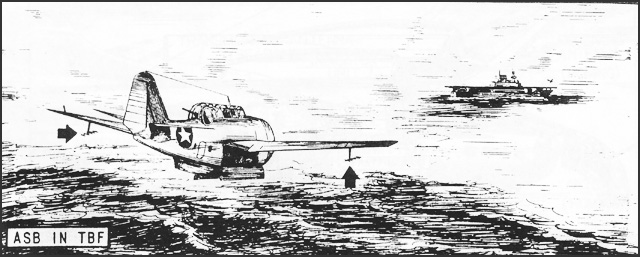
ASVII was very similar to ASB radar:
Radar-p68.jpg


HyperWar: U.S. Radar: Operational Characteristics [ASV--Air-To-Surface Search Sets]

and in fact ASB was copied from ASVII.

ASV was a longwave radar that did not require the parabolic dish carried in the Swordfish Radome in your picture. The swordfish you show is optimized for ASW work where a torpedo was not required.

unfortunately, not many photos of ASVII remain because it was strictly censored.

Here's a model of an ASVII radar equipped Swordfish:

Fairey Swordfish Mk.II by Stu Hurley (Tamiya 1/48)

Note how the radar antennae are nearly invisible.

We know that the F2A was a miserable carrier fighter and the USN dumped it ASAP.

As we've discussed the Fulmar was overdue for replacement by 1942, but the Fulmar did go up against the Zero over the Hermes off Ceylon, and still managed to bag 2-4 kills while losing two aircraft, and some of these losses were probably due to Val rear gunners.

The simple fact is that the Zero lacked armour and SS tanks, and would not have been accepted into RN or USN service (post 1942) and once these are added in, the Zero would have been a real dog, with its 1941/42 powerplant.
 
Last edited:
Now, lets compare in the winter of 1941/42:

US carrier (78 ) : 30 Wildcat, 24 Dauntless, 24 Devastator
UK carrier (40) : 16 Sea Hurri, 14 Albacore, 10 Fulmar

The British carrier's strike capabilities are badly weakened by the fact that the Fulmar has a very limited bomb capability. However it is still needed to perform the Recon role, as it has almost double the range of a Sea Hurri, and the second pair of eyes is better in the often poor visibility in the North Atlantic. The UK carrier can still defend itself with 26 aircraft, almost as many as the US carrier
 
I imagine that in the 3 years before the start of WWII that Hawkers, Supermarine and Rolls Royce were working flat out to try and build sufficent modern fighters for the defence of Great Britain a task which was only completed just in time. Can you imagine the response if the RN FAA had come along and said we want a modern single seat carrier fighter as well. I bet they were told to go away and make do with what they were given. Or in anglo saxon Bugger Off.

Who ever said that FAA would steal RAF planes?
.

That is in fact exactly the problem. There were only limited Aircraft production resources in the UK in 1939, and they were all working flat out to produce more RAF aircraft. Fairey was building Battles as quickly as possible, gearing up to produce the Fulmar, and working on an ever-changing fighter design (ultimately the Firefly - 5/40)

I have no doubt that the RN requested a replacement aircraft from the RAF in 38/39, but it was not as critical as RAF Fighter Command - so it was put on the back burner


You guys need to agree about who was responsible for FAA planes in late 1930's.

Simple: the RAF

I'm not saying RN had all oceans covered with LR MP planes. I'm saying that asking a fighter design to do the task other were doing was crippling that fighter.

No, in fact in every case except the Fulmar, (Skua, Firefly) it was a DIVE-BOMBER that was also able to perform as Recon a secondary fighter. With the Fulmar it was Fighter-Recon.

In the Fall of 1940 there was no other available long-range aircraft suitable for Recon

1st: Please quote my post where I'm saying anything about "radar equipped strike CV planes".
2nd: Please post a fact proving Fulmars used radar to spot ships.

Here is your quote: "To find a target for their ship-borne strike planes, RN employed radars on ships, strike CV planes subs."

If the RN are trying to locate an Axis convoy or Raider that's 200 - 300 miles away, it's beyond the range of shipboard radar. The SeaHurri Glad are also beyond range. The UK (nor anyone) didn't use subs to spot/search for CV strikes. So the Recon will be done by what "strike CV plane"? What are you are talking about? :confused:

So Improved Fulmar was also-known-as Firefly? Now that's curious

Yes. the airframe was very similar, which allowed it to be brought into service years quicker.

FleetAirArmArchive.net said:
Fairey Firefly - Designed as a two-seat Fleet reconaissance fighter based on the Fairey Fulmar, the prototype first flew on 22 December 1941.

Please, tell us what was Firefly bombing in 1943, besides UK proving grounds.

It wasn't needed to bomb anything in the summer of 1943, because the Allies had control of the Med, and had land based aircraft operating from Tunisia, Malta Sicily. What was left of the German Italian navy was bottled up in Norway, Italy or was sunk.

That's a rather irrelevant point anyways. :rolleyes:

So FAA used one kind of planes to kill fighters and another one to kill bombers. That goes nice along with multi-role capability all right.


Exactly the same strategy that the RAF used in the BoB, the Spitfire tackled the German fighters, while the Hurris went after the bombers.
 
That is in fact exactly the problem. There were only limited Aircraft production resources in the UK in 1939, and they were all working flat out to produce more RAF aircraft. Fairey was building Battles as quickly as possible, gearing up to produce the Fulmar, and working on an ever-changing fighter design (ultimately the Firefly - 5/40)

I have no doubt that the RN requested a replacement aircraft from the RAF in 38/39, but it was not as critical as RAF Fighter Command - so it was put on the back burner

Firefly was produced from mid 40 to end 42 - I'm not questioning the 39 production for FAA (again Roc being exception.

(who is responsible for FAA planes early in the war prewar)
Simple: the RAF

Okay, then we'll blame RAF for faulty purchase of planes for FAA needs :)

(tomo pauk claiming Fulmar was crippled since it required man and machines for spotting)

No, in fact in every case except the Fulmar, (Skua, Firefly) it was a DIVE-BOMBER that was also able to perform as Recon a secondary fighter. With the Fulmar it was Fighter-Recon.

In the Fall of 1940 there was no other available long-range aircraft suitable for Recon


Here is your quote: "To find a target for their ship-borne strike planes, RN employed radars on ships, strike CV planes subs."

Sorry for not being clear; it should be read as: subs, planes and radars on ships.

If the RN are trying to locate an Axis convoy or Raider that's 200 - 300 miles away, it's beyond the range of shipboard radar. The SeaHurri Glad are also beyond range. The UK (nor anyone) didn't use subs to spot/search for CV strikes. So the Recon will be done by what "strike CV plane"? What are you are talking about? :confused:

Swordfish, Albacore, Skua (if there is any left). (Now that we're at it, the purchase of Albacore need another 'was it worth it' topic...) Of course, the search would'nt be made by carrier planes only.

(about Firefly being 'Upgraded Fulmar')
Yes. the airframe was very similar, which allowed it to be brought into service years quicker.

Great. So if it wasn't based on Fulmar, it would fly in 1946?


It wasn't needed to bomb anything in the summer of 1943, because the Allies had control of the Med, and had land based aircraft operating from Tunisia, Malta Sicily.

So when Allies snatched control of Med, suddenly the carrier planes are left withou task in Europe? I guess that makes sense.

What was left of the German Italian navy was bottled up in Norway, Italy or was sunk.

Typo?

That's a rather irrelevant point anyways. :rolleyes:

So why FAA fielded a new plane that could carry 2K lbs (Firefly), purchased new Avengers and wanted Firebrand?


(about one fighter to kill fighters and another for bombers)

Exactly the same strategy that the RAF used in the BoB, the Spitfire tackled the German fighters, while the Hurris went after the bombers.

Unless proven as a fact, that's an urban myth.
.
 
If your point is that the performance of the Fulmar as a fighter is not as good as a Wildcat, Zero (or Sea Hurri) you are certainly correct

I think that perhaps Parsifal's example wasn't very clear.
Let's take for example a US carrier with a CAG of 78. Early US Pacific carriers - Ranger, Lexington etc were listed with a capacity of 80 -90, but I belive that is taking into account deck park?

Anyways, lets do a hypothetical comparison in summer 1943 to a British carrier (eg Indomitable) with a capacity of 48

US carrier 78 aircraft: 36 Hellcat, 24 Dauntless, 18 Avenger
UK carrier 48 aircraft: 18 Seafire, 18 Firefly, 12 Buccaneer

The Buccaneer is surely a typo?

The US carrier is attacked it can launch 36 fighters for defence. It can launch a strike mission of 42 aircraft.
The British carrier could launch 30 aircraft for a strike (Firefly + Buccanneer) OR if defending against a massive enemy strike (like "Pedestal" or a Kamikaze swarm) it can launch up to 36 fighters to defend (Seafire + Firefly), just as many as the US carrier can, even with 30 less aircraft embarked.

Now would it be nice to have a bigger CAG? Sure, but that's what you give up to have armor deck carriers. Considering the fate of the Lexington, Yorktown, Hornet, disabled by bombs, later sunk vs the UK carriers: Illusrious, Formidible Indomitable were all put out of action by bombs, yet were repaired within 6 -8 months.

I was under strong impression that CV air groups had the offensive tasks to do too. The double-sized air group would be better for the task IMHO.

All also took Kamakaze hits with no critical damage, compared to the USS Intrepid - sunk by Kamakaze hit.

Intrepid was light aircraft carrier, so that got to have something of a value.

The USN fielded some 200 planes aboard the CVs during Midway battle. If they went to armored deck CVs design pre war, they would've fielded ca. 100. Anyone can do the math, my guess is that the battle would've gone much worse for USN.
We could draw data about other cases US (and IJN) TFs using their planes to good effect.

The opposite case - RN fielding 'open hangar' design: the doubled number of planes would make the attacks to (but not only against) those RN carriers all but impossible.
 
Shotround6, is there something YOU think could be done better re. FAA planes, or you think their purchase policy was/is beyond criticism?

Maybe there was something that could have been done better but these notions of "Just stop producing XXXX and YYYY" and you would magicly have thousands of wonderful planes years before XXXX and YYYY ever reached that total is absurd.

If you want to criticise policy fine. But do it with a knowledge of why policy was the way it was.

SBDs were classified as SCOUT bombers. I believe SBDs and Vindicators were the standard Recon planes for American carriers. If this is so then the American Navy did not routinely use fighters for Recon flights. Was the rear seater in a Vindicator or Dauntless solely the gunner or was he also the radio operator?

Late 1930 radios had much different capabilities (much less) than later radios. Many fighter radios were single channel. British BoB radios where 4 channel radios with the channels pre-selected on the ground before take off. The use of morse code allowed longer range than voice transmission. Want to see a fighter pilot trying to tap out messages using a morse code key?

Many of these details are left out of aircraft descriptions (heck, many books/web sites don't even give the altitude an airplane achieved it's "top speed") making it hard to figure out why some planes were designed the way they were. In some cases perhaps the user requirements were too strict, like landing speeds for carrier planes but rememeber that the landing speed is closely related to the take-off speed. American carriers might catapult the first rows of planes from the deck but at some point the remaining planes were expected to fly off. Why? Because you could get more planes into the air quicker and the early planes wouldn't burn as much fuel circling around waiting for the whole squadron/strike group to get air borne and form up. Stike range was the distance the plane with the least fuel could fly.

And while we are criticising the FAA maybe we can spare a jeer or two for the USN which was still using biplane fighters on at least one carrier in the summer of 1941 and might have had biplane dive bombers on one carrier even later.

Given that nobody in the west really knew what the Japanese had for carrier planes in 1938-40 (except that biplanes were thought to make up a fair amount of their strength) and the Americans were still using a fair amount of biplanes in 1938-1940 and nobody else really had any carriers (OK that French thing) maybe the British could be excused for not making better carrier planes a top priority.

In England in the late thirties Fighter command had enough trouble getting "goodies" compared to Bomber Command. Bomber command got the first two speed supercharged engines, Tigers, Merlins and Pegusaus, Bomber command had first call on the VP propellers, getting them one-two years before fighter command. Expecting the FAA to make it to the front of the line is asking a bit much.
It wasn't right or very smart but it was that "Bomber Command comes first" attitude which would have to be overcome before the FAA got very far.
 
The USN fielded some 200 planes aboard the CVs during Midway battle. If they went to armored deck CVs design pre war, they would've fielded ca. 100. Anyone can do the math, my guess is that the battle would've gone much worse for USN.
We could draw data about other cases US (and IJN) TFs using their planes to good effect.

The opposite case - RN fielding 'open hangar' design: the doubled number of planes would make the attacks to (but not only against) those RN carriers all but impossible.

The USN used a permanent deck park to achieve much greater aircraft capacity. If the USN had used armoured flight deck carriers which were exact copies of the Illustrious class, they would have been carrying around 60-70 aircraft each, while the Indomitable and Implacable class could have carried 70-85. Yorktown was crippled by Dive bombers using 550lb bombs at Midway and then torpedoed after she became too slow to manoeuvre. An armoured carrier would have survived this attack.

One of the biggest myths of WW2 is that RN armoured flight decks restricted their aircraft capacity to 1/2 that of a USN carrier and this is simply untrue. A carrier's aircraft capacity is limited by its hanger size and the size of the flight deck forward of the crash barrier, and the differences in capacity between Illustrious and Enterprise were determined by these two factors. Of course the RN opted not to use a permanent deck park until later in the war, and their carriers Avgas supply was not designed with such a large capacity in mind, but this had nothing to do with armoured flight decks.
 
ASVII was very similar to ASB radar:
Radar-p68.jpg


HyperWar: U.S. Radar: Operational Characteristics [ASV--Air-To-Surface Search Sets]

and in fact ASB was copied from ASVII.

ASV was a longwave radar that did not require the parabolic dish carried in the Swordfish Radome in your picture. The swordfish you show is optimized for ASW work where a torpedo was not required.

unfortunately, not many photos of ASVII remain because it was strictly censored.

Here's a model of an ASVII radar equipped Swordfish:

Fairey Swordfish Mk.II by Stu Hurley (Tamiya 1/48)

Note how the radar antennae are nearly invisible.
First class information on the Radar that sorts out my confusion.

We know that the F2A was a miserable carrier fighter and the USN dumped it ASAP.
The USN replaced it as they had a better aircraft.

As we've discussed the Fulmar was overdue for replacement by 1942, but the Fulmar did go up against the Zero over the Hermes off Ceylon, and still managed to bag 2-4 kills while losing two aircraft, and some of these losses were probably due to Val rear gunners.
My understanding differs against the Zero. On 5th April Fulmars had their first combat against the Zero. One Zero was claimed by Lt Hordern of 806 Squadron but four Fulmars were shot down two from 803 squadron and two from 806 squadron. When the Hermes was sunk eight Fulmars engaged Japanese aircraft and three Vals were claimed by Lt Johnston, Sub Lt Nation and Lt Peirano. Two pilots were killed in this action including Lt Peirano.
This gives six Fulmars lost against three claims for three Val's and one Zero.

Source Royal Navy Aces of WW2 pages 68-69.

The simple fact is that the Zero lacked armour and SS tanks, and would not have been accepted into RN or USN service (post 1942) and once these are added in, the Zero would have been a real dog, with its 1941/42 powerplant.
This is well known as is the fact that until better aircraft came along the Zero was a very formidable aircraft.
 
First class information on the Radar that sorts out my confusion.


The USN replaced it as they had a better aircraft.


My understanding differs against the Zero. On 5th April Fulmars had their first combat against the Zero. One Zero was claimed by Lt Hordern of 806 Squadron but four Fulmars were shot down two from 803 squadron and two from 806 squadron. When the Hermes was sunk eight Fulmars engaged Japanese aircraft and three Vals were claimed by Lt Johnston, Sub Lt Nation and Lt Peirano. Two pilots were killed in this action including Lt Peirano.
This gives six Fulmars lost against three claims for three Val's and one Zero.

Source Royal Navy Aces of WW2 pages 68-69.


This is well known as is the fact that until better aircraft came along the Zero was a very formidable aircraft.

According to Shores, on the 5th of April three of the Fulmars were caught and shot down as they were taking off (as happened to the Hurricanes and this accounts for the lopsided results), some probably before they could even retract their gear. The fight above Hermes, however, was a fairer comparison, Shores states that there were two flights of Fulmars above Hermes, one with 4 or 6 Fulmars and one with the 8 that you mention.

Bloody Shambles V2, p397-398. ( the 4th Fulmar lost on the 5th may have also been lost as it was climbing away from the airfield, but this is unclear)

Edit: According to the above 4 Vals were lost from the group that attacked Hermes, but I suspect that 1 or 2 were lost to AA fire
 
Last edited:
A couple of obvious questions.
a) If the FAA considered the Buffalo and CR42 to be better than the Fulmar, how on earth do you expect it to beat the Wildcat and Zero?
b) American CVL in 1941? Any names


The FAA did not consider the F-2A to be superior to the Fulmar. The report you are quoting are the opinions of one pilot, and you have omitted to include his comments about the inadequate armement, problems in stability, and a few other things.

Suggest you read eric Browns comments on the F2A before claiming as superior to the Fulmar. The Fulmars advantage over the F2A was its relatively heavy amement, and its multi role functionality.

Thirty F2As entereed FAA service in 1940, and shot down nothing (possibly one aircraft) in the ETO.

In 1940, approximately 60 Fulmars entered service, and by years end had shot down more aircraft than were in service in the FAA, approximately 65, Whose record is superior?

The American CVL is fictional, to compare the capabilities of two CAGs of similar size. If we are going to compare apples to apples, then the two carrier philosophies need to be using similar numbers of aircraft. In large carriers carrying 80 or 90 planes, or where there are multiple carriers in a tassk group, the multi role argument that underpins the Fulmar falls down, its no linger valid. In small scale operations the multi role concept is valid....


Albacores with ASV in 1941? Even if they did the swordfish carried either an ASV or a torpedo and I suspect eh Albacore was the same. So make your mind up about the dilution of the strike.


Like I said, I dont care if they were using flashlights to find their way, the FAA had the capability to find moving targets at night, and sink them. You should look at the attacks at taranto, on the Bismarck, in the Channel against Axis shipping and from the Malta based swordfish/Albacore squadrons in 1941 to verify that. Trying to deny the capability is like trying to deny night and day. It did happen, it was the capability that set the British FAA apart from its rivals....

As mentioned before an American CAG of 32?
Yes, based on the theoretical carrying capacity of an Independance class CVL


As you have been in a carrier operation room you will know that with aircraft of this endurance to keep one on station you will need at least three to be dedicated. One on station, one going/preparing to go out and one returning/being turned around.

Not true, it depends on the endurance of the aircraft. Turn around times on the carrier are optimally one hour. If you have short endurance of 1 hour, you eill get the relationdhip you are suggesting (some re-arming, some taking off/landing and some on station....If the endurance is greater than that, the proportion of aircraft that can be on station goes up.
a
No you wouldn't. Once the target has been found the idea is to keep it in sight. A one plane attack would lose the entire object of the exercise and almost certainly result in the loss of the aircraft.
I agree with you here, but TP was trying to argue that the SBDs could search AND attack at the same time....they could, but in small numbers, and carrying bombs whilst searching will limit your range. The proper way to go about the battle would be to use your planes for search, once located, recall your seearchers, re-arm and close the range, then launch your srtike. But if your fighters cant undertake your spotting for you, who is going to keep the target position up to date. If your SBDs are allowed to search out to full stretch, they are going to be at least 4-6 hours from initial discovery of the target to arri8ving over the target with bombs. In other words they cant.

The Swordfish/albacores, on the other hand arent burdened by this enormous handicap, because the search function is being undertaken by the Fulmars....this is where mutirole functionality beats specilization hands down....when you have only a few aircraft to do a lot of different tasks...


And the US commander launches all his fighters and dive bombers against the Albacores and Fulmars decimating the attack. I love your plan, if I was USN or IJN all my birthdays will have come at once, brilliant.


At night....please do give details of the USN being night capable in 1940-41.....what major warships did they sink by night strike, and how many aircraft could a carrier without effective radar, and planes without night training and night equipment be able to intercept.
 
I admit the part about the ASV aircraft being fully strike capable is new to me. Attached is a photo of the Swordfish with ASV. Can you tell me where the torpedo will go? They did carry rockets and radar but not as far as I am aware torpedo's.
Are you not familiar with the operations to disable the Bismarck, the attacks on Taranto, th operations of the Malta based Swordfish and Albacores, and the operations of the Channel based Albacores?

In fact it wasnt just the use of the ASV radar.....This was a part of the sytem, with usulay three out of twelve aircraft fitted with ASV radar and flares...these aircraft would act as pathfinders for the armed element of the squadron, and one within the 6 mile radius of the sets, would illuminate the target with flares, whilst the remainder went into attack.

No other air arm in the world could pull this off in 1941


It never went into action from a carrier so we don't know how good the F2A would have been. In the USN they were replaced by the Wildcat. The questioins still holds, do you seriously expect the Wildcat or Zero to be worse than the Fulmar? Anything to support that statement would be appreciated.
It went into action just once in Europe perios, and may have shot down one aircraft. Despite being deployed in approximately half the strength of ther Fulmar, which was shooting enemy aircraft down in droves. I dont care if the Fulmar had to be flown backwards to achieve the reults it did, facts are, it was putting runs on the board for the FAA, the Buffalo didnt....

It was not put onto carriers (in the USNs case just one squadron)for good reason....it found to be fatally weak in the undercarriage, and would have required a total redesign to overcome the problem. It could not undertake the multi-role functions of the Fulmar, was less stable in a dive, and carried inadequate armament. I suggest you read some of the flight test data undertaken by the FAA and the RAF, that led to its banishment to the Far East before arguing its superiority


As mentioned the F2A didn't go into action from a carrier as they had been replaced by the Wildcat.
only because it suffred inherent design faults that could not be rectified. The wildcat was a superior fighter but it never would have been developed as it was if the Brewster design was up to speed.

Before the Americans of this forum go nuts, the USN inventory in December 41 on was superior to that in the RN, and suited perfectly to the capabilities of their large carriers. But in the context of the desperate fight facing the RN in 1940-41, where most operations weere by carriers half the capacity of their American counterparts, the US deck parks would have been at a disadvantage on a British carrier. ]
 
This might be of interest
Brewster v. Hurricane
[The Air Fighting Development Unit at Northolt filed this report on 5 Nov 1940 after testing a 339B.--DF]
Pilot's Cockpit - The pilot's cockpit is roomy and comfortable and well laid out, and the design of the hood gives an exceedingly good field of view, especially to the sides and rear. The type of hood itself is to be recommended in that it is very strongly built and operates on robust runners. It is difficult to close at high speed but opens easily at all speeds. The arrangement for raising and lowering the pilot's seat is bad; it is exceedingly difficult to raise when flying.

Trimming Tabs - The aircraft is supplied with elevator, rudder and aileron trimming tabs operated from the cockpit. These are very effective although rather sensitive and contribute materially to the ease of the control of the aircraft.

Field of View - For a single-seater single-engined fighter, the pilot's field of view is exceedingly good all around. For taxying, take-o9ff and landing the nose rather obscures the view directly ahead. The view to the rear is far superior to the Spitfire or Hurricane.

Take-off and Landing - The aircraft has a good take- off, being better than a Hurricane, with a slight tendency to swing to the left. . . . For landing, it has a flat approach, and to approach with comfort a little engine is required. It has a comparatively fast approach but pulls up very quickly once having touched down. The actual touch down is simple. The brakes, which are pedal operated, are very efficient both for taxying and landing.

Climb and Dive - The climb to 15,000 feet is better than that of the Hurricane, and the aircraft easily out-dives the Hurricane.

Comparative Speed in Level Flight - [The fighters were flown at the rated heights for the two-speed supercharger on the Brewster's Cyclone engine.] At 6,000 feet the Brewster was approximately 15 m.p.h. faster than the Hurricane; while at 14,700 feet the speeds were practically identical. [If similarly equipped,] the Brewster's speed at 6,000 feet would be approximately the same as the Hurricane, whereas at 14,700 feet it would be approximately 12 miles slower.

Maneuverability - In the air the Brewster Fighter is very maneuverable, its aileron and elevator controls being positive and lighter than the Hurricane or Spitfire at all speeds. The rudder is definitively heavy, but only a little movement is required for full control. It can easily turn inside the Hurricane.

Steadiness of aircraft as gun platform - Although the guns were not fitted, it is the opinion of all pilots who flew the aircraft that it should be a steady gun platform.

I also found out that the Buffalo was to wide for the lifts in most RN carriers. This may have had something to do with the reluctance to use it on board ship. It is only fair to say that it seems to lose performance at any altitude but that wasn't the Fulmars strong point either.

To sum up, you go to war in the Fulmar I will take the Wildcat, Zero or even the Buffalo.
 
Last edited:

Users who are viewing this thread

Back