Could the Kriegsmarine IJN neutralize the US War Effort with a combined attack?

Ad: This forum contains affiliate links to products on Amazon and eBay. More information in Terms and rules

Just to answer the original question: no! ;)

OK Daniel, perhaps you can explain how the Allies can wage war against Japan Germany with shipping losses 2, 3 or 4 times as severe as happened?


With a complete lack of ASW escorts the shipping losses will continue to mount, until the offensive effort grinds to a halt.

And don't think that "They can just build more ships" - they can't. Allied shipbuilding capacity is about 1.2 million tons/month MAXIMUM, even with a severe shortage they were not able to push this higher. With the German U-boat effort at less than 50%, and the Japanese at perhaps 25%, the U-subs were able to sink 600,000 - 650,000 in several months, the best month was over 800,000 tons BY SUBS ALONE. Add to this sinkings by Axis aircraft, mines, accident, weather etc. Now consider if both Germany and Japan devoted 100% resources to sink Allies shipping right from 1941 then they could EASILY account for 1.5 - 2.5 million tons PER MONTH! The shipping "import crisis" will begin not in mid 1943, but will be in the spring of 1942.


THE ALLIES CANNOT FIGHT THE WAR WITHOUT SHIPPING!!!
 

OK Daniel, perhaps you can explain how the Allies can wage war against Japan Germany with shipping losses 2, 3 or 4 times as severe as happened?


With a complete lack of ASW escorts the shipping losses will continue to mount, until the offensive effort grinds to a halt.

And don't think that "They can just build more ships" - they can't. Allied shipbuilding capacity is about 1.2 million tons/month MAXIMUM, even with a severe shortage they were not able to push this higher. With the German U-boat effort at less than 50%, and the Japanese at perhaps 25%, the U-subs were able to sink 600,000 - 650,000 in several months, the best month was over 800,000 tons BY SUBS ALONE. Add to this sinkings by Axis aircraft, mines, accident, weather etc. Now consider if both Germany and Japan devoted 100% resources to sink Allies shipping right from 1941 then they could EASILY account for 1.5 - 2.5 million tons PER MONTH! The shipping "import crisis" will begin not in mid 1943, but will be in the spring of 1942.


THE ALLIES CANNOT FIGHT THE WAR WITHOUT SHIPPING!!!
Taking into consideration the lack of depth in the German and Japanese war economy, oil&rubber supply and their other military goals it is impossible that they could have substained their other war efforts had such a shipbuilding programme been made. Moreover the brittish transportfleet alone was at 18 million tons at the start of the war - and capable of producing 1 million more every year (all this is excluding the US which had an even larger stock capacity - Wages of Destruction, p.398 )). Even if a sinking ratio of 600.000 tons a month was reached by the Germans (Doenitz original goal) it would be some time before britains merchant tonnage would reach critical level. And if the Germans had completely gone for broke and reserved all the precious resources to reach the 600 or so U-Boats it would take (at a total minimum cost of 1 billion reichsmarks just for construction) - Britain and the US would have engaged even more fervently in countermeasures - causing further attrition and cost. The Japanese U-boat arm was even more at odds. Thier boats where not of the same quality as the Kriegsmarine and their naval codes where broken long before the enigma was cracked. At any rate the U-Boats became obsolete as a weapon for the axis during 1943. Only a premature development of the type XXI could have given Germany a renewed if somewhat small offensive naval capability. All in all I find it impossible to see how the Axis could have strangeled the allies through naval attrition. Productioncapacity and the economic and technological facts simply make it nonrealistic IMO.
 
hi daniel

What is being proposed here is not an increased output of u-boats/I-boats, rather a re-ordering of priorities, and a change in operational status. For the germans, there were massive diversions of U-Boats to the Med and the Arctic. If these boats had been diverted to the Atlantic, as donitz had wanted, ther would have been a significant increase in tonnage losses, for no additional economic cost to Germany.

In the case of the Japanese, the change would have reequired some change in strategic thinking, that is admittedly difficult to justify. However, there were constant recommendations from the Japanese submarine commaqnders to switch to a mercantile warfare strategy, similar to the german employment. These wre consistently overruled by the Japanese High command, so the resistance to the change in strategy was coming from the top, and not the operational commanders.

If you add the additional 65 I-Boats, and the additional 80 U-Boats to the battle in 1942, the equation starts to look quite different.

To maintain the british economy at subsistence level, the british calculated that they needed a minimum of 7 million tons of shipping. however, the british also had other worldwide committments, to her overseas empire , the neutrals and the dominions. For Australia alone, the committment of shipping was about 2 million tons. Without this committment of shipping, the economic benefits of Australia, who provided the lions share of wheat to feed india, and wool for various military purposes, would have been lost, and Australia would have faced economic ruin within a year. there were similar committments allover the world that had to be met or the grand allianc being forged by the british at the time would have surely failed, as well as very real economic ruin for many members of the United Nations.

I have a book "British shipping in WWII" SG Sturmey Athlone Press 1962. In this book, it discusses this issue in a fair amount of detail. To maintain Britains worldwide committments, Sturmey estimetes a minimum need of not less than 15 million tons. Thats exclusive of any military needs. So when you talk about 18 million tons, and suggest that this represented a comfortable margin for losses, i have to strongly disagree. Allied shipping in 1942 was in very short supply, and every loss was being keenly felt. The needs of operation Torch, for example, caused a reduction in strategic oil reserves in England, such that these reserves were down to about 3 months supply by the beginning of 1943. So the margin for losses was very tight indeed. any significant increase in losses over historical levels was going to have a drastic effect on operations everywhere. The loss of an additional 1 million tons, for example, would have precluded any landings into North Africa, and would have also severely affected the buildup for Alamein 9which demanded the diversion of some 800 merchantmen totalling well in excess of 3.2 million tons of shipping).

It is also important to keep in perspective the actual production of shipping in this period. In 1942, the year we are looking at, the US produced 5.5 million tons, the british 1.3 million, and "others" 0.7 million tons, for a total of 7.5 million tons. The Americans controlled a further 12 million tons of shipping at the beginning of the war, but this was pretty stretched as well, due to the losses that had been sustained by the british in the period 1939-42. in short there was very little fat left on the bone when the US entered the war.

From december 1941 through to June 1942, 4.7 million tons. I have estimated, that with U-Boats diverted from the tactical theatres, and the IJN committed to the tonnage battle, these losses would have been basically tripled, to approximately 11 million tons. At 11-12 million tons, there would have been a nett deficit, compared to history of at least 7 million tons. This is not enough to knock out the allies, but it is enough to bring a complete halt to all offensive operations for at least a year, and would severely test the political resolve of the grand alliance. just as an example, the ability to import grain to India would have been severely strained. there were sever riots in Bengal in 1943 for this very reason (which explains why the Japanese chose to invade in 1944) with even less food availble, it is quite possible that india would have descended into chaos.


It is not possible to win the war by the u-Boats alon, however, the British could only defeat the Axis by the formation and maintenence of a worldwide grand alliance. The security of this grand alliance could be threatened by shipping losses, in the manner I have described. In addition, the loss of even quite small amount of merchant tonnages, brings offensive capability for the allies to a complete stop, probably for at least a year (but depending on the scale of losses). In that period, the Japanese and the germans gain vital breathing time....time to bring Russia to her knees, time to isolate and force the surrender of Australia, time to fortify the Japanese outer perimeter, , time to build the Atlantic wall, time to introduce jet technologies.

You are right to assert that the Allies commanded a massive economic advantage over the Axis. however , where they were not at an advantage, was in the area of manpower. if the offensives of 1942 had not progressed, and the Axis had gained some time with which to prepre more thoroughly, the manpower losses for the allies would have inevitable increased. This may well have been sufficient to force th allies to the negotiating table, which in the latter half of the war was the objective the axis needed to aim for.
 
Taking into consideration the lack of depth in the German and Japanese war economy, oil&rubber supply and their other military goals it is impossible that they could have substained their other war efforts had such a shipbuilding programme been made. Moreover the brittish transportfleet alone was at 18 million tons at the start of the war - and capable of producing 1 million more every year (all this is excluding the US which had an even larger stock capacity - Wages of Destruction, p.398 )).

No, actually the British/Allied stock was about double the US stock in 1941.

Both the US UK were desperatly short of shipping from 1941 -1944

Thanks to Al Schlageter for the U-boat data

http://www.ww2aircraft.net/forum/ww2-general/question-you-u-boat-experts-10338.html#post290913

Got this off some BB somewhere, sometime.

British merchant ship construction capacity from 1939-1941 did not exceed 1.2 million GRT per year.
US merchant ship construction in 1939 was 0.242 million GRT.

British controlled merchant shipping over 1,600 GRT (number/in thousands of gross tons)
3Sep39 2,999/17,784
30Sep40 3,75721,373
30Sep41 3,608/20,552
31Dec41 3,616/20,693


Even if a sinking ratio of 600.000 tons a month was reached by the Germans (Doenitz original goal) it would be some time before britains merchant tonnage would reach critical level.

A few months actually.

The British shipping fleet had kept ahead of sinkings up to 1941, mainly because they had absorbed the Dutch Norweigan fleets into the war effort.

Of the 20.5 million British controlled tons in the fall of '41, about 15.5 were "dry". {excludes oil tankers} Of this 15.5 mill/tons about 10% is unavailable at any one time due to repairs, breakdowns, war damage, in drydock etc.

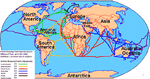
Of the approx 14 million tons, the breakdown is in the map below.

Note that this is total tonnage, so the estimated 5.5 million tons on the "round the horn" route to Egypt India take an average 4.5 months round trip, giving a total of about 1.2 million tons/month of supplies delivered to the armies in Egypt, Africa, Palestine, CBI etc. Cargo taken on the return trips included Iron, Coal, Rubber and other supplies from India, Africa etc.

Remember that if an immediate Axis sub offensive results in convoys instituted in the Indian Ocean Pacific as well, convoys reduce shipping efficiancy by 10 -20% {due to delays in assembling convoys, routing conflicts port facilities overloaded - as all ships arrive together}

Also by beginning offensives in all Oceans right away it will overload an already inadequate escort capability of the Allies.

If the Allies respond to huge shipping losses by closing ports where no escort is available this also reduces capacity.

Another point is that we are using the total building capacity in our calculations, yet only considering U-boat sinkings. There were also significant losses due aircraft, mines, weather, accident etc.

It is not unreasonable in our hypothetical scenario to expect a loss in capacity due to all causes of 10 - 12 million tons after 4 months, of which at least 8 million would be British. This further breaks down to 2 million tons of tankers, and 6 million of dry cargo capacity.

Taking a look at the map below, where would you subtract this 6 million tons?
{Remember that about 2.5 million tons in the Australian/Pacific fleets is Aus/NZ owned shipping, which could not be comendeered}

The only real option is to eliminate most or all the Africa-Indian Ocean route, which would cause the total abandonment of the war effort in Africa/CBI


P.S. Parsifal, I used the best available data to estimate the capacity of the shipping routes, do you have any corrections/additions to my map?
 

Attachments

  • worldmap11.GIF
    worldmap11.GIF
    36 KB · Views: 138
Hi freebird

I looked at your map. To be honest, i am not sure about its correctness

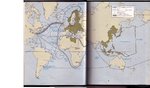
I have attached a map of my own, taken from a book "Undersea Warfare" Richard Humble New English Library, 1981

The thickness of the lines indicates the comparative weight of traffic. This type of graphic display would require the area of each "shipping lane" to be calculated, in order to determine the amount of shipping tonnage allocated to that route, but it gives some idea of the world wide committments of the allied controlled MS fleets
 

Attachments

  • Shipping LanesII.jpg
    Shipping LanesII.jpg
    102.3 KB · Views: 124
The Americans controlled a further 12 million tons of shipping at the beginning of the war, but this was pretty stretched as well, due to the losses that had been sustained by the british in the period 1939-42. in short there was very little fat left on the bone when the US entered the war.

Where did you get 12 million tons? I had read closer to 9?
 
I was relying on the figures given in Janes for 1939. I dont know what US losses were for the period 1939-41, but I expect them to be not too high
 
hi daniel

What is being proposed here is not an increased output of u-boats/I-boats, rather a re-ordering of priorities, and a change in operational status. For the germans, there were massive diversions of U-Boats to the Med and the Arctic. If these boats had been diverted to the Atlantic, as donitz had wanted, ther would have been a significant increase in tonnage losses, for no additional economic cost to Germany.

In the case of the Japanese, the change would have reequired some change in strategic thinking, that is admittedly difficult to justify. However, there were constant recommendations from the Japanese submarine commaqnders to switch to a mercantile warfare strategy, similar to the german employment. These wre consistently overruled by the Japanese High command, so the resistance to the change in strategy was coming from the top, and not the operational commanders.

If you add the additional 65 I-Boats, and the additional 80 U-Boats to the battle in 1942, the equation starts to look quite different.

To maintain the british economy at subsistence level, the british calculated that they needed a minimum of 7 million tons of shipping. however, the british also had other worldwide committments, to her overseas empire , the neutrals and the dominions. For Australia alone, the committment of shipping was about 2 million tons. Without this committment of shipping, the economic benefits of Australia, who provided the lions share of wheat to feed india, and wool for various military purposes, would have been lost, and Australia would have faced economic ruin within a year. there were similar committments allover the world that had to be met or the grand allianc being forged by the british at the time would have surely failed, as well as very real economic ruin for many members of the United Nations.

I have a book "British shipping in WWII" SG Sturmey Athlone Press 1962. In this book, it discusses this issue in a fair amount of detail. To maintain Britains worldwide committments, Sturmey estimetes a minimum need of not less than 15 million tons. Thats exclusive of any military needs. So when you talk about 18 million tons, and suggest that this represented a comfortable margin for losses, i have to strongly disagree. Allied shipping in 1942 was in very short supply, and every loss was being keenly felt. The needs of operation Torch, for example, caused a reduction in strategic oil reserves in England, such that these reserves were down to about 3 months supply by the beginning of 1943. So the margin for losses was very tight indeed. any significant increase in losses over historical levels was going to have a drastic effect on operations everywhere. The loss of an additional 1 million tons, for example, would have precluded any landings into North Africa, and would have also severely affected the buildup for Alamein 9which demanded the diversion of some 800 merchantmen totalling well in excess of 3.2 million tons of shipping).

It is also important to keep in perspective the actual production of shipping in this period. In 1942, the year we are looking at, the US produced 5.5 million tons, the british 1.3 million, and "others" 0.7 million tons, for a total of 7.5 million tons. The Americans controlled a further 12 million tons of shipping at the beginning of the war, but this was pretty stretched as well, due to the losses that had been sustained by the british in the period 1939-42. in short there was very little fat left on the bone when the US entered the war.

From december 1941 through to June 1942, 4.7 million tons. I have estimated, that with U-Boats diverted from the tactical theatres, and the IJN committed to the tonnage battle, these losses would have been basically tripled, to approximately 11 million tons. At 11-12 million tons, there would have been a nett deficit, compared to history of at least 7 million tons. This is not enough to knock out the allies, but it is enough to bring a complete halt to all offensive operations for at least a year, and would severely test the political resolve of the grand alliance. just as an example, the ability to import grain to India would have been severely strained. there were sever riots in Bengal in 1943 for this very reason (which explains why the Japanese chose to invade in 1944) with even less food availble, it is quite possible that india would have descended into chaos.


It is not possible to win the war by the u-Boats alon, however, the British could only defeat the Axis by the formation and maintenence of a worldwide grand alliance. The security of this grand alliance could be threatened by shipping losses, in the manner I have described. In addition, the loss of even quite small amount of merchant tonnages, brings offensive capability for the allies to a complete stop, probably for at least a year (but depending on the scale of losses). In that period, the Japanese and the germans gain vital breathing time....time to bring Russia to her knees, time to isolate and force the surrender of Australia, time to fortify the Japanese outer perimeter, , time to build the Atlantic wall, time to introduce jet technologies.

You are right to assert that the Allies commanded a massive economic advantage over the Axis. however , where they were not at an advantage, was in the area of manpower. if the offensives of 1942 had not progressed, and the Axis had gained some time with which to prepre more thoroughly, the manpower losses for the allies would have inevitable increased. This may well have been sufficient to force th allies to the negotiating table, which in the latter half of the war was the objective the axis needed to aim for.

The rate of attrition in the east was causing the Germans much more attrition than that which was or could have been inflicted on the western allies. Although a favorite subject for armchair generals the Germans could simply never have won the war in the east. Their manpower reserves where already fully commited in Barbarossa.

Since the point isn't an increase in u-boat production but an improved usage of those already available then I don't see any chance of the theoretical numbers flying around becoming reality. Mainly for two reasons

1. They assume that the allies do not react. Further sinkings would have increased/improved convoy defenses, research priority, production capacity etc...
2. They assume that the U-boats could have sunk the needed tonnage by early 43 at the latest. Production capacity and technology make it impossible for any ammount of U/I-Boats to make any difference beyond that time.

What could have been achieved by using the odd 80 extra u-boats and a better doctrine for the Japanese would certainly have caused the allies considerable hurt and delays. But not have altered the course of the war.
 
The rate of attrition in the east was causing the Germans much more attrition than that which was or could have been inflicted on the western allies. Although a favorite subject for armchair generals the Germans could simply never have won the war in the east. Their manpower reserves where already fully commited in Barbarossa.

Since the point isn't an increase in u-boat production but an improved usage of those already available then I don't see any chance of the theoretical numbers flying around becoming reality. Mainly for two reasons

1. They assume that the allies do not react. Further sinkings would have increased/improved convoy defenses, research priority, production capacity etc...
2. They assume that the U-boats could have sunk the needed tonnage by early 43 at the latest. Production capacity and technology make it impossible for any ammount of U/I-Boats to make any difference beyond that time.

What could have been achieved by using the odd 80 extra u-boats and a better doctrine for the Japanese would certainly have caused the allies considerable hurt and delays. But not have altered the course of the war.

Eastern Front is problematical, and i am the first to admit that with the forces available, the historical campaign undertaken by the Germans was at the top end of the effectiveness scale, rather than the bottom. Still the supply of Lend Lease to Russia would almost certainly have been curtailed, the Luftwaffe would have been somewhat stronger, and ther would have been at least some additional manpower diverted to the east. Conversely, the amount of manpower for the Soviets would have decreased quite dramatically, since the large numbers of men released from agricultural production as a result of the huge quantieis of grain shipped to Russia under Lend Lease, would no longer be available.

Perhaps a minor point, but food fopr thought, the Stalingrad airlift might have been successful, with the air transport that was diverted to Tunisia diverted to Russia. in addition, the Germans would have been able to occupy North Africa, and press on to the Middle east, thereby threatening Russia from the South. In this circumstance, Turkey is almost certaihnly going to cave in and join the Axis, or at least allow rights of passage. If that happened, all of a sudden, the security of the eastern Front becomes problematic

Your assessment is looking at the problem from the point of view of production only, or rather, direct losses in production. But the shipping losses being touted here would, in my opinion have other spin off effects, such as the famine and revolt in India, the economic ruin of key allies, and the sapping of manpower resources. What is at threat most of all is the security of the alliance needed to defeat Germany. Germany was not defeated by any single nation, it was a worldwide coalition, with even the marginal South American states playing their part. Without secure shipping routes all of this is under severe threat.

You mentioned that a "quid pro quo" would be likely if the tonnage losses shot up. I tend to agree with that, but ther are members of this forum that seem to think that a re-ordering of priorities in the face of such a catastrophe is not required

In the case of the british, it would be difficult to see them increasing merchant tonnage production, because of the very poor state of her shipyards. She may have increased escort production, but only to a marginal degree. The most likley reaction from the british would be to withdraw some, or all, of her fleets from places like the med, the Arctic, perhaps even the far east. All quite possible, but none without serious consequnences

In the case of the US, capacity to increase tonnages certainly exists, but only at the expense of delaying other programs. The most obvious would be the large capital ship program underway, or a curtailment of the APB programs, possibly vehicle production, or AFV production. None of these changes could be undertaken without very dire consequences to other elements of the allied war effort. Not minor delays, major ones

Plus ther is the issue that the US simply lacked the skills in 1942 to undertake a convoy war properly.

I have not said that the U-Boat war would win the war, but I have postulated that it would achieve significant delays, which you have not challenged. I have also indicated that the achilles heel for the allies was manpower, and that the U-Boats, by achieving a delay in the Allied counteroffensive may well then suffer huge increases in Manpower losses, that they could not sustain. This may well have led to a retreat from the "unconditional surrender" position that had been adopted in the Atlantic Charter. In other words, survival of the Axis regimes
 
About the map, I am fairly ceartain that it is approximately accurate, as I used the map you posted, as well as other shipping info to make it. The monthly total for UK "dry" imports is ~ 2.4 - 2.5 million tons, as the minimum requirement was about 26 million tons at the 1941 ration levels. 50% of imports came from North America, the rest from S. America Africa. The monthly total "dry" exports to Mid East/Indian Ocean is about 1.2 million tons monthly. {5.5 million tons x 4.5 month average round trip}

I was relying on the figures given in Janes for 1939. I dont know what US losses were for the period 1939-41, but I expect them to be not too high

Did you get that from the web? Is there a link?

I think that total might be including the Army Navy supply ships tankers, not available for general cargo.

The US flagged Merchant Marine of 1,000 tons or more is about 8.25 million tons. There is ~ 7.2 million tons in Dec 1940, + 800,000 tons built in 1941 + 500,000 tons of interned Axis shipping seized after Dec 7/41. In 1941 they probably lost ~ 250,000 tons to retirement, accidents, sinkings, and transferred to UK.

{Check table 1 in "American Shipping Situation"}

The American Shipping Situation

Now as to Daniel's your points about the ultimate effect on the war, perhaps we can go into that a bit later, after we can estimate the net shipping effect. His question about the possible Allied responce is a good one, some interesting ideas.

To start with let's look at the scenario, if we assume that:

1.) The Japanese give general information to the Nazi's about their intent to go to war. The Nazi's have about 3 - 4 months notice, but do not know exact plan or date. The Germans agree to support Japan in war against USA.

2.) The Submarine Admirals manage to convince Tokyo Berlin that subs are the best way to win the war, both sides make sub warfare a priority.

3.) The Japanese agree to interdict cargo going to the Soviet Far East, this may result in increased tensions on the Manchurian border.

4.) Germany prepares some logistical options for subs in the Caribbean, possibly involving supplies from Vichy/Mexican ports

5.) Japan launches the attack as originally planned in the first week of November, and sinks the 3 US Pacific carriers.

6.) The Axis prepare some "spoiler" commando attacks in the Western Hemisphere, to increase US uncertainty, and to distract Government public attention from the main threat - the sub offensive.


Question: suppose that the Allies lose ~ 2.5 - 3 million tons in the first month, and ~ 2 million tons in month 2. How long do you suppose it would take for the Allies to make plans for some drastic measures to reduce sinkings? I would think that after 6 - 8 weeks, after the first month's losses are recorded and tabulated there would be some emergency sessions to work on the problem. I would assume that they would need at least 1 month of data, and it takes a couple more weeks for overdue ships to be declared lost, for losses to be added up etc.
 
Hi freebird

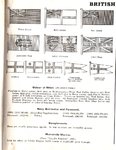
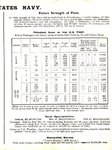
No, it is not an electronic link, but i have scanned the british and US pages of Janes that refer to the shipping under their direct control

However, even this does not reveal the full extent of shipping availability. Because of the neutrality Act, the British would detain any ship thought trading or aiding the enemy (best example I can think of is the detaining of the two Spica Class TBs transferred from Italy to Sweden by the RN in 1940). This meant that virtually the entire worldwide neutral shipping fleet was available in an emergency. This included fleets great and small (eg the Argentinian fleet of some 334000 tons, plus the Norwegian fleet of some 4.5 million tons). Typically, the british are credited with being able to control up to 27 million tons at the beginning of the war.

However wartime losses had made significant inroads up until the end of 1941. The British lost nearly 5 million tons in 1940, and about 4.5 million (from memory) in 1941. They also lost about 800000 tons in 1939. The french fleet was never enlisted until after 1942, and norway, denmark, and the netherlands lost or had seized about 1.5 million tons after they were invaded.

I dont know how much American shipping was lost prior to her entry, but her replacement of losses was virtaully zero. Nearly all production up to 1941 was being sent to Britain. American merchantmen were not permitted to enter the war zone after 1939, until the Lend lease Act (up to that time it wa strictly "Cash Carry")
 

Attachments

  • Brtish MS 1939.jpg
    Brtish MS 1939.jpg
    158.1 KB · Views: 111
  • US MS 1939.jpg
    US MS 1939.jpg
    179.2 KB · Views: 103
Hmm interesting, the only difference seems to be that Janes includes ALL ships including river lake traffic, and presumably ferrys too, as they would be registered Merchan Marine as well.

I also looked up the Merchant Marine site, it confirms that there were only 492 ships of ~4 million tons in the overseas trade. {including Panama, US bases territories}

usmm.org said:
American Flag Ships 1939
American Flag ships in foreign trade or trade with U.S. possessions and territories [including Alaska and Hawaii] as of April 1939.

There are 492 ships on this official U.S. government list prepared by the U.S. Maritime Commission. If a ship is not on this list, but was an ocean-going ship, it was probably engaged only in coastwise voyages, for example, New York to New Orleans, or Seattle to Los Angeles.

American Flag ships in foreign trade or trade with U.S. possessions as of April 1939

So it seems, if you subtract all of the ferrys river/lake ships of < 1,000 tons, the usable starting total in 1941 is between 8 million - 9 million.


But setting aside the exact tonnage, the key question seems to be how long the Allies will allow their shipping losses in "freefall", before they do something. A huge stumbling block will be Admiral King, he might delay needed measures by a couple of months or more. As Syscom mentioned earlier, the US can stop all unescorted ships, and concentrate the limited escorts on heavily protected convoys to Hawaii, Panama, South America.

For the British it would probably be strong convoys in a box between the UK, Halifax, Freetown Aruba. Possibly also from Calcutta-Singapore-Australia Sydney - Port Moresby to keep the supply lines open. Otherwise there will not be enough additional escorts for at least 8 - 10 months, so it is hard to see how they could keep the ships sailing to the Indian Ocean via the Cape. By having a "lock-down" of unescorted ships it will only precipitate the collapse of the desert army in Egypt.

I suspect that the Allies would go into "shipping crisis" mode after losing between 5 - 8 million tons. What is your thought?
 
The allies were in "shipping crisis" with the historical losses. if you double that, they are beyond that point....

The unkown so to speak is what can they do. Kings attitude to ASW was basically if he didnt think about shipping losses they would somehow just go away. The Americans were so wewdded to the Mananian idea of the "decisve battle", that it was very difficult for them to re-adjust to the "small war" ideas that were needed to fight the Battle of the subs (cant call it Battle Of the Atlantic anymore). you saw Sys's reaction to my suggestion that capital ship copnstruction might need to be curtailed for a while to make room for merchantmen, and small ships. "Not a chance!!!!" was the reply, as I recall, rings like a quotation from Admiral Kings Diary. Admiral King in the historical campaign let things slide until about March 1942, by which time US losses were running above the 2 million tons mark. I think the US reaction and eventual wake up to the fact that they could lose the war if they didnt do something was more linked to the tonnage losses rather than the date, so if our scenario sinks 3-4 million tons in the first month, the US is going to start to react more or less straight away

But its one thing to relaize that a big problem exists, and another to make effective countermeasures work. historically it was August before there was any effect from US countermeasures instituted in March, and in this hypothetical, the problem facing the Americans is much worse, with 80 boats attacking them in the Atlantic 9instead of an average of about 20), and say 30-40 Japanese Boats on the pacific Front. In every sense of the word, the US would be fighting a two front war for which it was neither doctrinally or materially equipped to deal with.

My opinion is that massive withdrawals would be required, from the pacific and the med. the US would need to allow the british to assisst them, and probably place a british admiral with ASW experience to run the show for them. AThe destroyers pulled back from the med, along with nearly all of the USN DDs, would need to be retr4ained and formed into escort groups, very quickly, to minimize losses, A Huge chunk from Bomber command would need to be re-assigned to a much enlarged Coastal Command, which would incorporate virtually all of the USAAAF assets (which at that time were being used to train the rapidly expanding Army and Navy air services. These would need to be re-trained, and equipped for a primarily ASW role, which has the unfortunate effect of delaying the big expansion, but cant be helped given the seriousness of the emergency.

With measures like these, the U-Boats could still be defeated by the middle of 1943. But a massive delay of perhaps a year has occurred in that time, with indeterminate consequences
 
The allies were in "shipping crisis" with the historical losses. if you double that, they are beyond that point....

True enough, in fact the UK was in severe "crisis" the day after Pearl Harbor, before "Drumbeat" sank a single ship. There was an extreme shortage of capacity to the Middle East CBI, it was always a question of which theatre would get supplied and which would go without. Part of the problem with the Desert Army in the first half of 1942 was that CBI Australian fronts soaked up most of the avilable new units.

But historically the crisis did not come to a head until the spring of 1943 with the "British Import Crisis". The Allies lost about 8.2 million tons in 1942, {6 by U-boat} of which about 5.5 million was British. The Commonwealth built 1.8 million tons, the US built 5.2 million tons in 1942. So although the Allies lost a total of 1.2 million tons, the British lost far more than the US.

The "Import Crisis" was resolved by transferring Indian Ocean ships to the Atlantic, and with US shipping switched to UK delivery, with the effect of:

1.) Certain US operations in the Pacific were reduced or delayed
2.) The 1943 Burma offensive was weakened and ultimately failed
3.) Millions died in the 1943 Bengal famine

The unkown so to speak is what can they do. Kings attitude to ASW was basically if he didnt think about shipping losses they would somehow just go away. The Americans were so wedded to the Mananian idea of the "decisve battle", that it was very difficult for them to re-adjust to the "small war" ideas that were needed to fight the Battle of the subs (cant call it Battle Of the Atlantic anymore). you saw Sys's reaction to my suggestion that capital ship copnstruction might need to be curtailed for a while to make room for merchantmen, and small ships. "Not a chance!!!!" was the reply, as I recall, rings like a quotation from Admiral Kings Diary.

Indeed, and we should be careful to judge the response on what was "reasonable" within a historical sense, with the information that they had at the time. I would consider that our Axis "sub strategy" to be "reasonable" as Hitler was basically on board with the U-boat offensive idea, and it is not unreasonable that the Japanese sub proponants could convince Yamamoto that shipping was the most vulnerable part of the Allied war effort.

However, as you point out there is virtually no chance that the US would abandon the BB program to build shipping. I think Syscom's point was that since the BB's were mostly already 60 - 90% built, it would not make much sense to cancel them. {At 75 - 80% built, the BB could be moved out to free drydock space, while the final superstructure guns were finished in berth}
Also I don't think that the construction of shipping could be increased by much, for besides the Iowa class BB's, there was very little that was not vital. DD's, DE's CV's CL's were all badly needed for operations convoy escort. The CA program had many of it's hulls converted to CVL's also badly needed. I don't think that slowing aircraft production to increase shipbuilding could have much effect for 8 - 12 months
 
Admiral King in the historical campaign let things slide until about March 1942, by which time US losses were running above the 2 million tons mark. I think the US reaction and eventual wake up to the fact that they could lose the war if they didnt do something was more linked to the tonnage losses rather than the date, so if our scenario sinks 3-4 million tons in the first month, the US is going to start to react more or less straight away

This is the primary reason why I would be in favor of commando "spoiler" attacks, to divert attention away from the shipping crisis. Another effect of the increased tension in the Caribbean/Latin America is that the USN would be under more pressure to build up forces bases in the theater {On bases leased from the UK at Jamaica, Trinidad, Barbados, Bermuda etc}. By forcing the USN to use DD's shipping to supply these bases, they increase the burden.

I would think that in 4 - 6 weeks the "crisis" mode would be realized in Whitehall, as the UK "shipping bureau" kept track of all ships, and Gen. Brooke Adm. Pound were already both very aware of the problem.

In the US it was a different story. The lack of a "shipping bureau" meant that it was often weeks or months before they became aware of losses, and the general inexperience and inertia of the top level USN meant that it might well take many months for any concrete action.

I also think we should consider the UK response seperately from the US

But its one thing to relaize that a big problem exists, and another to make effective countermeasures work. historically it was August before there was any effect from US countermeasures instituted in March, and in this hypothetical, the problem facing the Americans is much worse, with 80 boats attacking them in the Atlantic 9instead of an average of about 20), and say 30-40 Japanese Boats on the pacific Front. In every sense of the word, the US would be fighting a two front war for which it was neither doctrinally or materially equipped to deal with.

Very true.

My opinion is that massive withdrawals would be required, from the Pacific and the Med. the US would need to allow the British to assist them, and probably place a british admiral with ASW experience to run the show for them.

I can't see how the {anti-UK} King would ever agree to put a British Admiral in charge. Even if he were forced to do so, he would be so uncooperative as to make the effort useless.

I don't think that they can abandon the Med without jepordising the whole war. If the supply to Egypt, India Malaysia is cut off, this would result in a retreat to Sudan/South Africa and Australia. This could allow an Axis victory.

With all supplies to Russia cut off {Arctic, Pacific Indian Oceans}, a possible re-deployment of several armies to Russia, Axis attack on Russia via the Caucasus, and without the huge diversion of troops to Africa in the fall of '42, there would be no Russian victory at Stalingrad, Germany may well have conquered the USSR in 1943.

The Allies have to figure a way to keep the African CBI fronts viable

The destroyers pulled back from the med, along with nearly all of the USN DDs, would need to be retrained and formed into escort groups, very quickly, to minimize losses, A Huge chunk from Bomber command would need to be re-assigned to a much enlarged Coastal Command, which would incorporate virtually all of the USAAAF assets (which at that time were being used to train the rapidly expanding Army and Navy air services. These would need to be re-trained, and equipped for a primarily ASW role, which has the unfortunate effect of delaying the big expansion, but cant be helped given the seriousness of the emergency.

I would agree with most of this.

With measures like these, the U-Boats could still be defeated by the middle of 1943. But a massive delay of perhaps a year has occurred in that time, with indeterminate consequences

More like 2 - 3+ years. The problem is that the U-boats were never "defeated", but by the end of 1942 the average monthly construction exceeded the monthly sinkings. By this time {as mentioned in previous post} the net Allied aggregate loss was only 1.2 million tons, while there was a dramatic increase in the need for shipping. {with more US participation + longer supply lines}

If by the end of 1942 the Allies have lost an estimated 10 - 12+ million tons vs. 1.2, it may take a further 12 - 20 months to rebuild AFTER monthly building exceeds sinkings. At that point it would take many further months to replenish the depleated critical supplies at the many overseas bases, before further operations could be planned.
 
you saw Sys's reaction to my suggestion that capital ship copnstruction might need to be curtailed for a while to make room for merchantmen, and small ships. "Not a chance!!!!"

Its the truth. The shipyards with the hulls of the capital ships already substantially completed could not over night just stop production and rebuild them as destroyers. They would have finished them, launched them then begin building the escorts.

Same with the slips with carriers being built.

Building warships is a tad more complicated than making trucks or aircraft.

1.) Certain US operations in the Pacific were reduced or delayed.

True. I would suspect that the Japanese would eventually come to capture Papua NG, but not much more. By summer of 1942, their logistics were in tatters from their rapid gains, and needed a breather to recover. But its irrelevant because in the summer of 1943, the US had the resources to begin a systematic offensive through the Central Pacific.

2.) The 1943 Burma offensive was weakened and ultimately failed

It didnt matter what happened in the CBI.
 
Its the truth. The shipyards with the hulls of the capital ships already substantially completed could not over night just stop production and rebuild them as destroyers. They would have finished them, launched them then begin building the escorts.

Same with the slips with carriers being built.

Building warships is a tad more complicated than making trucks or aircraft.

Yes and this does make the most sense. Even if it was needed to abandon BB's under construction, the USN would never do it. At that point in the war, they didn't know that BB's would not be needed to play a great role in the Pacific, they wanted to re-build the BB's after Pearl.

True. I would suspect that the Japanese would eventually come to capture Papua NG, but not much more. By summer of 1942, their logistics were in tatters from their rapid gains, and needed a breather to recover. But its irrelevant because in the summer of 1943, the US had the resources to begin a systematic offensive through the Central Pacific.

Had the resources IN THE USA, very true, but how to ship it overseas?

In 1943 the US shipyards got up to speed, producing 13 million tons. However if the total shipping loss by the end of 1942 was 10 million tons, not 1.2 - it would take 75% of the entire 1943 production just to make up losses. Would Roosevelt be willing to allow the UK to be starved into surrendering before launching a Pacific offensive? I think not. Also if the attack on Panama succceeds, what % of the shipyards are in the Pacific?

It didnt matter what happened in the CBI.

In the historical model it did not because the Commonwealth maintained enough supplies to hold the Japanese at the Indian border. However if the Japanese are able to conquer India as well it provides enormous problems for your re-conquest of the Pacific.

The key point is that by cutting off supplies to Russia and breaking UK control of the Indian Ocean Middle East, Germany has a good chance of eliminateing serious Soviet opposition by mid 1943.

Would the USA support 1943 operations against Japan while the European theatre collapses? I think not. Roosevelt, Stimson Marshall were all agreed on "Germany First", and in the event of a 1942 collapse of the USSR were in favor of a "suicide" attack into France to try to shift Nazi forces away from the Soviet front.
 
A point that might be overlooked was that up until 41 very few U boats had been sunk bt ASW aircraft I believe the number was 2 , but with a radar that was able to work at longer ranges the numbers began to increase rapidly , I believ the Happy Times were well over by late 41 with advent of a serious search radar that had range at lower altitudes
 
A point that might be overlooked was that up until 41 very few U boats had been sunk bt ASW aircraft I believe the number was 2 , but with a radar that was able to work at longer ranges the numbers began to increase rapidly , I believ the Happy Times were well over by late 41 with advent of a serious search radar that had range at lower altitudes

I believe it was actually in mid 1942 that the technology began to turn the tide.

In any event, it was only experienced, well-equipped ASW units that had any real effect.

During the crisis off the US seaboard, they were only able to sink the first U-boat in April, and during the first 6 months of the war there were only 3 or 4 sunk in US Atlantic waters. It was not ASW that limited the German offensive, it was a lack of U-boats to sink the dozens of available targets.
 
A point that might be overlooked was that up until 41 very few U boats had been sunk bt ASW aircraft I believe the number was 2 , but with a radar that was able to work at longer ranges the numbers began to increase rapidly , I believ the Happy Times were well over by late 41 with advent of a serious search radar that had range at lower altitudes

aircrafts principal role in ASw is not so much to sink boats. They are there for two main reasons. Firstly to suppress the sub 9ie keep it submerged, therby robbing the boat of its mobility), and secondly to give advance warning to the convoy of the position of the raider. This can allow the deployment of a hunter killer group to hunt down and destroy the contact, and more importantly allow the re-routing of the convoy.

To undertake this mission you need a lot of aircraft, with a long range. The only force fitting that profile in 1942 was Bomber Command
 

Users who are viewing this thread

Back