
Design & Spec a 14-cyl Bristol Mercury with Fuel Injection

Ad: This forum contains affiliate links to products on Amazon and eBay. More information in Terms and rules

18
1
Sep 3, 2023
Bristol/Fedden brute forced their way into making the sleeve valve work, and succeeded, but lost a lot of time in the process. The general conceit of this timeline is "what if the man-hours and resources poured into making sleeve valves work instead was directed at S/C efficiency, fuel injection (successfully developed from the Draco), and twin-row radial cooling," and "imagine Hooker chooses to join a more successful Bristol instead of RR."

I'd like help creating a plausible development arc for a twin-row 14-cyl Mercury. Using the Mercury XV as a base (source attached):
Mercury XV / 1937
5.75 x 6.5 bore and stroke
24.9 L
51.5" diameter
1065 lb
1-stage 1-speed S/C
840 hp (WEP) @ 2750 rpm @ 14,000 ft / 87 oct
995 hp (WEP) @ 2750 rpm @ 9,250 ft / 100 oct (+18% hp increase)

Using historical benchmarks, adding fuel injection should add 7-12% max hp. That's -> 1095 hp (WEP) @ ~10,000 ft with FI / 100 oct (I'm not sure why the 100 oct rated alts are less than the 87 oct, if anyone knows please share)

Just using proportional math, a 14-cyl Mercury should be:
"Andromeda" V / 1940
5.75 x 6.5 bore and stroke
38.7 L
51.5" diameter
~1650 lb (1065 lb on Mercury / 9-cyl = 118 lb * 14 = 1656 lb)
1-stage 1-speed S/C
~1700 hp (WEP) @ 2750 rpm @ ~10,000 ft with FI / 100 oct (1095 hp on FI Mercury / 9-cyl = 121.7 * 14-cyl = 1703 hp)
That's ~120 hp/cyl vs ~113 for Herc XI (1941, 1590 hp / 100 oct)

1700 hp doesn't account for losses from the twin-row design, and is clearly over optimistic. And ~1650 lb doesn't account for the fuel injection system.

From what I've read elsewhere on a twin-row Merc:

  • "14 cylinder twin row engine with a chunky three bearing crank and enclosed valve gear. Some improvements from the Pegasus line (e.g., induction system)"
  • "Not sure how much the 4 valve head played part there, and how easy will be to engineer a 4 valve head in a 2-row radial. Probably the joint camshafts will be needed for pairs of cylinders."
  • "Bristol's superchargers were big, 13 in impeller on Hercules, but were also suffering from lack of inducer vanes and 'messy' intakes. Same story was on the BMW 801A/C/D. It took both companies until late in 1944 to have better supercharging in service engines, although still no 2-stage S/C."
  • "Apparently early Hercules engines had a very poorly designed supercharger inlet and/or outlet design which choked the airflow. When Hooker joined Bristol after the war he felt that the Bristol engine design team still didn't understand airflow properly."
  • "Had Bristol made a good effort to improve and declutter the supercharges and intakes on the Pegasus and Mercury, they would've gained at least another 10% of power down low, and perhaps 15-20% above 15000 ft, for no weight increase. Same for the Hercules, without the wait until 1944 and the Hercules 100"
Clearly there was a lot of work to be done on better S/C, and if Hooker went to Bristol that should be possible.

For power estimates from others:

  • Early: "1250+ HP at ~15000 ft / 1350+ HP down low"
  • Later: "1400-1600 HP (1500+ on early 100 oct)"
So my questions boil down to:

  1. plausible max hp with a 1-speed S/C? with 2-speed? with 2-stage + intercooler?
  2. with fuel injection?
  3. with overall improved S/C system efficiency? modern cylinder head design? ...etc.
  4. on 87 oct? on 100 oct?
  5. power on first run? power fully developed?
  6. reasonable weight estimates?
  7. and what should the rated altitude be at the various stages?
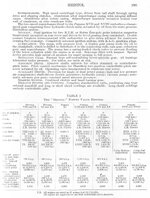
 

Attachments

  • bristolaeroengines4.jpg
    bristolaeroengines4.jpg
    386.2 KB · Views: 45
Bristol/Fedden brute forced their way into making the sleeve valve work, and succeeded, but lost a lot of time in the process. The general conceit of this timeline is "what if the man-hours and resources poured into making sleeve valves work instead was directed at S/C efficiency, fuel injection (successfully developed from the Draco), and twin-row radial cooling," and "imagine Hooker chooses to join a more successful Bristol instead of RR."

I'd like help creating a plausible development arc for a twin-row 14-cyl Mercury. Using the Mercury XV as a base (source attached):
Mercury XV / 1937
5.75 x 6.5 bore and stroke
24.9 L
51.5" diameter
1065 lb
1-stage 1-speed S/C
840 hp (WEP) @ 2750 rpm @ 14,000 ft / 87 oct
995 hp (WEP) @ 2750 rpm @ 9,250 ft / 100 oct (+18% hp increase)

Using historical benchmarks, adding fuel injection should add 7-12% max hp. That's -> 1095 hp (WEP) @ ~10,000 ft with FI / 100 oct (I'm not sure why the 100 oct rated alts are less than the 87 oct, if anyone knows please share)

Just using proportional math, a 14-cyl Mercury should be:
"Andromeda" V / 1940
5.75 x 6.5 bore and stroke
38.7 L
51.5" diameter
~1650 lb (1065 lb on Mercury / 9-cyl = 118 lb * 14 = 1656 lb)
1-stage 1-speed S/C
~1700 hp (WEP) @ 2750 rpm @ ~10,000 ft with FI / 100 oct (1095 hp on FI Mercury / 9-cyl = 121.7 * 14-cyl = 1703 hp)
That's ~120 hp/cyl vs ~113 for Herc XI (1941, 1590 hp / 100 oct)

1700 hp doesn't account for losses from the twin-row design, and is clearly over optimistic. And ~1650 lb doesn't account for the fuel injection system.

From what I've read elsewhere on a twin-row Merc:

  • "14 cylinder twin row engine with a chunky three bearing crank and enclosed valve gear. Some improvements from the Pegasus line (e.g., induction system)"
  • "Not sure how much the 4 valve head played part there, and how easy will be to engineer a 4 valve head in a 2-row radial. Probably the joint camshafts will be needed for pairs of cylinders."
  • "Bristol's superchargers were big, 13 in impeller on Hercules, but were also suffering from lack of inducer vanes and 'messy' intakes. Same story was on the BMW 801A/C/D. It took both companies until late in 1944 to have better supercharging in service engines, although still no 2-stage S/C."
  • "Apparently early Hercules engines had a very poorly designed supercharger inlet and/or outlet design which choked the airflow. When Hooker joined Bristol after the war he felt that the Bristol engine design team still didn't understand airflow properly."
  • "Had Bristol made a good effort to improve and declutter the supercharges and intakes on the Pegasus and Mercury, they would've gained at least another 10% of power down low, and perhaps 15-20% above 15000 ft, for no weight increase. Same for the Hercules, without the wait until 1944 and the Hercules 100"
Clearly there was a lot of work to be done on better S/C, and if Hooker went to Bristol that should be possible.

For power estimates from others:

  • Early: "1250+ HP at ~15000 ft / 1350+ HP down low"
  • Later: "1400-1600 HP (1500+ on early 100 oct)"
So my questions boil down to:

  1. plausible max hp with a 1-speed S/C? with 2-speed? with 2-stage + intercooler?
  2. with fuel injection?
  3. with overall improved S/C system efficiency? modern cylinder head design? ...etc.
  4. on 87 oct? on 100 oct?
  5. power on first run? power fully developed?
  6. reasonable weight estimates?
  7. and what should the rated altitude be at the various stages?

The 14-cylinder version of the Mercury, with a bore/stroke of 146 x 165 mm and only two poppet valves per cylinder, was in France the Gnome-Rhone 14K/N/R.

In its last version (14R 04/05 type-tested in February 1940), this engine had extensively redesigned finning, a 3-bearing crankshaft and a high-efficiency 2-speed supercharger (axial intake), CR 6,43 with a carburetor.

In rated mode (87 oct., 950 mm Hg boost and 2,400 rpm), the 14R 04/05 gave 1,210 hp at takeoff (1st gear) and 1,230 hp at 6,000 m (2nd gear). In "overload" mode (roughly equivalent to the US "military" or WEP...), with 100 oct. fuel, at 2,600 rpm, the boost was 1,180 mm Hg and the power increased to 1,590 hp at take-off and 1,580 hp at 5,000 m. Weight 819 kg (1,805 lbs)
 
Last edited:
L loftonhenderson ; I like the premise, but I'm going to use a bunch of baseball analogies:

We can't start in the major leagues, swinging for the fence, i.e. you can't start in '40 attempting to build a 1,700hp/1,650lb engine.
And we have to acknowledge that there were a huge number of changes happening in parallel that muted the sleeve valves advantage.​
e.g. Improving gasoline from 80 to 87 to 100 octane. And its not just the octane increase, the product becomes move uniform i.e 80 octane as 5% - 60 octane/10% - 70 octane, 70% - octane/10% - 90 octane/5% - 100 octane. While 100 octane has lows and highs only a couple points off the mean. And then you get into the aromatics vs alkanes... All of which remove much of the sleeve valve advantage.​
e.g.2 It was Bristol/Fedden vs the world. And the world was coming up with a ton of "brute force" improvements of their own: sodium in valve stems to cool the exhaust valves, stellite seats, electric arc furnace/fluxes to remove impurities from spring steel. Because the whole world was incrementally improving their products, they matched the sleeve valve. But how good was your '35 crystal ball....and what happens if you're wrong??​

But we could start in '35 with a poppet valve alternate to the Hercules - and internal company competition. Aim for 1,150hp/1,500lb engine (power and weight will increase as design is refined) Again I'm going head to head with the Hercules - which allows reuse of a number of parts - reduction gear, supercharger, ignition, etc.

B Bretoal2 ; Gnome-Rhone 14K/N/R might have the same grandparents, but they are 2nd generation from the Jupiter/Titan. I'm not sure if a set of plans for the 14K is a great starting point or not. (I'll for sure have a Gnome-Rhone and Pratt & Whitney Wasp in the lab for ideas).
 
Gnome-Rhone 14K/N/R might have the same grandparents, but they are 2nd generation from the Jupiter/Titan. I'm not sure if a set of plans for the 14K is a great starting point or not. (I'll for sure have a Gnome-Rhone and Pratt & Whitney Wasp in the lab for ideas).

No. The 14K is not a development of the Jupiter and Titan; it is already a fairly new engine that incorporates some solutions from Bristol, but also many new processes already introduced on the 5K, 7K, and 9K—in particular, the abandonment of the four parallel valves and their "poultice head" in favor of two valves in V. If we still want to maintain a "Bristol" vision of this family, we can say that the 5K, 7K, and 9K are distant second-generation cousins, and the 14K is third.

The 14N, compared to the 14K, shows only minor changes, mainly reinforcements (finning, crankcase, crankshaft, etc.). It was initially presented as a "1937 14K."

The 14R, on the other hand, is a significantly redesigned engine, with new crankcases, a dramatic increase in fin surfaces, a center-bearing crankshaft, and an all-new supercharger with a widely modified intake system. Performance takes a spectacular leap forward.
 
The basic "problems" with concept is that starting with Mercury cylinders maybe locking you into outdated technology.
You do need a new crankcase and crankshaft so you are not saving a whole lot (you need a bigger supercharger and new reduction gear so the only things you can save are the cylinders and pistons).
In their zeal to perfect the sleeve valve engines/concept Bristol never upgraded the poppet valve cylinder heads and they never really addressed the cooling problem/s (size/spacing of the cooling fins). The last Mercury and Pegasus engines built were still using grease guns to lubricate the valve gear (4-6 fittings per head?) instead of engine oil.

Octane ratings are a real mess. The octane scale is NOT liner.
Octane.........................Performance number
70.....................................48.28
75.....................................52.83
77.....................................54.90
80.....................................58.33
85.....................................65.12
87.....................................68.29
90.....................................73.68
92.....................................77.78
96.....................................87.50
100................................100.00

The PN scale is liner. Please note that the British 100 octane fuel used in the BoB and that most British engines of 1940-42 were rated on was really 100/115 at worst and often somewhere between 100/120-130 with the 100/130 becoming standard by 1942 even if it was not always referred to as such.
Now in 1935-1938 what kind of fuel are you going to be getting in 1940?
The 100 octane fuel used in laboratories (or record setting flights) in the mid 1930s was just about 100% iso octane which was/is economically unfeasible to use as a production fuel.
Most the 2nd half of the 1930s was spent trying to figure out how to get the benefits of 100 octane fuel at price (cost of manufacture) that air forces and airlines could afford.
Changes in refining and using different additives took a while. At times they were sort of flying blind. The British knew what they wanted (even more than 100% iso-octane performance) and they knew how to get it (use around 20% aromatic compounds in the fuel) but they could not measure the exact result without a new test scale and new test engines (they needed dozens of test engines if not hundreds for large scale production of fuel, not few full size aircraft cylinders in a few test sites).
So now you have engine companies trying to develop new engines to use new fuel without knowing exactly what the new fuel would be able to do or when it was going to become available.
Using historical benchmarks, adding fuel injection should add 7-12% max hp. That's -> 1095 hp (WEP) @ ~10,000 ft with FI / 100 oct (I'm not sure why the 100 oct rated alts are less than the 87 oct, if anyone knows please share)
The answer is simple. The Mercury at 14,000ft (air is 0.04973lbs/cu/ft) was flowing all the air the supercharger could put into the engine. Doesn't matter what kind of fuel you are using, you can't get more air into the engine. At 9,250ft the thicker air (9,000ft=0.05829lbs/cu/ft) is about 17% more dense and the engine can make more power because it can flow more air. Mercury was not running wide open at 9250ft with 87 octane fuel because at that level of boost with 87 octane fuel the engine would go into detonation and wreck the engine.
The supercharger (and carb set-up) had maxed out it's airflow at 9250ft. Assuming you have even better fuel and assuming (really big assumption) that the engine wouldn't overheat
You can make even more power at low altitude (like 5,000ft or under). Please see the Allison V-12 engine for a very good example of altitude affecting power output (around 1700hp at sea level or around 1090hp at 13,000ft). Didn't matter what kind of fuel you poured into the Allison fuel tank, supercharger could not flow any more air at 13-14,000ft.

Which really puts us back at basic engine design, especially with air-cooled engines. If you can't keep the engine cool (air flow and fins) you are going to have problems real quick.
Higher octane fuel helps solve the detonation problem. It does not solve the heat problems with the oil in the cylinder walls (piston ring lubrication). If you burn more fuel minute you need to get rid of more heat per minute or things are going to go sideways real quick.
Please note that many air cooled radials were using fuel for cooling at high power. Some were consuming around 40-50% more fuel than they really needed for combustion.
All fuel injection was not the same. German engines (mostly liquid cooled) could not run rich, the injectors would not handle the increased fuel flows. The American throttle body carbs would, (but they weren't as efficient at cruising).
Also note that the German fuel injection systems used many more parts that a British carb and many of them needed more precise machining.

Back to cooling. EVERY time either P&W or Wright significantly increase the power of one of their engines they also significantly increased the size/area of the cooling surfaces, OR went to water injection as a cooling aid.

Bristol changed the cylinder fins on the Hercules a number of time over it's production life and from the 1930s to the late 40s/early 40s went through about 7 different cylinder heads ending with 1 or 2 that were mostly copper alloy for better heat transfer.

I have no idea if the Bristol 4 valve heads were a good idea by the late 30s or not. Without any numbers we are all guessing. It is not just the number of valves it is the size. Are 4 small valves better than 2 big ones? Does the 2 valve head have bigger intake and exhaust ports? Or better shaped ports? Without knowing the actual restrictions at each point things are guess work.
Bristol's 4 valve head was designed when the steels for valves were not that good and smaller valves had less problems with warping (or failing) and valve seats had problems and smaller size meant better cooling. Valve springs often broke and a cylinder that was limping with a broken valve was better than one that was making no power because of broken spring. Bristol did improve materials through the years but only at a minimal change in tooling. Basic design stayed the same (again they never enclosed the valve train or used pressure oil feed to the valve train).
Keeping just the bore and stroke doesn't give a good idea of potential power and radials also need good bottom ends to handle high power.
 
  1. plausible max hp with a 1-speed S/C? with 2-speed? with 2-stage + intercooler?
  2. with fuel injection?
  3. with overall improved S/C system efficiency? modern cylinder head design? ...etc.
  4. on 87 oct? on 100 oct?
  5. power on first run? power fully developed?
  6. reasonable weight estimates?
  7. and what should the rated altitude be at the various stages?
1. 2 speed supercharger will give more power at lower altitude. See the 2 speed Pegasus in the chart. It doesn't do a lot for power in the high teens. The Mercury had a pretty darn good supercharger for 1938-40. Only the Merlin was better. The American radials, the Allison, the German V-12s and the French engines were all worse in 1938-1940. more in #3
2. the problem is cost and manufacturing ability.
3. better superchargers are possible. The problem with 2 stage and intercoolers in size/volume/weight. For bombers you have space and weight avialbalbe. For fighters things get a lot tighter.
4. Merlin showed large increases. Some American radials not so much. Some went from 90 octane to 100/100 and stayed there. Marginal increases and none with 100/130 fuel. Cooling problems stopped any increases in power. R-2600 added 200hp but needed new crankcase/crankshaft, new cylinder heads and a brand new way of making cylinder fins. Kept the bore and stroke in a completely new engine. Late (1944) P&W R-1830s added 150hp, required new cylinder heads and new cylinder barrels with aluminum cooing muffs.
5. a lot depends on "development".
Cyclone Cylinders.jpg

Wright "development" of the R-1820 radial engine form 1931-1939 (1100hp version in 1939) with about 3 times the cooling fin area in addition to all the other changes.
Please note that the 1200hp R-1820s of 1940 and late had over 2800 sq in of head finning. There were similar changes to the cylinder barrel fins.

Most anything can be done if you throw enough time and money at it. The question is what else doesn't get done?
6. A lot depends on what you want. And what durability do you want? The R-1830 started at about 800-830hp at sea level (80-87 octane fuel) at just under 1200lbs and it ended at 1350hp at sea level (100/130 fuel) ant 1575hp (single stage 2 speed supercharger) but the the 1944-45 engines had a much longer time between overhauls. In 1944-45 these were bomber/transport engines and not fighter engines.
If you want two stage engines add several hundred lbs for the 2nd stage and the intercoolers.
7. a lot depends on the superchargers required. There is also the cooling problem. At about 22,000ft the air is 1/2 as dense as sea level and at 33,000ft it is about 1/3 which means you need double or 3 times the amount of air flow to get the same cooling.
P&W had not quite figured out the 2 stage engines used in the F4F Wildcats and while they were allowed to use 2700rpm at lower altitudes they were often restricted to 2550rpm in high gear with the 2 stage supercharger. Cooling problem due to inadequate intercooling or inadequate cylinder cooling? Or other reason?

For the British the Merlin used 3 versions of single stage superchargers and two versions of the two stage supercharger and this does not count the different sets of supercharger gears or minor changes in inlet vanes.
 
L loftonhenderson ; I like the premise, but I'm going to use a bunch of baseball analogies:

We can't start in the major leagues, swinging for the fence, i.e. you can't start in '40 attempting to build a 1,700hp/1,650lb engine.
And we have to acknowledge that there were a huge number of changes happening in parallel that muted the sleeve valves advantage.
e.g. Improving gasoline from 80 to 87 to 100 octane. And its not just the octane increase, the product becomes move uniform i.e 80 octane as 5% - 60 octane/10% - 70 octane, 70% - octane/10% - 90 octane/5% - 100 octane. While 100 octane has lows and highs only a couple points off the mean. And then you get into the aromatics vs alkanes... All of which remove much of the sleeve valve advantage.
e.g.2 It was Bristol/Fedden vs the world. And the world was coming up with a ton of "brute force" improvements of their own: sodium in valve stems to cool the exhaust valves, stellite seats, electric arc furnace/fluxes to remove impurities from spring steel. Because the whole world was incrementally improving their products, they matched the sleeve valve. But how good was your '35 crystal ball....and what happens if you're wrong??​

But we could start in '35 with a poppet valve alternate to the Hercules - and internal company competition. Aim for 1,150hp/1,500lb engine (power and weight will increase as design is refined) Again I'm going head to head with the Hercules - which allows reuse of a number of parts - reduction gear, supercharger, ignition, etc.
I was envisioning a prototype somewhere around 1936 and initial production model by 1940. And yes, I don't believe 1,700hp/1,650lb is accurate or plausible, that was simply back of the napkin math with proportions. There are all excellent points. The Hercules was a clean sheet design I believe. A clean sheet 14-cyl inspired by the Mercury would be the counterpart. 1,150hp/1,500lb makes sense for the initial run. But the question stands, what kind of performance and development arc could it plausibly achieve assuming all the sleeve valve effort instead went into the cooling system and S/C?

That and what effect would functional mechanical fuel injection have...
 
No. The 14K is not a development of the Jupiter and Titan; it is already a fairly new engine that incorporates some solutions from Bristol, but also many new processes already introduced on the 5K, 7K, and 9K—in particular, the abandonment of the four parallel valves and their "poultice head" in favor of two valves in V. If we still want to maintain a "Bristol" vision of this family, we can say that the 5K, 7K, and 9K are distant second-generation cousins, and the 14K is third.

The 14N, compared to the 14K, shows only minor changes, mainly reinforcements (finning, crankcase, crankshaft, etc.). It was initially presented as a "1937 14K."

The 14R, on the other hand, is a significantly redesigned engine, with new crankcases, a dramatic increase in fin surfaces, a center-bearing crankshaft, and an all-new supercharger with a widely modified intake system. Performance takes a spectacular leap forward.
The return to 2vpc is informative perhaps. Although I believe Fedden could have found a way to make 4vpc work with enough effort. My understanding is that what made the Merc/Pegasus stand out was their 4vpc design.

The K --> N --> R may be a good benchmark for this hypothetical 14-cyl poppet radial though -- thank you for the info
 
The basic "problems" with concept is that starting with Mercury cylinders maybe locking you into outdated technology.
You do need a new crankcase and crankshaft so you are not saving a whole lot (you need a bigger supercharger and new reduction gear so the only things you can save are the cylinders and pistons).
In their zeal to perfect the sleeve valve engines/concept Bristol never upgraded the poppet valve cylinder heads and they never really addressed the cooling problem/s (size/spacing of the cooling fins). The last Mercury and Pegasus engines built were still using grease guns to lubricate the valve gear (4-6 fittings per head?) instead of engine oil.

Octane ratings are a real mess. The octane scale is NOT liner.
Octane.........................Performance number
70.....................................48.28
75.....................................52.83
77.....................................54.90
80.....................................58.33
85.....................................65.12
87.....................................68.29
90.....................................73.68
92.....................................77.78
96.....................................87.50
100................................100.00

The PN scale is liner. Please note that the British 100 octane fuel used in the BoB and that most British engines of 1940-42 were rated on was really 100/115 at worst and often somewhere between 100/120-130 with the 100/130 becoming standard by 1942 even if it was not always referred to as such.
Now in 1935-1938 what kind of fuel are you going to be getting in 1940?
The 100 octane fuel used in laboratories (or record setting flights) in the mid 1930s was just about 100% iso octane which was/is economically unfeasible to use as a production fuel.
Most the 2nd half of the 1930s was spent trying to figure out how to get the benefits of 100 octane fuel at price (cost of manufacture) that air forces and airlines could afford.
Changes in refining and using different additives took a while. At times they were sort of flying blind. The British knew what they wanted (even more than 100% iso-octane performance) and they knew how to get it (use around 20% aromatic compounds in the fuel) but they could not measure the exact result without a new test scale and new test engines (they needed dozens of test engines if not hundreds for large scale production of fuel, not few full size aircraft cylinders in a few test sites).
So now you have engine companies trying to develop new engines to use new fuel without knowing exactly what the new fuel would be able to do or when it was going to become available.

The answer is simple. The Mercury at 14,000ft (air is 0.04973lbs/cu/ft) was flowing all the air the supercharger could put into the engine. Doesn't matter what kind of fuel you are using, you can't get more air into the engine. At 9,250ft the thicker air (9,000ft=0.05829lbs/cu/ft) is about 17% more dense and the engine can make more power because it can flow more air. Mercury was not running wide open at 9250ft with 87 octane fuel because at that level of boost with 87 octane fuel the engine would go into detonation and wreck the engine.
The supercharger (and carb set-up) had maxed out it's airflow at 9250ft. Assuming you have even better fuel and assuming (really big assumption) that the engine wouldn't overheat
You can make even more power at low altitude (like 5,000ft or under). Please see the Allison V-12 engine for a very good example of altitude affecting power output (around 1700hp at sea level or around 1090hp at 13,000ft). Didn't matter what kind of fuel you poured into the Allison fuel tank, supercharger could not flow any more air at 13-14,000ft.

Which really puts us back at basic engine design, especially with air-cooled engines. If you can't keep the engine cool (air flow and fins) you are going to have problems real quick.
Higher octane fuel helps solve the detonation problem. It does not solve the heat problems with the oil in the cylinder walls (piston ring lubrication). If you burn more fuel minute you need to get rid of more heat per minute or things are going to go sideways real quick.
Please note that many air cooled radials were using fuel for cooling at high power. Some were consuming around 40-50% more fuel than they really needed for combustion.
All fuel injection was not the same. German engines (mostly liquid cooled) could not run rich, the injectors would not handle the increased fuel flows. The American throttle body carbs would, (but they weren't as efficient at cruising).
Also note that the German fuel injection systems used many more parts that a British carb and many of them needed more precise machining.

Back to cooling. EVERY time either P&W or Wright significantly increase the power of one of their engines they also significantly increased the size/area of the cooling surfaces, OR went to water injection as a cooling aid.

Bristol changed the cylinder fins on the Hercules a number of time over it's production life and from the 1930s to the late 40s/early 40s went through about 7 different cylinder heads ending with 1 or 2 that were mostly copper alloy for better heat transfer.

I have no idea if the Bristol 4 valve heads were a good idea by the late 30s or not. Without any numbers we are all guessing. It is not just the number of valves it is the size. Are 4 small valves better than 2 big ones? Does the 2 valve head have bigger intake and exhaust ports? Or better shaped ports? Without knowing the actual restrictions at each point things are guess work.
Bristol's 4 valve head was designed when the steels for valves were not that good and smaller valves had less problems with warping (or failing) and valve seats had problems and smaller size meant better cooling. Valve springs often broke and a cylinder that was limping with a broken valve was better than one that was making no power because of broken spring. Bristol did improve materials through the years but only at a minimal change in tooling. Basic design stayed the same (again they never enclosed the valve train or used pressure oil feed to the valve train).
Keeping just the bore and stroke doesn't give a good idea of potential power and radials also need good bottom ends to handle high power.

Your 2 posts are extremely informative, thank you!

Perhaps I'm going at this the wrong way -- let's imagine a clean sheet design for a poppet 14-cyl radial with a ~1936 first run... not built from the Mercury but maybe "inspired by." And an improved Mercury as a testbed for what's possible in this new engine.

That begs the new question, which is probably a lot more answerable, "how good could the Mercury have gotten" with sufficient investment, and what would those specs be? Going off what you shared, where do you expect a Mercury would stand with:
  • 2-speed S/C
  • functional direct mechanical fuel injection
  • sodium filled exhaust valves
  • enclosed valve train
  • decluttered intakes
  • better lubrication
  • modern materials
  • improved cylinder head design & cooling fins
  • higher oct fuel (when available/economical)
  • other reasonable improvements...etc.?

Because I think that might go a long way in informing how a mid-30s clean sheet poppet 14-cyl might turn out.
 
The radial that showed the best practices of the day (late 1930s) was the Wright R-2600 and it shows some rather strong limits.

This was a 14 cylinder engine with
155mm bore
160mm Stroke
2604 cu in/ 42.67 L displacement
which is a bit bigger that a 14 cylinder Mercury.

But the diameter was 54-55in (different models)
weight started at just over 1900lbs
Max RPM on the early versions was 2300rpm. By 1939/40 it was 2400rpm.
Early versions gave 1500hp and the 1939/40 version gave 1600hp, HOWEVER, this was for take-off or at very, very low altitude. Like 1500ft (yes 1500, not 15,000ft) on the single speed single stage supercharger.

This goes back to intended use/design. Wright was trying to build an engine for the next generation of airliners after the DC-3. Lots of power for take-off but since they didn't have pressurized fuselages yet (except in very, very small numbers) and passengers don't want to wear oxygen masks for long flights the airliners cruised at 10,000ft or lower with very few exceptions. Wright also wanted long times between engine overhauls and since the first use of the R-2600 was in the Boeing 314
330px-Boeing_314_Clipper-cropped.jpg

First flight June 7th 1938. The R-2600 was first test run in Sept 1936. Almost 3 years before the BMW 801 and
Wright was not trying for a super high performance engine. They were designing a work horse.
As far as 'development' went. There wasn't a lot of difference between the 1500hp and 1600hp versions. There were major changes from the 1600hp to the 1700hp version. Like changing from a forged aluminum crankcase to a forged steel crankcase. Wright may have been the only radial engine company to go to forged steel crankcases. But this may have been an issue with supply of good forgings and exact alloys for each material and/or intended overhaul life.
Wright superchargers were better than the early 30s GE superchargers but that is damning with faint praise. Wright was also running into cooling problems.
The 1600hp A series engines were good for 1600hp in low gear at 1000ft and 1400hp at 10,000ft when using 91 octane fuel. Using the early US 100 octane they were rated at 1600hp 1500ft and 1400hp at 11,500ft. The Wright R-2600 superchargers used about double the power in high gear that they did in low gear. They also heated the intake charge a lot in high gear which further affected performance. The 1600hp versions were used in the A-20 for most of it's life.
The later 1900hp version/s got just about everything brand new (new heads, new barrels, new crankcase/crankshaft) and ran 300rpm faster than the 1700hp version, which ran 100rpm faster than the 1600hp versions. Just like the R-1820 9 cylinder engines. Each new version got more, deeper, thinner fins which often meant new manufacturing techniques, materials, tooling.
In the mid 30s there was a lot going on. Armstrong Siddeley only managed to get the first two speed supercharger into production in 1936. Unfortunately the engine it was mounted on was a piece of junk. So much so that the Whitley's it was mounted on were banned from over water flights for training in 1938/early 1939.
Engine alloys were in a state of flux. Fuel was evolving and engines that used 77-80 octane would not stand very much supercharging so the only way to make big power was to use large engines but due to the materials you could not use high rpm (also the speed of flame travel in large cylinders) so there was a lot of chicken and egg things going on at the same time.
I will also point out that the Germans only started fitting fuel injection to the Jumo and DB engines in 1938. People knew about fuel injection. Getting it to work and being able to make it in quantity (hundreds of injection pumps per month) was a real challenge in the late 30s.
 
Perhaps I'm going at this the wrong way -- let's imagine a clean sheet design for a poppet 14-cyl radial with a ~1936 first run... not built from the Mercury but maybe "inspired by." And an improved Mercury as a testbed for what's possible in this new engine.

That begs the new question, which is probably a lot more answerable, "how good could the Mercury have gotten" with sufficient investment, and what would those specs be? Going off what you shared, where do you expect a Mercury would stand with:
As I said in the last post, there was a lot of chicken and egg things going on.
  • improved cylinder head design & cooling fins
  • higher oct fuel (when available/economical)
If you only have 77 or 87 octane fuel you only need a certain amount of finning on the heads. More/deeper fins means large forgings/castings and more machine work making the resulting heads heavier/more expensive. Over building engines means poor sales. You are offering a higher priced engine with a poorer power to weight ratio. Finding the right balance point was not easy.
The 73-77 octane fuel was a step up from 70 octane (or less) but it didn't support much boost without going into detonation. It had just about the same BTUs per pound as 100/130 fuel. The Mercury's of 1932-33 using 73 octane fuel had a max boost of 1.5lbs. By 1935 they had 87 octane and a max boost of 5lbs. They also used another 150rpm.
With low boost and poor intake design (and even race cars were using poor manifolds and poor porting/passages) and low rpm people were not picking up on bad things were flowing. Superchargers were often used as crutch for poor flow. The change on the Mercury from 1.5lbs boost to 5lbs boost was good for over a 21% increase in total airflow.
Bristol was offering both medium supercharged engines and fully supercharged, fully in most cases means best performance at 12,000ft or higher. Medium supercharged meant peak power at somewhere around 6500ft give or take, but it often meant around an extra 100hp for take-off. With fixed pitch props this was huge for bombers, flying boats and transports.

Superchargers need power in proportion to the square of the impeller speed. Increasing the impeller speed by 30% can (not always) mean doubling the amount of power needed to drive the supercharger and things get nasty quick. Since even a very good mid 1930s supercharger was only 70% efficient that means that 30% of the power is turned into pure heat over and above the heating resulting from the work of compressing the air. Poor superchargers could really screw things up. The French Hispano engines were rumored to blister the paint on their superchargers, poor paint or really hot for not much boost?
Many two speed superchargers were used to increase take-off performance without sacrificing altitude (mid teens) performance. The existing fuels would not support a high supercharger compression ratio. If you want 5lbs at 15,000ft the supercharger has to compress the air 2.37 times the air pressure at 15,000ft. The higher you go the higher the compression ratio in the supercharger for the same boost and the higher the intake charge temperature is and the more likely the engine is to suffer from detonation in the cylinders.
A two speed supercharger was not a magic solution to high altitude performance unless you used better fuel or an intercooler (or both)
  • 2-speed S/C
  • functional direct mechanical fuel injection
  • sodium filled exhaust valves
  • enclosed valve train
  • decluttered intakes
1. 2 speed supercharger, covered above. Useful but not a silver bullet.
2. fuel injection also useful but also had a few disadvantages (cost) and does not provide intake cooling like carburetors (although there may be doubts about the French/Russian/Italian set ups).
3. Sodium filled valves. Pretty much standard by the mid/late 30s for 'high' powered aircraft engines. High power includes the AS Cheetah ;)
4. Enclosed valve train. Be careful of descriptions ;) enclosed means enclosed, which is better than exposed but it does not always mean pressure lubricated/supplied which is also a bit confusing. Some engines enclosed the valve train inside quick detach covers and replaced grease fittings with oil soaked pads/wicks that that to be serviced at short intervals.
Some engines used oil feeds by piping or through push rod tubes but that requires a oil return system to keep from filling the rocker boxes full of oil. Lubrication of the pivot points/rubbing surfaces may rely on splash (?)
  • better lubrication
  • modern materials
Both lubrication materials (oils) and bearings were improving during this time, some nations were ahead of others and not all nations progressed at the same rate.
One engine designer claimed you use ball/roller bearings when you don't trust your plain bearings ;)
Things can get confusing here. A lot of engine companies didn't design their own bearings in the 1930s. They went to special companies that designed/built bearings and told them what they needed and then bought the bearings from them or licensed them. Now if your country had several bearing companies that specialized in ball/roller bearings you choice of plain bearings was limited. Depending on the type oils you had perhaps the ball/roller bearing was the way to go.
The Allison company up until 1940 made a lot more money from selling bearings than they did from the Allison V-12 engine.
P&W developed their own bearing material of silver-lead-indium which they licensed to several other manufactures for 1 dollar during WW II. But that didn't show up until 1941/42?

Allison somehow discovered a husband and wife artist pair that were making aluminum sculptures with a process they were patenting. Turns out that the process could make V-12 engine blocks stronger and more accurate (needed less finish machining ) and was about 10lbs lighter than the ALCOA ( Aluminum Company of America ) Process that they had been using (or buying the raw blocks from Alcoa). Change over was in 1942.
In the 1930s when many engine companies were only building a few hundred or under 1000 engines per year they were dependent on outside suppliers/venders.
One source claims that Wright from 1928 to Aug 1938 Wright had built over 8,000 9 cylinder Cyclone engines with about 2300 engines just in 1937 and 7 months of 1938.
The Cyclone had gone from a 525hp 1750 cu/in engine to 1100hp 1820 cu/in G-100 version in those 10 years. The 1820cu/in version showed up in the "E" series in 1930 and wnt through the "F", the "G" and the "G100" by 1938. The G200 was the 1200hp version and the 1300-1535hp versions were the H series.
Please note that aside for bore and stroke, most of the these different series of engines had few, if any, interchangeable parts (aside from washers and nuts) and weight went from 945lbs for an E (with reduction gear) to 1420lbs for a late H model of 1525hp engines were using either 100/130 and water injection or 115/145 fuel.
The Wright Cyclone was probably the most or longest developed piston aircraft engine. It had some problems at times it is a good study for how things changed.
P&W never went to a steel crankcase so perhaps Wright screwed up or they just kept doing what they knew, The first steel crankcase on the R-1820 saved 50lbs (?) on the previous aluminum one so who knows?
 
Let's talk a little about Bristol...

We don't know how Fedden's vision of classic valvetrain would have evolved if he had devoted himself solely to this type of engine.

But we may observe that in the time when, under the influence of Harry Ricardo, Fedden began to take an interest in the Burt & McCollum system, he was also faced with the need to rapidly upgrade the Jupiter (around 1925/1926). Indeed, by this time, this engine originally designed as a naturally aspirated and direct-drive had already received two major improvements: supercharger and propeller reduction gear. However, the "power section" had been barely modified, as it was effectively blocked by the famous "poultice heads," which drastically limited the thermal load the cylinders could withstand.

This meant that new cylinder heads had to be studied, abandoning the cast iron closed cylinders design. Light alloy cylinder heads had made real progress at this time, notably thanks to the work of Sam Heron, first at the RAE and then in the USA when he moved across the Atlantic.

Fedden then designed open cylinders, on wich light alloy cylinder heads were screwed. He retained the four valves, but now arranged them in a V-shape, allowing for larger diameters for both seats, ports and pipes, which obviously improved engine breathing. Above all, he placed a very generous vertical finning above his cylinder head, inspired by the design known in the USA as the "Pompadour head."

The result was a spectacular leap in performance: the system remained virtually unchanged until the Pegasus, which delivered almost double the power of the Jupiter.

Subsequently, the main development was to replace light-alloy cast cylinder heads by forged and fully machined ones, a process more than ten years ahead of what the competitors were doing (and extensively used in the sleeve-valves series).

The disadvantage of this design was that it was virtually impossible to enclose the valve train in a sealed crankcase. The rocker arms assembly were combined in a complex way, since on each side of the V formed by the valves there was an intake valve and an exhaust valve. So, no oil circulation; everything was lubricated with grease, which had to be replenished very regularly, causing the engine to spit out oily traces everywhere.

How all this would have evolved if Roy Fedden hadn't embarked on the development of the Argyll/Burt & McCollum system, I repeat, no one knows. But note that when, after WWII, he designed a car model that he wanted to be simple, inexpensive, and yet powerful, he chose a valveless engine !
 
This is a little optimistic on the development of the progress of the Jupiter and Mercury in regards to the competition.
It took a while for the US competition to really get going (hurt somewhat by the wide availability of surplus Liberty engines).

Fedden then designed open cylinders, on wich light alloy cylinder heads were screwed. He retained the four valves, but now arranged them in a V-shape, allowing for larger diameters for both seats, ports and pipes, which obviously improved engine breathing. Above all, he placed a very generous vertical finning above his cylinder head, inspired by the design known in the USA as the "Pompadour head."
The V shape for the valves is not great being on the shallow side. He was also a little late compared to Wright and P&W ( who also stated out with shallow Vs).
The R-1750 Cyclone of 1927 used valves inclined 37.5 degrees from the center line.
Britain lost a lot when Sam Heron left England and went to America. Wright gained a lot when Heron left McCook Field and joined Wright. By 1928 Wright was on the 3rd Generation of the small Whirlwind and were two years into the R-1750 (replacing the P-1/P-2) and the 1925 P&W Wasp was making 400hp from 1340cu in which showed how behind the 1753 cu in Jupiter's were. Wright started the R-1750 at 525hp and passed it's 50 hour type test in 1927. P&W countered with the R-1690 Hornet and "the Race" was on.
Subsequently, the main development was to replace light-alloy cast cylinder heads by forged and fully machined ones, a process more than ten years ahead of what the competitors were doing
The Americans were using Alloy Cylinder heads from the beginning, or rather at times, Alloy cylinders with steel liners for the cylinders. And steel valve seat inserts. They shifted to steel barrels and cast heads by the late 20s. There is some argument over the need for forged alloy cylinder heads at this time. A lot depends on the state of the art of the casting and forging suppliers of the time. Wright and P&W both changed to forgings at a much later date but the cast heads were not a weak point in the 1920s or early/mid 30s American engines. If course the American heads only had 4 holes (2 valves and 2 spark plugs) in them rather 6 holes so maybe that helped ;)
The Americans were using sodium filled Exhaust valves in the late 20 courtesy of Sam Heron.
Need for fully machined cooling fins is also somewhat dependent on the state of the art of the casting facilities. Yes the Americans shifted over but with Wright going for 1200hp in 1940 from 9 cylinders they needed more cooling than the under 1100hp Pegasus.
Two other bench marks of the Early R-1820 was passing a 700hp type test on Sept 1st 1932 at 875lbs for the lowest specific weight of any US engine and in the Spring of 1934 the Army tested one at 750hp which was the highest power of any single row radial engine anywhere (granted it was the largest)

Fedden's problem was that he was comparing his sleeve valve engines to his own poppet valve engines and NOT to the competition except for the AS engines ;)
 
Last edited:
This is a little optimistic on the development of the progress of the Jupiter and Mercury in regards to the competition.
It took a while for the US competition to really get going (hurt somewhat by the wide availability of surplus Liberty engines).
Certainly... but in Europe, the market was also "polluted" by the surpluses issue, at all levels. Consider Frank Halford's stroke of genius, who acquired a huge batch of Renault V-8s, cut them in half, and turned them into a 4-cylinder touring engine that would achieve a splendid reputation.

In the 1920s, good and bad rotary engines, as well as first-generation Hispano-Suizas, Lorraine engines, and so on, were still available in France for ridiculous prices.

This explains why the need for real progress in the development of the Jupiter wasn't felt until around 1925, 7 or 8 years after the first drawings. And the revelation of US successes made the matter urgent!

Nevertheless, we must not overly exaggerate American influence on European technology. At that time, France and England were thinking "nationally" above all and were seeking to develop their own solutions locally. In this respect, Sam Heron's exile was indeed a major loss for England !

American heads only had 4 holes (2 valves and 2 spark plugs) in them rather 6 holes so maybe that helped
Indeed, the number of holes in cylinder head has obviously an impact on its stiffness. But Fedden must be given credit for finding the solution to the problem in a way that paved the way for the future development of his sleeve valve engines.
 
Certainly... but in Europe, the market was also "polluted" by the surpluses issue, at all levels. Consider Frank Halford's stroke of genius, who acquired a huge batch of Renault V-8s, cut them in half, and turned them into a 4-cylinder touring engine that would achieve a splendid reputation.

In the 1920s, good and bad rotary engines, as well as first-generation Hispano-Suizas, Lorraine engines, and so on, were still available in France for ridiculous prices.
Problem in the US was that there not a lot of surplus 100-250hp engines unless imported. The Liberty was a 400hp engine and for too many years was the engine of choice for both the military (who had spare engines sitting crates) and the fledging airlines/air mail industry. The Stout metal monoplane used a single Liberty engine in the first 11 planes. Replaced by three 200-220hp Wright Whirlwinds as the first Ford tri-motors. It took a while for the big (400hp +) radials to displace the Liberty in the late 1920s.

From March 1927 when the US first issued the A.T.C. (Approved Type Certificate) until end of March 1937 the Dept of of Commerce issued 630 type certificates. Granted hundreds of them just covered engine changes but Aviation was big business in America. Flying from New York to San Francisco was almost like flying from London to Baghdad as far as distance goes, or Chelyabinsk, Russia (tankograd). Airplanes had to compete with trains. Trains that did not have to deal with channel crossings/water crossings, border crossings and changing from one rail road to another.
Nevertheless, we must not overly exaggerate American influence on European technology. At that time, France and England were thinking "nationally" above all and were seeking to develop their own solutions locally.
You are right, it took a while for the Americans to influence European technology. In part because of NIH ;). The Americans were often considered upstarts in the 1920s and early 30s and not leaders in several forms of engineering. Reading old issues of British aviation magazines is rather illuminating. One article about the 3 early American monoplane bombers (B-7, B-8 and B-9) makes a comment about them being a passing fad and the Americans would return to proper biplane bombers ;) Of note is that all three planes had retracting landing gear. Crude with some bits hanging out when retracted but you have to start somewhere and the Fairley Hendon and HP Heyford were not it.
Hard to exert influence in the face of willful ignorance. The British almost religious zealotry in resisting variable pitch propellers is another example, one that was not followed by most of the rest of Europe. On 12 April 1935, the Type 142, named Britain First, conducted its first flight leading the Blenheim. This was almost 6 months after the MacRobertson Trophy Air Race with a DC-2, flying it's regular route and a Boeing 247 finished 2nd and 3rd to the DH Comet racing plane. It was about 14 months after the first flight of the Lockheed 10 transport.

The British and French were world leaders in aviation before and during WW I, the US was well behind. But the US caught up in the 1920s and passed Britain and France out. There could be good reasons, like lack of money due to the war debt. But Britain and France (with some exceptions, like RR) had fallen well behind in the 1930s. Fedden's problem was that he spent millions of pounds and 13-14 years to solve the problems of the 1925 Jupiter (and there many but many other early 1920s engines also had a number of problems) and while he succeeded, other companies had also solved the problems of the 1925 Jupiter in the mean time. Britain and France did not want to face the fact that their leadership had faded away.
 
I am not trying to say that everything was wonderful in the US and that we didn't make mistakes. I have brought up the US Army's hyper engine program and their irrational attachment to it (not canceled until Sept 1944?) many times and the 6.5 million 1940 dollars that Wright sank into the R-2160 program (42 cylinder 6 row radial) that delayed improved R-2600 and new version of the R-3350. Just due to the size of the US industry we could make more mistakes and still come up with right answers (throw enough stuff at the wall and see what sticks?). The fighter field in the US was certainly littered with carcasses of failed ideas in the late 30s and early 40 from trying to push the envelope.

What is surprising is the number of actual engine designers was very small for the number of engines built. Many of these men had very strong egos and when they went off on a tangent, convinced they were right, things could get sideways very quickly. Some designers changed companies at least once. R.J Rowledge worked on the R.A.F. 4 air cooled V-12 in 1915 while on load from Napier, then designed the Lion and in the late 20s went to Rolls, Royce. Heron changed careers, at the R.A.F he helped design the R.A.F 8 which was a 14 cylinder two row radial but the R.A.F ((Royal Aircraft Factory) was broken up by a beyond stupid political scheme which delayed the progress of British radial engines by several years and opened the door for the criminally incompetent A.B.C. to foist the Dragonfly engine on the Royal Air Force. 11,930 ordered, 1147 actual delivered and 9-10 actually flown pretty much tells that story. A huge disaster for the RAF had the Germans not surrendered in 1918. Heron went with Green to Armstrong-Siddeley to turn the R.A.F. 8 into the Jaguar but there was a hiccup when Heron disagreed with Siddeley about changing from 2 valves to 3 and Heron left A-S and went to the US were he worked for a few years for the US Army and then helped Wright design the cylinders for the the J-5 Whirlwind and then he helped design salt and sodium cooled valves and then went to work for the Ethyl corporation on lead additives for fuel.
Siddeley was the man who doomed his own company when he refused to listen to any later designers who wanted to put a center bearing in any of the two row radials that they built.
What worked (barely) in a 400hp 24.8 liter engine worked less well in larger, higher powered engines. This was British competition for the Jupiter and as a result Bristol and Fedden sold licensing rights to 14 countries. This success cemented Feddens reputation as one of the great engine designers of his time. The sleeve valve was going to be the next big leap forward and not just refining/polishing an existing design. With hindsight we can see that refining/polishing might well have been the better path.
 
1. 2 speed supercharger, covered above. Useful but not a silver bullet.
2. fuel injection also useful but also had a few disadvantages (cost) and does not provide intake cooling like carburetors (although there may be doubts about the French/Russian/Italian set ups).
A bit on this.
1 - A 2-speed S/C can give perhaps 300 HP on a 14 cyl engine of the day, so it is definitely useful.
2 - The 'intake cooling' by the carb is perhaps a kool aid by the RR people? A carb itself is a net loss for the engine power since it restricts and messes up the air flow, be that if installed in front of the S/C or behind. The British float-type carbs were especially bad in this regard. One also has to be sure the carb is ice-proof, or the ice guard must be installed, further hurting the perfomance. See also the elaborate air intakes on aircraft like the P-51, to handle the different air temperatures, the feature not present on the aircraft with fuel-injected engines.
Carbs don't allow for the increase of valve overlap - that can add ~10% to the power, as shown already in the early 1930s in the British tests, that people in charge decided to neglect - and will offer a better fuel mileage, again as noted by the British when the Jumo fuel injection was shoehorned on the Merlin (that again was brushed aside by the powers that were). Fuel injection was considered improvement by anyone that put their effort to it - Wright, Shvetsov and Japanese, plus the Germans.
Last but not least, the cost of a fuel injection system was hardly noticeable vs. the cost of an aircraft.
 
1 - A 2-speed S/C can give perhaps 300 HP on a 14 cyl engine of the day, so it is definitely useful.
the R-2600 managed about 200hp gain in low gear for take-off. The 1700hp version gained about 250hp so it was very useful. But since the 1700hp version was good for 1450hp at 14,100ft the idea that a 2 speed supercharger was going to do much for altitude performance needs careful consideration.
The Japanese did better altitude performance from many of their two speed engines but I think they also changed the entire supercharger and didn't just fit a two speed box on the existing supercharger like Wright did. Wright's supercharger wasn't that good to begin with. At 18,000-18,500 it was only good for about 1100hp or about what a Merlin XX would do.
2 - The 'intake cooling' by the carb is perhaps a kool aid by the RR people? A carb itself is a net loss for the engine power since it restricts and messes up the air flow, be that if installed in front of the S/C or behind.
Perhaps, but there as number of different carb set ups and some of them have problems of their own, like the 6 carb set up of the Hispano engines. Airflow through manifolds was a not given much consideration. Look at the intake manifolds for an Allison (good?) and look at the Hispano engines (bad)
RR and Hooker and company claim the 25 C degree cooling effect was worth the supercharger changing from a 2.0 compression ratio to a 2.12 compression ratio and actual air flow through the supercharger was about 10%.. Putting the carbs after the supercharger has much less effect ( I hesitate to say no effect).
Perhaps this gain of about 10% cancels out some of the disadvantages. It is easy and cheap to do and you will get the benefit if you fit a better carburetor or a pressure carb (throttle body injector).
They thought the temperature drop with be a bit less at altitude (like 20 degree at 20,000ft?).
All of the calculations/measurements were with single stage superchargers.

The British had a huge advantage over the Germans, with better fuel they could just raise the boost and cover up a lot of 'sins'. The Germans for most of the war were boost limited and had to figure out ways around it, which sucked up engineering time and sometimes fabrication time.
If I can get 10% more power buy using 2.5lbs more boost and not have to change cams or induction systems or ignition timing why shouldn't I take the easy route?
 
Perhaps, but there as number of different carb set ups and some of them have problems of their own, like the 6 carb set up of the Hispano engines. Airflow through manifolds was a not given much consideration. Look at the intake manifolds for an Allison (good?) and look at the Hispano engines (bad)
RR and Hooker and company claim the 25 C degree cooling effect was worth the supercharger changing from a 2.0 compression ratio to a 2.12 compression ratio and actual air flow through the supercharger was about 10%.. Putting the carbs after the supercharger has much less effect ( I hesitate to say no effect).
Perhaps this gain of about 10% cancels out some of the disadvantages. It is easy and cheap to do and you will get the benefit if you fit a better carburetor or a pressure carb (throttle body injector).
They thought the temperature drop with be a bit less at altitude (like 20 degree at 20,000ft?).
All of the calculations/measurements were with single stage superchargers.
Float-type carbs were the worst. We know that Spitfire V gained 9-10 mph and a 1500 ft in ceiling just by the switch to the pressure-type carb. We also know that the ice guard was to blame for the 8 mph loss.
R and Hooker figures would've been much more believable if they tested a fuel-injected Merlin, too, as well as a Merlin with the pressure-type carb, and then made the tables and graphs so the end result is evident.
For a video that covers the topic far better than I can, please see here (never mind the title of the video).

The British had a huge advantage over the Germans, with better fuel they could just raise the boost and cover up a lot of 'sins'. The Germans for most of the war were boost limited and had to figure out ways around it, which sucked up engineering time and sometimes fabrication time.
If I can get 10% more power buy using 2.5lbs more boost and not have to change cams or induction systems or ignition timing why shouldn't I take the easy route?

Germans were fuel limited both in octane rating and in quantity of the fuel. If one can get a 10+ % better mileage and a 10% better power via a mechanical device, that was a boon.
I don't believe for a second that a float type carb (or any carb) beats the fuel injection, in any category bar the price.
 
Germans were fuel limited both in octane rating and in quantity of the fuel. If one can get a 10+ % better mileage and a 10% better power via a mechanical device, that was a boon.
I don't believe for a second that a float type carb (or any carb) beats the fuel injection, in any category bar the price.
Except in price (manufacturing cost) it won't.
The information on the befits of the fuel cooling are not well documented. I am going by two pages in in a RR heritage trust booklet No 3.
One thing they start with is using an air to fuel ratio of 13 to 1 which is on the rich side but not excessively so (max power is usually 12.7 to 1).
They were looking for complete evaporation of fuel before it entered the supercharger as this should give the densest charge (fuel and air) for the supercharger to work with.
Even at high altitude with the difference in temperature and pressure they figured that they would get the 25 degrees C by the time the charge mixture exited the supercharger.

They make no comments about really rich mixtures or raw fuel in the supercharger, intakes or through the combustion process that allowed extra cooling for really high boost.
Nothing one way or the other but we know that they (and many other makers/countries) used over rich mixtures for cooling even if it didn't cool the intake charge much.

We can debate about fuel mileage/consumption but it seems like the big savings for the Germans was when running rich. The German engines never really ran rich, they used only slightly more fuel per HP/hour at full power than they did when cruising. Many allied engines used 40-50% more fuel per hp/hour at high power. In part for cooling and in part to make up for poor fuel distribution (solved by fuel injection). But planes spent a lot more time cruising than they did at high power.
Some FW 190s just dumped raw fuel into the air intakes ahead of the supercharger inlet for emergency power. Extra cooling or trying to get some of the effect the British were getting from the carbs, or both? The German injector set-up could not handle the needed fuel flow. Perhaps a new pump set up with more fuel flow could have been made to work?

Now just for consideration, the German Jumo 211J used an intercooler and the intercooler gave them around 9% to 23% (although much over 12% only shows up once in eight comparisons) more power at the same Pressure and rpms and either the same or close altitudes as the non-intercooled 211F. Best percentages were using high gear and at altitude in the mid teens. I am wondering if the British (and other carb before the supercharger engines) got some measure of cooling effect while cruising. I really don't see why not, with less than 13 to 1 (14 to 1 when cruising?) perhaps they don't get the full 25 degree drop and maybe they only get 5-6% increase in air flow?
Maybe I haven't got enough sleep ;)
 

Users who are viewing this thread

Back