Hi Neil,
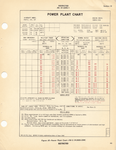
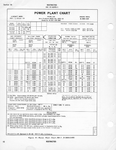
I've been trying to catch Steve Hinton for 2 - 3 weeks now on Saturday when he is there to ask to see his dash one pilot manual for the F8F, but he's been swamped with tasks. He did say the dash one may not tell the max climb since it is mostly operations. Has great charts for takeoff and typical mission profiles, but may not address WER climb (I asked him as he was leaving to test fly a freshly-restored Tigercat).
Hopefully the dash one DOES address WER climb and I can catch him soon.
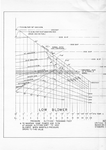
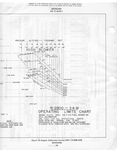
You hit the nail on the head ... there is precious little charted data available that is reliable. Sometimes all you have is one number (mostly without altitude or speed) and we all know the speed and climb rate changes with altitude. I've seen a so-called pilot's manual in pdf format, and it gives performance that seems quite low compared with what we see today. Then you read the small print and it says the data were all compiled with full fuel ,full ammo, one 150-gallon centerline drop tank, and bomb racks installed. Removing the tank added something like 13 mph and removing the racks added another 10 mph ... but they never mentioned the effect on climb, and the climb data was a single number. I did notice the climb data were all with tanks and rack and made at Normal Power (2,250 HP) but the engine is actually rated at a WER of 2,500 HP. Also, they didn't give the altitude where the climb rate was measured. Frustrating, to say the least. For instance, I have some data for most of the top Japanese types by altitude, so I can create speed and ROC charts. But the weight and power settings are not specified with the data ... so how good is it? If I did it and posted it, I'd just take flak for it and I simply don't have the other information.
Back to the F8F, I would think that 3,750 fpm climb when carrying full internal fuel, full armament, plus a 150-gallon centerline tanks and bomb racks at 58" MAP would turn into a much better climb rate when clean with partial fuel and using WER of 70" MAP. I know what I have heard from Bearcat pilots, but talk is cheap.
So, I'm trying to find something that is believable as a reference rather than personal experience (I catch a lot of flak in here for relating pilot experience) though I believe Steve as he doesn't inflate things ... he flies a LOT of different warbirds and has no axe to grind. In fact, he sometimes flies things he doesn't like to fly just for the people to see (doesn't think much of a few warbirds that shall remain nameless). Anyway, I'll keep checking and get back to the thread.
By way of example, he was quoted in a magazine as saying the F model P-38 was faster than the J model. I asked him about it one Saturday and he said that while he was quoted correctly, they didn't suppply the context. In reality, the F model is a bit cleaner and is faster at equivalent power and rpm. But the J model has more powerful engines and is a faster aircraft at full power. All he intended to say was that the F was faster when crusing with a J and if both were at the same manifold presure and rpm. Alternately, to fly formation, the J model uses slightly more power than an F model.
I have no dog in this hunt since I like all the great piston fighters ... as well as quite a few jets.
As a matter of curiosity only, I've seen numerous references on the web for the Hornet / Sea Hornet showing 4,000 fpm as the rate of climb, one showing 4,650 fpm, and now the reference from you at over 5,000 fpm. I wonder if the loadout is known for your chart? I'd believe the high climb rate at very light weight (say, 1/3 fuel, no ammo, no survivial gear, pilot and chute in shorts), but not at full capacity ... that is, full internal fuel, full ammunition, full consumables, survival gear, and pilot with gun and parachute and maybe winter clothes.
Much the same can be said for the F8F. You CAN load it down and still get good performance, but you can also lighten it up and get sparkling performance. So, the numbers are pretty useless without other information to go along with them ... for ANY aircraft and many times the other numbers and conditions aren't noted on the charts or in the manuals.
Anyway, nice charts, Neil. Did you use Excel? Maybe add some gridlines?