German logistics, purchase programs and war booty, reality and alternatives 1935-43

Ad: This forum contains affiliate links to products on Amazon and eBay. More information in Terms and rules

Possible German use of the Czech fighters powered by the HS 12Y:
- the most promising was the B.135, with performance almost as good as the 109E, D.520 or the VG.33
- the next best was it's fixed U/C sibling, the B.35, was a good deal slower, but still probably useful if bombed up
- the biplane fighter, B-534, was probably useful as a light bomber or, indeed, a trainer. I'd use it as a parts donor for the production of the monoplanes - 500+ engines removed from it would've come in handy for the production of the B.135
 
marathag marathag might've find this interesting: Hitler himself requested the development of a heavy steam-powered coal-fired tractor for 'heavy and heaviest payloads' in November 1944, with two possible designs being mooted in December. The 1st design was supposed to have a 40 ton a winch and a small crane, 18 ton class with 300 HP engine, while the other one was to be a 20 km/h fully-tracked vehicle.

Too late, buster.

steam.png

(for some strange reason, the .jpg version does not attach)
 
marathag marathag might've find this interesting: Hitler himself requested the development of a heavy steam-powered coal-fired tractor for 'heavy and heaviest payloads' in November 1944, with two possible designs being mooted in December. The 1st design was supposed to have a 40 ton a winch and a small crane, 18 ton class with 300 HP engine, while the other one was to be a 20 km/h fully-tracked vehicle.

Too late, buster.

View attachment 858655

(for some strange reason, the .jpg version does not attach)

Is that a tractor as in agricultural machine, or some kind of prime mover for industrial or even military use? 18ton/300hp sounds very large, no huge, for an agricultural tractor in that time period?

In any case, yes, shows some remarkable detachment from reality for the leader of the country to concern himself with such matters in late 1944. In 1934 maybe it could have made a difference?
 
Is that a tractor as in agricultural machine, or some kind of prime mover for industrial or even military use? 18ton/300hp sounds very large, no huge, for an agricultural tractor in that time period?
Military tractor, like the halftracks they used (or a fully tracked vehicle in the other example).

In any case, yes, shows some remarkable detachment from reality for the leader of the country to concern himself with such matters in late 1944. In 1934 maybe it could have made a difference?

Idea was indeed too late by many years.
 
The Soviet Winter Offensive(s) of 1941-1942 would've thus found the Germans ~20% better equipped, and German production output would've reached its 1943 levels (i.e. doubled) in mid-1942 amid the onset of Fall Blau. It is extremely likely this is enough to knock the Soviets out and thus set the conditions for the Germans to force an armistice on the Western Allies as access to Soviet resources and Speer gaining total control over the German economy in ATL 1943 would result in output too high to be sufficiently overcome in a defensive struggle by the Anglo-American bloc.

Coming back to this because I found a graph that really illustrates the point well:

rtillery-shells-in-artillery-wars-v0-y1oo7ao2q2j91.jpg


Basic idea is that by the Summer of '42, the Germans have similar fire rates as 1943 thanks to the earlier production increases that begin to make themselves first felt in the Winter of 1941-1942.
 
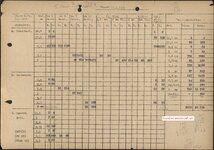
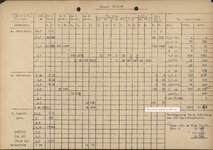
The time frame when the Luftwaffe lost their French 75s that were repurposed into the Flak seems to be between the mid-April and mid-May of 1942:

flaks.jpg

flak2.jpg

The French 75 is denoted as the 'FK 97' in the tables. The Flak 14 is the ww1 relic, while the M27(B) is the war booty gun from Belgium. 'Sperrf. batt' - short for the 'barrage fire batteries'. 'Beutebatt.' is short for 'captured batteries' of AA guns that have some sort of modern fire control system.

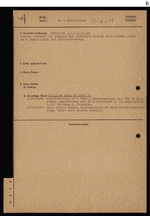
The FK 97 is no longer present in the table from May. Comment in the lower right box of that table says, roughly, 'Decrease of number due the dissolution of 290 barrage fire batteries' - 287 of them were outfitted with the French 75 in mid-April.

Heer received 1000 of Pak 97/38 in May of 1942, and another 1000 in July. They received a lot more later.
 
Had the Italians remained neutral, what kit would the Germans be most interested in buying from Italy? If available in greater numbers from a neutral Italy, the all-wheel drive SPA TL37 and SPA AS.37, the 6-ton FIAT 666N and Lancia 3Ro, and the SM.82 transport aircraft would be useful for sustaining Barbarossa.

Italians certainly got the memo that big wheels are useful for terrain or really bad roads. In addition to the above, SPA-Viberti AS.42 - Wikipedia is one of my favorites, just based on looks.
 
Italians certainly got the memo that big wheels are useful for terrain or really bad roads. In addition to the above, SPA-Viberti AS.42 - Wikipedia is one of my favorites, just based on looks.
On another forum, a fellow member pointed out to the DAF 4x6 truck, that was being produced from the mid-30s. Should've been a far better thing off-road than the different German trucks. It should not be hard to turn it into a halftrack if required.
The Italian military trucks also look as the much more rugged machines than what the Germans were making; granted, the Italian ability to make many of them was not there.
 
It would have been interesting if Re.2000 flown by the RAF engaged the same flown by the Luftwaffe.

View attachment 863338
Not only in AI though. In 1941 RAF and Iraqi Gloster Gladiators clashed, as did RAF Hawker Audax and Iraqi Audax. Mind you the RAF was using Fairey Gordon's, Airspeed Oxfords and Vickers Valentias there too as bombers. The Gladiators, were reinforced with more Gladiators. The Audaxes carrying up to 500lb* of bombs as dive bombers. They seem to have those then been offered to the RAF in Malaya once peace was signed off in Syria as Middle East Command had no further use for them after they went on to be used in the war against the French in Syria. They appear to have acquitted themselves adequately under the circumstances against also Luftwaffe Heinkel He IIIs and Messerschmitt Me110s and Italian Fiat CR42s and Savoia SM79s as well as Iraqi Gladiators over Iraq and French Dewoitine D520s over Syria.
*locally created bomb racks.
 
Germans captured a lot of 12 cyl engines in Poland, Czechoslovakia and in France. Some of them were behind the curve, like the Lorainne W12 engines, or the H engines 'lower' on the scale than the 12Y, but there were also a few thousands of the HS 12Y engines. Refitting a decent supercharger on the 12Y engines nets them the altitude power similar to the -45 or the M-103 (the HS supercharger was without the curved diffuser 'blades', that robbed a lot of altitude power).
The engines that are not suitable for aircraft can be turned into the tanks' engines.
 
On another forum, a fellow member pointed out to the DAF 4x6 truck, that was being produced from the mid-30s. Should've been a far better thing off-road than the different German trucks. It should not be hard to turn it into a halftrack if required.
The Italian military trucks also look as the much more rugged machines than what the Germans were making; granted, the Italian ability to make many of them was not there.
960px-DAF-M39.jpg


Shows rear suspension rather well. What it does not show is that the left and right sides could operate independently. That is the right rear wheel could be the high wheel on the right side while the left rear wheel could be the low wheel as in the picture.
About 12-15 were built and they were developing a 6X6 version. What is hard to find out is the transmission information (number of gears and/or hi-low range) but the engine seems to be a Ford/Mercury flat head V-8.
I have no idea of the production capacity of the DAF factory of the time.
This walking beam rear end seems to go in and out of fashion several times through history. Brazilians were pushing hard in the 70s and 80s, maybe later?
3c145189b1e6bef130ec27e8425e0e3fdc9bf623.jpg
 
That is very interesting. I wonder what was the source for the data, as well as whether the mortar shells are accounted there, too. Both Germans and Soviets grew to love mortars even before the war, and the 'love' just increased during the war.
Mortars could use cheaper steel (or even cast iron) for shells than normal rifled artillery. Also needed less machining on the outside of the shells. Combined with the smooth bore tubes and low pressure (thinner barrel walls) they were a very cost-effective way of throwing HE/smoke around. Limitations were range and accuracy against point targets.
 
Mortars could use cheaper steel (or even cast iron) for shells than normal rifled artillery. Also needed less machining on the outside of the shells. Combined with the smooth bore tubes and low pressure (thinner barrel walls) they were a very cost-effective way of throwing HE/smoke around. Limitations were range and accuracy against point targets.
No quarrels about that, just that some important details about the graph are missing, as I've already commented.
 
Germans had some problems adapting WW I solutions (steam) to WW II as far as mobility goes.
Once WW I bogged down steam tractors (wheeled or tracked) did a lot of good work hauling guns and ammo from the rail-lines/sidings to the battlefields. But the distances were not long ( a few dozen kilometers?) and speed only needed to be at a walking pace. British 1920/30 steam wagons running on good roads were good for about 60-70km range when not towing a trailer. Max speed 20pmh by law. Gear box was only shifted while stopped. If low gear was needed the wagon was stopped, low gear selected and the throttle opened. Steam engines make maximum torque at stall. But steam consumption was much higher in low gear than high gear.
By the late 1930s with mobility becoming very important to armies the low speed/short range steam wagons/trucks were much less attractive to the army, despite the ability to pull heavy loads at walking (or even a fast walk/jog) pace. A 400km advance using steam powered trucks? On unpaved roads?
Steam trucks could have been used for commerce/war production in factory areas. But such areas would have been well served by trains most of the time.
Steam tractors might have been useful for agricultural work. But this might not suit German style farming. Steam tractors need large farms or collectives (communist?) to pay for the tractors.
I am not sure how small a steam farm tractor can be made. A small 3-6hp machine that can be fuel by wood or coal might have replaced 2 or more horses and done a number of things on a farm, like powering different attachments like threshers or wood saws that would also allow for higher productivity.
The US used a lot of 1 1/2-6 hp stationary engines to power equipment on farms. Most farms, if they were lucky, had one engine that could be hooked up a using long flat belt to whatever device needed powering at the time. Most ran on gasoline (40-55 octane?) but some started on gasoline and then switched to kerosene or diesel.
But changing over the ways of doing farming was going to take well over a single decade. It is not a thing to done in 4-6 years.
 
No quarrels about that, just that some important details about the graph are missing, as I've already commented.
Yes.
Like a 105mm shell weights roughly twice what a 75/76mm shell does so counting shells gives you one direction on the graph but counting weight goes in the other direction.
Granted 75/76mm guns tended to fire more shells so it kind of averages out.
I do wonder if the German consumption includes AA fire.
 
By the late 1930s with mobility becoming very important to armies the low speed/short range steam wagons/trucks were much less attractive to the army, despite the ability to pull heavy loads at walking (or even a fast walk/jog) pace. A 400km advance using steam powered trucks? On unpaved roads?
A far better proposition that hauling stuff with horse-drawn carts, or wait if and when the next supply of gasoline or diesel will arrive, so the trucks can start moving again. Note that price of fuel for steam machines ranged between 'low' and 'free'.

Steam trucks could have been used for commerce/war production in factory areas. But such areas would have been well served by trains most of the time.

It depends. Every economy of the time used the trucks, even in the UK.

Steam tractors might have been useful for agricultural work. But this might not suit German style farming. Steam tractors need large farms or collectives (communist?) to pay for the tractors.
I am not sure how small a steam farm tractor can be made. A small 3-6hp machine that can be fuel by wood or coal might have replaced 2 or more horses and done a number of things on a farm, like powering different attachments like threshers or wood saws that would also allow for higher productivity.
Machines don't just replace beasts of burden, but also the men in their best years. Germany was lacking the men for their military and industry. Animals also demand that part of land is used to grow the food for them, no such problems with machines.
As for how the steam tractors can be used in agriculture - a choice between a) producing more food and b) being stingy with the borders of the plots is an easy one in an non-democratic society. And there is no onption a) in the occupied lands.

But changing over the ways of doing farming was going to take well over a single decade. It is not a thing to done in 4-6 years.

Insisting on just the best stuff - gasoline and diesel power - was a bad move for Germany of the 1930s. They were no USA, not even USSR wrt. the fuel availability. Steam, started by mid 1930s, is a one way to alleviate the fuel problems.

But were in the same bind as with the long-range Spitfire debate - if it is not as perfect as the another thing (ie. Merlin Mustang), we should not bother with making it as good as possible. A stance that it is long past it's sell date.
 

Users who are viewing this thread

Back