One of the problems of the early supersonic jets was the same problem the short wing B-26 had, improper training for higher performance, higher wing loading, faster landing aircraft. In the early supersonic jets, it was the wing design for supersonic flight, the earlier the planes the more problems. The supersonic wing has more in common with double edge sword than with sub supersonic classic airfoil design.
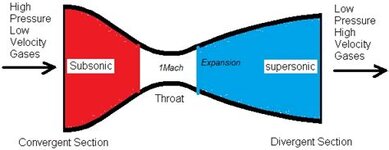
I'm going into a bit of advanced aerodynamics here but not much, since I'll bog myself down, its been a long time. Supersonic airflow does not behave like subsonic airflow. Bernoulli's principle does not apply. Venturi effect, pushing air through a venturi, a convergent aperture, accelerates velocity and reduces static pressure, does not apply, in fact it is reversed. This is apparent in the design of a modern rocket engine, at the combustion point, pressure is high, velocity is low. The gasses (subsonic) is pushed into a convergent nozzle, and, using the venturi effect, this will cause the velocity to increase and the pressure to decrease, until local Mach 1 is obtained. Then the process is reversed and as the now mach plus flow continues down the divergent nozzle velocity continues to increase and pressure decreases. See picture from
http://sahil34935.blogspot.com/2013/03/nozzles.html. Note here, Mach is a function of temperature, and since at the Mach 1 point of the rocket engine the temperature is still very high, so is the velocity of Mach 1.
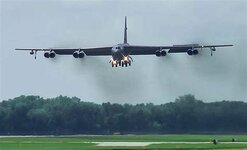
Now, let's get back to the supersonic wing design. The standard airfoil does not work for supersonic flight since the air going over the top of the wing accelerates more than the air under the wing and is more likely to get to Mach 1, and this causes all kinds of trouble. At zero angle of attack, the typical subsonic airfoil will usually still generate lift, sometimes even at a negative angle of attack it will, like a B-52 landing (see pix from wikipedia). The supersonic wing will typically generate no or minor lift at zero angle of attack. Because it is inefficient at low speed, Drag is high. This causes a danger when you are low and slow. A pilot can get to a point, usually during landing, of getting "behind the power curve". This is a point where your power available does not overcome the increased drag being experienced. This is more critical in the poor slow speed performance of the supersonic wing.
Now, back to the early supersonic jets. New pilots coming out of pilot training going into the F-100, learned to fly on a T-33 with its subsonic wing which probably flew final at about 140 mph, and stepped into the F-100 which flew final at about 173 mph. The old head stick, coming from the subsonic F-86F, which flew final at about 135 mph. Can you imagine Foreign pilots coming out of the F-84Fs, flying approach at 165 mph, stepping into the F-104 cockpit and flying final at 234 mph! Much faster speeds, more trickier wing, a good recipe of some problems.
I kinda guesstimated all the airspeed numbers, but I think you get the point.