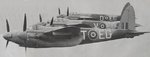
Is Spitfire really the BEST British fighter???

IIRC "Eric Charlie Brown" was his full name ! :?

Anyway, the 109 wouldnt get into any uncontrollable spins, and the slats among other things would see to that.

The 109 was a handful to fly at high speeds, as its controls were heavy, but still reacted very well though. The Stick pressure needed for aileron deflection at high speeds was less than that of the Spit !
 
No, you gave me lots of accounts where German pilots claimed the slats helped in turning, but none indicated at high or even medium speeds.

Indicated ??!!!

RG one of the purposes of automatic slats on fighters is to improve turn performance ! Go ask any F4 Phantom or F-86 Sabre pilot about this !

Don't you rememeber the chart i presented ??! The AoA just had to be sufficient, and the slats would pop out, high speed or low speed.

The purpose of the modern day forward shooting slats on "Airliners" is to increase lift at low speeds accuring at landing or take off.
 
I totally disagree that the Bf-109 had miraculous advantage because of the slats, Soren....
That particular quote I made was from George 'Grumpy' Unwin, then flying Mk.IA's with the Duxford Wing during the BoB.....He went on to say, ''The Spitfire would give a shudder to signal that it was close to the edge, so as soon as you felt the shake you eased off the stick pressure...'' - I have to agree with the others, in that in all of my reading, the Messerschmitt's slats weren't all they were cracked up to be, many pilots found them more of an irritating inconveniance than really useful...but again, there were those that could work very well with them.

I have to add that New Zealanders had quite alot to do with Spitfires, our RAF 485 [NZ] Sqn. flew them from April 1941 until August 1945, and two of our chaps had the distinction of test-flying in the prototype Spitfire K5054; Arthur Clouston [later Air Cmdr.], and Henry Ramsbottom-Isherwood [later Wg. Cmdr.]....Clouston was involved in work with RAE as a test-pilot and in 1935 did spinning tests that were used in the Spitfire prototype's development, [designer Reg Mitchell wrote about it with praise], and again later in camoflage trials. - Isherwood [as he was called], was a test-pilot at A AEE and was involved with K5054's gun-heating trials in Oct. 1937, he was well known for his leadership of No. 151 Hurricane Wing that went to Russia in 1941.
There were 200 NZ pilots who were in 485 [NZ] Sqn. during the War, about 20% of all NZ pilots flying Spitfires for the RAF in other Squadrons, so if you have any continuing doubts about the Spitfire's abilities in battles with the Luftwaffe, there's at least a dozen books of 'Our Chap's Battle Histories' you can read, then after that, you can start on the Aussies, Canadians, S. Africans and the English pilots themselves, many books in fact, that you can read, that should adequately convince you, that the RAF beat a numerically superior Luftwaffe with Spitfires and Hurricanes in the BoB, and continued to push them until D-Day, and on into Germany until the Allies won.....

The Spitfire [like the Mosquito], was a very unique and capable aircraft...

In saying that, both the Luftwaffe's fighters were very good too, and that's what makes all this so bloody fascinating....
- I think Soren, alot of who won what, was really also about the individual pilot's skill too.....
 

Attachments

  • raf_487__nz__sqn._-_on_the_hunt..._131.jpg
    raf_487__nz__sqn._-_on_the_hunt..._131.jpg
    16 KB · Views: 831
This is what G Rall had to say about the slats.

"Q: Did you use this extra lift from the slats in combat?

A: Not at all. I mean, its also a matter of experience of the pilot, you know? When I think of the Russian... This is another thing, of the Russian airfields. In the wintertime you had mud and fall. MUD. And we had problems. When you takeoff, you roll and roll, you know? You get the mud into the cooler, ja? And we tried to overcome this by all technical gimmicks which didn't work."

on the 109F
"Lovely, - highly maneuverable. Absolutely the best model. The 109G was overloaded"
On the slats (once again) he said that they were necessary for the landing in particular, otherwise the landing speed would have been too high. However he did not prefer them in combat, for they would be snapping and throwing the plane around. Being asked, he said that in a rough turn, the outboard slat would jump out and completely snap the aircraft (say left to right).
Asked whether he knew any that had the slats fixed, his answer was a NO."
 
Erwin Leykauf, German fighter pilot, 33 victories:

"The Bf 109s also had leading edge slats. When the 109 was flown, advertently or inadvertently, too slow, the slats shot forward out of the wing, sometimes with a loud bang which could be heard above the noise of the engine. Many times the slats coming out frightenened young pilots when they flew the Bf 109 for the first time in combat. One often flew near the stalling speed in combat, not only when flying straight and level but especially when turning and climbing. Sometimes the slats would suddenly fly out with a bang as if one had been hit, especially when one had throttled back to bank steeply. Indeed many fresh young pilots thought they were pulling very tight turns even when the slats were still closed against the wing. For us, the more experienced pilots, real manoeuvring only started when the slats were out. For this reason it is possible to find pilots from that period (1940) who will tell you that the Spitfire turned better than the Bf 109. That is not true. I myself had many dogfights with Spitfires and I could always out-turn them.
One had to enter the turn correctly, then open up the engine. It was a matter of feel. When one noticed the speed becoming critical - the aircraft vibrated - one had to ease up a bit, then pull back again, so that in plan the best turn would have looked like an egg or a horizontal ellipse rather than a circle. In this way one could out-turn the Spitfire - and I shot down six of them doing it."


Franz Stigler, German fighter ace. 28 victories:

"- Did pilots like the slats on the wings of the 109?
Yes, pilots did like them, since it allowed them better positions in dogfights along with using the flaps. These slats would also deploy slightly when the a/c was reaching stall at higher altitudes showing the pilot how close they were to stalling.....this was also useful when you were drunk "


Walter Wolfrum, German fighter ace. 137 victories:

"Unexperienced pilots hesitated to turn tight, bacause the plane shook violently when the slats deployed. I realised, though, that because of the slats the plane's stalling characteristics were much better than in comparable Allied planes that I got to fly. Even though you may doubt it, I knew the Bf109 could manouver better in turnfight than LaGG, Yak or even Spitfire."

Adolf Galland German fighter ace. 104 victories:

"Novice pilots tended to be thinking they should back off their turn when they deployed, but really it was just a booster to turn-performance"


The reason for Günther Rall's statement about the slats, is due to his 109"E"'s slats once jamming, and ever since that experience he never tried to turn that hard in a 109 again ! (Also he flew many other aircraff than the 109, so his memory is sketchy !)

And we were young, untrained, unexperienced group (Said by Günther Rall) And as explained by Galland ("Novice pilots tended to be thinking they should back off their turn when they deployed, but really it was just a booster to turn-performance")

All the German pilots who said the Spit turned tighter are from the period (1940), you will find None from any period beyond this who says the same !

Also the claim that the Spit outturned the 109 simply runs from any aerodynamic and physic's rule available !

----------------------------------------

The 109 had a conventional wing and was equipped with automatic leading edge slats. These opened out at low speed or at high speed under G loads, and restored the airflow (=lift) which would have been long separated otherwise due to turbulance.

The Slats extend up the range of AoA where the airflow stays attached to the wing. Withouth slats the wing would stall at certain AoA, the airflow turning turbulent at the same moment with sudden enormous increase in drag. With slats the airflow stays non-turbulent for some extra amount of AoA, and there should not be any "stepped" increase in drag when the slats deploy, only at the point where even the slats cannot prevent the wing entering a stall.

Here's a chart showing the difference between a Wing fitted with slats and one without slats:
fig63.jpg
 
Soren said:
Erwin Leykauf, German fighter pilot, 33 victories:

"The Bf 109s also had leading edge slats. When the 109 was flown, advertently or inadvertently, too slow, the slats shot forward out of the wing, sometimes with a loud bang which could be heard above the noise of the engine. Many times the slats coming out frightenened young pilots when they flew the Bf 109 for the first time in combat. One often flew near the stalling speed in combat, not only when flying straight and level but especially when turning and climbing. Sometimes the slats would suddenly fly out with a bang as if one had been hit, especially when one had throttled back to bank steeply. Indeed many fresh young pilots thought they were pulling very tight turns even when the slats were still closed against the wing. For us, the more experienced pilots, real manoeuvring only started when the slats were out. For this reason it is possible to find pilots from that period (1940) who will tell you that the Spitfire turned better than the Bf 109. That is not true. I myself had many dogfights with Spitfires and I could always out-turn them.
One had to enter the turn correctly, then open up the engine. It was a matter of feel. When one noticed the speed becoming critical - the aircraft vibrated - one had to ease up a bit, then pull back again, so that in plan the best turn would have looked like an egg or a horizontal ellipse rather than a circle. In this way one could out-turn the Spitfire - and I shot down six of them doing it."


Franz Stigler, German fighter ace. 28 victories:

"- Did pilots like the slats on the wings of the 109?
Yes, pilots did like them, since it allowed them better positions in dogfights along with using the flaps. These slats would also deploy slightly when the a/c was reaching stall at higher altitudes showing the pilot how close they were to stalling.....this was also useful when you were drunk "


Walter Wolfrum, German fighter ace. 137 victories:

"Unexperienced pilots hesitated to turn tight, bacause the plane shook violently when the slats deployed. I realised, though, that because of the slats the plane's stalling characteristics were much better than in comparable Allied planes that I got to fly. Even though you may doubt it, I knew the Bf109 could manouver better in turnfight than LaGG, Yak or even Spitfire."

Every example which is specific indicates they deployed at low speed, near the stall.

As to your diagram, it relates to leading edge slats on large aircraft (Douglas 558-II) at low speeds. The relevant studies can be found on the nasa site you listed by searching on "slat". Furthermore, these slats were locked in the closed position at speed, and they were interconnected so that they would always deploy the same amount in all conditions. Rolling and yawing issues are also indicated as more pronounced when the slats are used than when they are not.

So your chart does not apply to high speeds, as in the tests, the slats were locked at such speeds.

=S=

Lunatic
 
RG_Lunatic said:
Soren said:
Erwin Leykauf, German fighter pilot, 33 victories:

"The Bf 109s also had leading edge slats. When the 109 was flown, advertently or inadvertently, too slow, the slats shot forward out of the wing, sometimes with a loud bang which could be heard above the noise of the engine. Many times the slats coming out frightenened young pilots when they flew the Bf 109 for the first time in combat. One often flew near the stalling speed in combat, not only when flying straight and level but especially when turning and climbing. Sometimes the slats would suddenly fly out with a bang as if one had been hit, especially when one had throttled back to bank steeply. Indeed many fresh young pilots thought they were pulling very tight turns even when the slats were still closed against the wing. For us, the more experienced pilots, real manoeuvring only started when the slats were out. For this reason it is possible to find pilots from that period (1940) who will tell you that the Spitfire turned better than the Bf 109. That is not true. I myself had many dogfights with Spitfires and I could always out-turn them.
One had to enter the turn correctly, then open up the engine. It was a matter of feel. When one noticed the speed becoming critical - the aircraft vibrated - one had to ease up a bit, then pull back again, so that in plan the best turn would have looked like an egg or a horizontal ellipse rather than a circle. In this way one could out-turn the Spitfire - and I shot down six of them doing it."


Franz Stigler, German fighter ace. 28 victories:

"- Did pilots like the slats on the wings of the 109?
Yes, pilots did like them, since it allowed them better positions in dogfights along with using the flaps. These slats would also deploy slightly when the a/c was reaching stall at higher altitudes showing the pilot how close they were to stalling.....this was also useful when you were drunk "

You forgot the indicated statements ! :wink: And with them, your small indications mean NOTHING !


Walter Wolfrum, German fighter ace. 137 victories:

"Unexperienced pilots hesitated to turn tight, bacause the plane shook violently when the slats deployed. I realised, though, that because of the slats the plane's stalling characteristics were much better than in comparable Allied planes that I got to fly. Even though you may doubt it, I knew the Bf109 could manouver better in turnfight than LaGG, Yak or even Spitfire."

Do you even know what STALL means ! You can also stall a wing at high speed RG ! :wink: The AoA just has to be efficient !

Every example which is specific indicates they deployed at low speed, near the stall.

Nope not a single one of them !


The slats worked at ALL speeds, and contributed to increase lift in combat-turns by a considerable margin !.

The slats opened out at low speed or at high speed under high G loads, and restored airflow which would have been long separated otherwise due to turbulance= Greater lift in turns. (See the AoA chart a presented)

The auto-deployment of the slats was subject to extensive testing prior to WW2, and was found to be beneficial in ALL situations. The American F-86 Sabre was equipped with similar passive leading-edge slats.

Also usually whoever claims that slats caused problems ignore that slats were only "problematic" prior to the E models. However 'Dust' caused some problems for the 109's slats in Africa though, but pilots soon learned to cover them up when their airplane was on the ground.


These are FACTS RG !!

 
See my edit to the post.

The chart you have given is irrelevant to high speed stalls - the flaps on the tested aircraft were always locked at even medium speeds.

At higher speeds you cannot achieve the necessary angle of attack to cause the slats to deploy anyway.

I'm still waiting for a single source, even one, that specifically says the slats were of use at high speeds. So far - nada.

And the slats on the F-86 were interlinked so that they would always deploy togehter and the same amount. And they were locked in the in position except when flying at very low speeds (takeoff and landing).
 
RG_Lunatic said:
The chart you have given is irrelevant to high speed stalls - the flaps on the tested aircraft were always locked at even medium speeds.

RG only "Airliners" or "BIG" airplanes have the slats locked at high speeds !!
 
Soren said:
RG_Lunatic said:
The chart you have given is irrelevant to high speed stalls - the flaps on the tested aircraft were always locked at even medium speeds.

RG only "Airliners" or "BIG" airplanes have the slats locked at high speeds !!

The F-86 slats were locked after takeoff, and unlocked before landing.
 
As to your diagram, it relates to leading edge slats on large aircraft (Douglas 558-II) at low speeds.

Nope it relates purely to the function of slats !

At higher speeds you cannot achieve the necessary angle of attack to cause the slats to deploy anyway.

Hahahaha !! Thats total BS ! :D (Lets see a source thats specifically says this ? :wink: )
I'm still waiting for a single source, even one, that specifically says the slats were of use at high speeds. So far - nada.

Its bloody well-known areodynamics RG !!!

And the slats on the F-86 were interlinked so that they would always deploy togehter and the same amount. And they were locked in the in position except when flying at very low speeds (takeoff and landing).

Go ask any F-86 Sabre and F4 Phantom pilots about that, and they will whole heartedly disagree. (But im warning you, I have a former F-86 Sabre pilot in my family !)
 
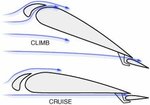
In normal straight flight the Slats are inside the wings, but as soon as the AoA is sufficient they pop out, nomatter the speed. (The previus illustration actually explained this aswell !)

Anyway here's ANOTHER illustration to make you understand this !:
 

Attachments

  • slats_work_601.jpg
    slats_work_601.jpg
    10 KB · Views: 767
Soren said:
Go ask any F-86 Sabre and F4 Phantom pilots about that, and they will whole heartedly disagree. (But im warning you, I have a former F-86 Sabre pilot in my family !)

My Dad flew the navy F-86 (the F-J), he was a flight instructor and combat evaluation officer before commanding a tacron. He also was one of the first team in Europe to train NATO on how to use A-2-A missiles. He said the slats were only useful for takeoff and landing and were not useful in combat manuvers and were normally locked after takeoff.

So go ahead and ask your family member - I'm sure he will tell you the same thing.
 
Soren said:
In normal straight flight the Slats are inside the wings, but as soon as the AoA is sufficient they pop out, nomatter the speed. (The previus illustration actually explained this aswell !)

Anyway here's ANOTHER illustration to make you understand this !:

But you cannot normally get that angle of attack at speed. If you do you enter an accerated stall, and then the slats won't deploy anyway and if they did they'd likely rip right off.
 
RG_Lunatic said:
But you cannot normally get that angle of attack at speed. If you do you enter an accerated stall, and then the slats won't deploy anyway and if they did they'd likely rip right off.

Absolute nonesense !

------------------------------------------

My uncle flew the F model of the Sabre, however he isnt really in near proximity. My father flew the F4 Phantom for some time, and he strongly states that it WAS the Slats wich made the F4 far more maneuverable.

Facts about the F4 and its slats:

The most significant change at 71-0237 was the replacement of the blown leading-edge wing droops of earlier Phantoms by slats. This was done in the interest of obtaining enhanced combat maneuverability, which had been one of the Phantom's weak points. The outer leading edge slats were were driven by a hydraulic jack and terminated in a large "dogtooth" at the inboard end where the wing folding joint had once been. Immediately downstream of the dogtooth edge was a small wing fence. The inboard wing was also fitted with powered slats which terminated about three feet from the root. The inner 3 feet of the leading edge were fixed.

The first production F-4E to be fitted with slats was 71-0237, but the first to actually fly with slats was 71-0238 which made its maiden flight on February 11, 1972. The addition of these slats greatly enhanced the maneuvering performance, and the USAF decided to retrofit earlier F-4Es with these slats. The USAF ordered the first slat modification kits in April of 1972, and the first retrofitted F-4E (serial number 69-7524) flew on September 28, 1972. 304 earlier production block F-4Es were retrofitted with these slats, which included just about every surviving F-4E except for those serving with the Thunderbirds.


Source: "McDonnell F-4 Phantom: Spirit in the Skies" by David Donald and Jon Lake.
 
More facts about slats on "Fighter's":

Slats are auxiliary airfoils fitted to the leading edge of the wing. At high angles of attack, they automatically move out ahead of the wing. The angle of attack of the slat being less than that of the mainplane, there is a smooth airflow over the slat which tends to smooth out the eddies forming over the wing. Slats are usually fitted to the leading edge near the wing tips to improve lateral control.
 
All things considered Soren, and I can acknowledge that the slats may well have been found useful by some Luftwaffe pilots...certainly not all, the Spitfire was still an aerodynamically superior aircraft, it just didn't need such things as it's performance and handling made it basically a delight to fly. In saying that, the latter models grew successively heavier in the interests of more power, and range, but then so did the Messerschmitts...If you're gonna compare them, wings to wings, the elliptical Spitfire wing will always be known as a very successful design, in all it's different armament arrangements and the 'fuel wing' as used by the PR Spits.....in fact, if you really want a good comparison of Spit vs 109 and 190's, Wg. Cmdr. Alfred Ball of No.4 PRU states, '' Until the end of 1942 we were still flying the old Mk.IV's with Merlin 45's. We could match the E's in speed and cope with the F's too, provided we saw them in time, for we could out-turn them, but could not afford to lose height as they could out-dive us. It was another story with the G's and 190's. They were both faster, but the 190's best height was around 24,000 ft. and provided we stayed around 30,000 ft. we had a chance at full throttle, it depended on an early sighting of them. The G had a better ceiling than the 190 but we could out-turn them both if we got our turn-time just right, but it was touch n' go until we received the Mk.XI in early '43. - For the remainder of the War, the Mk.XI with it's Merlin 60 series and, later, Mk.XIX with the Griffons, Spitfires were able to range freely over Germany, indeed, worldwide, with acceptable losses even against the 262 and 163 jets...But the contribution made by a relatively small number of PR Spitfires to the overall Allied victory was truly outstanding...''

I have a book written in 2000 called ''Spitfire - the NZ story'' about mostly 485 [NZ] Sqn., and the ORB of the Sqn. records all the combats that took place, and all the Luftwaffe's best aircraft still fell to earlier Mk.'s of Spit, and indeed we got knocked-off too, but what I'm trying to say is, despite the advent of later models and the 190's intro etc., all-in-all, it was a well contested battle between all these fine aircraft, but it was also a battle of tactics and strategy, and between the pilots with their respective training, which between Air Forces was quite different....And in some respects comparing Aces isn't really contributive, as the Air War from theatre to theatre was very different.......

Gemhorse
 
Soren said:
IIRC "Eric Charlie Brown" was his full name ! :?

Soren, the guy is under 40 years old. His parents were probably kids when Erich Brown was testing 109's during WWII!

THERE IS ABSOLUTELY NO WAY IT IS THE SAME GUY!

Next time the show comes around, you should watch it. RAF Lt. Charlie Brown flies one of the few operational 109's left in existance, as well as a variety of Spitfires. They are also restoring another 109 to flying condition.

=S=

Lunatic
 
RG_Lunatic said:
Soren, the guy is under 40 years old. His parents were probably kids when Erich Brown was testing 109's during WWII!

THERE IS ABSOLUTELY NO WAY IT IS THE SAME GUY!

Yes, i was mixing two persons. As far as i remembered "Charlie" was just the middle name, but I was wrong and I acknowledge that. I shouldnt have relied on my memory, I should have looked it up.

Next time the show comes around, you should watch it. RAF Lt. Charlie Brown flies one of the few operational 109's left in existance, as well as a variety of Spitfires. They are also restoring another 109 to flying condition.

I think I've seen it already, for some time ago.

I've also seen Mark Hanna fly several 109's. (However mostly old models)

IIRC Charlie only flew the G6, and never the F model or later G models. (He might have flown an early D model, but not sure)

--------------------------------------------

Gemhorse your reference makes it sound like the 109G was a better T&B fighter than the F model, wich makes it totally merit-less !

Also that Allied pilots claim they could turn inside a 109 easier than a 190, is totally ludacris ! EVERY German and even Russian test claims the 109 easely turns inside the 190, except at speeds in excess of 400mph !

Fact is the 109 and Spit turned very equally. 109 pilots say the 109 turned tighter, while Spit pilots say the spit turned tighter, aerodynamics say the 109 (Except G6) turned tighter or as tight as the Spit= They were VERY equal !

The 109 turned tightly because of its thick wings and leading edge automatic slats. While the Spit turned tight because of its large wing area.

Gemhorse said:
but what I'm trying to say is, despite the advent of later models and the 190's intro etc., all-in-all, it was a well contested battle between all these fine aircraft, but it was also a battle of tactics and strategy, and between the pilots with their respective training, which between Air Forces was quite different....And in some respects comparing Aces isn't really contributive, as the Air War from theatre to theatre was very different.......

Gemhorse

I agree Gemhorse.
 
I think a point was made earlier about the Spitfire giving you warning when it was going to stall. Due to the elliptical wing, when entering a stall, the wing stalled at the wingtip first, giving a "buzz" then mushy feeling of the controls. This is the ideal stall characteristics a designer is looking for. I'm guessing the 109 does not give this pronounced warning, with or without slats. Because of this, one may be given the illusion that they are achieving a tighter turn. :leftfighter3:

Flying an aircraft that gives little or no stall warning, especially in a steep turn makes one a little apprehensive!:hypnodisk:
 

Users who are viewing this thread

Back