Making the Uralbomber work

Ad: This forum contains affiliate links to products on Amazon and eBay. More information in Terms and rules

wiking85

Staff Sergeant
1,477
95
Jul 30, 2012
Chicagoland Area
It is hard to track down accurate specifications for the project, but it seems like an operating radius of 1500km with 2000kg of bombs.

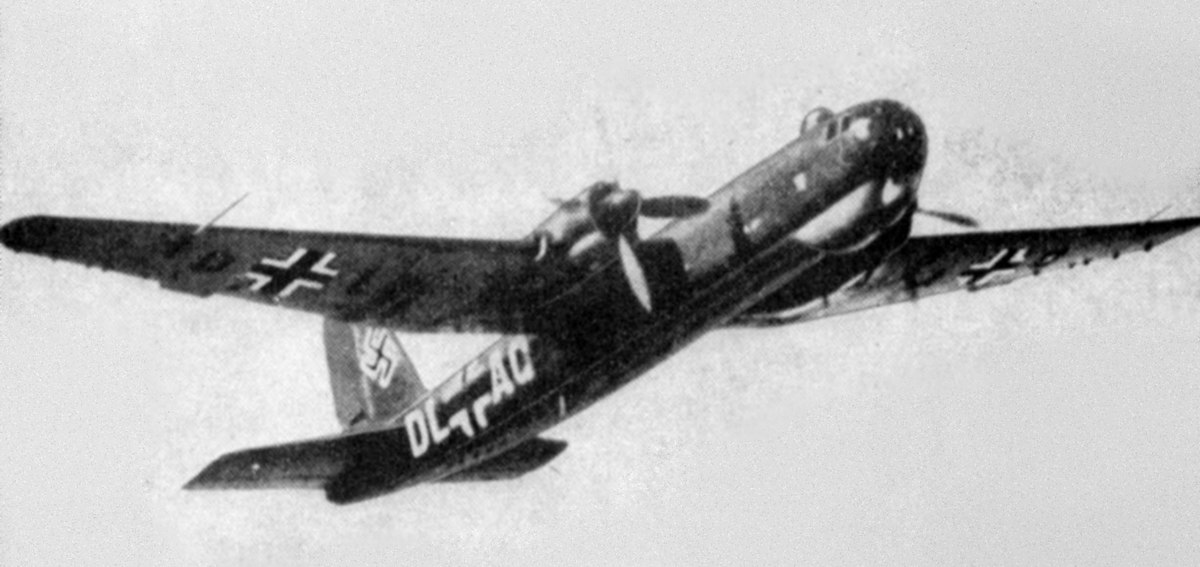
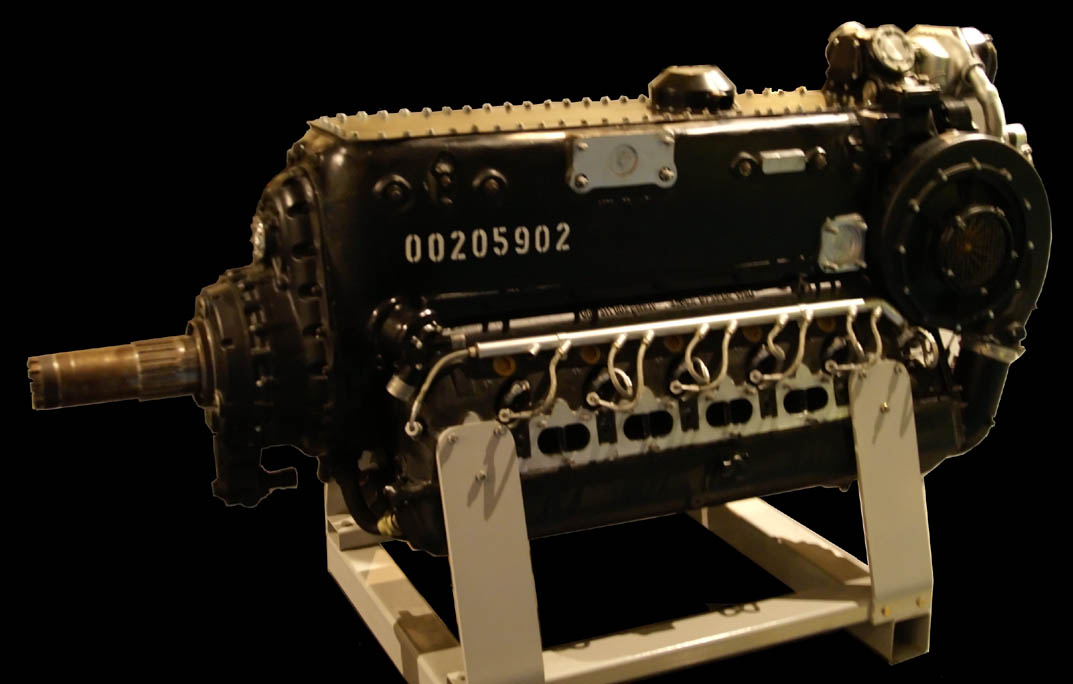
The historical designs were obviously not up to the mark, but could they have been? The Do 19 was clearly too flawed at the basic level, but the Ju89 was developed further eventually into the 290 and 390 versions after converting into a civilian airliner, the Ju90. An interesting discovery I recently made was about the Ju86, which was originally equipped with the Jumo 205 diesel aviation engine, which was found to not be able to handle the rapid throttle changes that came with combat in a medium bomber flying at lower altitudes in 1936 in Spain. It was initially selected because it was considerably more fuel efficient than the standard gasoline engines, up to 35% more efficient. This actually matches the fuel consumption differential between the Jumo 205 and the B17's engines, as the Jumo diesel consumed 1/3rd less fuel than the radial air-cooled B17 engines running on gasoline. The Jumo 205 was developed in a number of ways and ended up generating as much power or more in different configurations/designations. The equivalent Jumo 207 with turbosupercharger produced the same power as the American radial engines with much less refined fuel, though with slightly greater weight. Though diesels are much more fuel efficient they are heavier and lower power per KG. Still given higher altitudes and the lack of need for significant engine throttle changes diesel aero-engines are actually really good for long range purposes.

Then I remembered the application of 6 Jumo 207's historically:
Nearly twice as heavy as the Ju89 it had performance that more than matched the Ural bomber spec.

So what if the Junkers company disregarded the restrictions of the RLM and the RLM was more forward thinking and accepted what Junkers offer with a 6x Jumo 205 diesel fueled Ju89? The wing area could be cut down on with more power and given the Ju390 later on a 6x engine long range bomber was not a problem. We could even reference the B36, but a pusher configuration is beyond the scope of this what if. But with 6 such engines and 1/3rd lower fuel consumption per engine, the Ural bomber concept was viable for much greater than the specifications called for. The Urals could actually be reached and hit from East Prussia by 1941 with a developed Ju89 with Jumo 207 engines.
On the long transatlantic routes, the Jumo 205 Diesel engine was a very economic engine due to the low fuel consumption. On the other hand these long range routes with hours of cruise power were an optimum for the Diesel engines.
Given that heavy bombers are going to operate at higher altitudes and Soviet aircraft engines had serious problems with altitude due to lack of production turbo or higher altitude superchargers even in 1944, diesel aero-engines and more of them might have been the answer.

After all the 207 was used to power the Ju86P high altitude recon aircraft that were basically untouchable by Soviet fighters. Generating over 1000hp each, they could generate more than enough power to get a heavy bomber to the Urals and back with a significant payload. Or even just the Moscow-Upper Volga region with all the critical infrastructure that was to be targeted historically by Operation Eisenhammer.

That's also assuming the Jumo 208 is not started earlier to provide greater power for a 4 engine bomber: Junkers Jumo 208
Nearly 1500hp for takeoff, 1000hp at continuous use. Better than the B17 at 1/3rd less fuel cost.

Best yet, diesel fuel was abundant in Germany relative to any other type of fuel, since really on the navy used diesel engines. Avgas would be a major constraining factor for heavy bomber use, but diesel wouldn't be a problem.

Also before anyone complains about production costs, over 1,200 He177 heavy bombers were built during WW2 as well as several other 4 engine types like the Fw200 among others.
If there is a working long range bomber available for maritime aviation use too and uses naval fuel for use, then it has multiple roles beyond just bombing Russia. For higher altitude work the Germans could operate over Britain until September 1942, which was the first time a British fighter was able to intercept a high altitude Ju86P using the Jumo 207 engine.

What are the thoughts of the community?
 
TopSpeed-ETO1943.png

The figure above shows top speeds in the ETO in 1943. The Luftwaffe failed to deploy two-stage superchargers. In 1943, American strategic aircraft were turbocharged, with the compressors pumping air into the engine's superchargers, for two-stages. The B17s and B24 cruised over Germany at 25,000 to 28,000ft. The Germans could shoot down unescorted bombers. When the escorting P47s showed up, the Luftwaffe took a beating. Note how the P47 could equal the climb rate of a Bf109 at around 33,000ft. Most of this data is from WWII Aircraft Performance. Later on P51s showed up with two-stage supercharged Packard Merlins. Two-stage supercharged Mosquitos flew all over the German empire with impunity, taking photos, so the allies had excellent photographic intelligence. Also, much of of the German empire was occupied, and full of people eager to pass information on to the allies. German intelligence over the Soviet Union would have been nowhere as good.

The pre-war concept of bombers defending themselves turned out to be wrong. Long range bombing of the USSR would have consumed massive resources, and Luftwaffe aircrews, just like it did for the British and the Americans. In the actual war, the Russian did not push high-altitude performance, because they wanted to support the army on the ground. They were investigating high altitude. If they get bombed from medium (not high) altitudes, the Russians investigate harder, and move stuff into production. Maybe they learn to like the Spitfire_IXs they were supplied with!

I read something on a thousand bomber raid by the USAAF over Germany. That is 1,000 four engined bombers, escorted by 700 P51s. That is 10,700 aircrew in the air over Germany,, equivalent to an army division. Then there is all stuff on the ground back in Britain to support them. The resources need to support strategic bombing are massive. What do the Germans stop doing to free these resources?

Over Britain, the Spitfire_VIIs were supposed to stop high altitude incursions by the Luftwaffe. The VII was not all that much faster than the medium altitude VIIIs and IXs. Most of the accounts I have read about Ju86s involved souped up Spitfire_Vs and regular Spitfire_IXs.
 
There is problem with 2 stage superchargers and low octane fuel.
There are ways to minimize the problem but if you are trying to compress the air at 28,000ft to 1.4 Ata you are trying to compress it 4.3 times the air pressure at 28,000ft which means you are heating it up an awful lot.
A two stage compressor will heat it slightly less than a single stage compressor.
Using water injection can cool the intake air (at a cost of weight)
Using intercoolers can cool the intake air (at a cost in weight and drag and volume)
Good compressor design helps ;)

Allied use of high octane fuels meant they could use more compression of the air while only using 1 or 2 of these solutions and use their existing engines (Merlins, Allisons and several radials). Germans need to use more solutions at the same time. P-47 and F4U-1D and Some F6Fs wound up using both intercooler and water injection. Maybe they could have used bigger intercoolers instead but that might have required more redesign (bigger airframe?).

Getting the desired pressure from the compressor/s was not hard. Getting the engine to survive the heat problem with lower octane fuel was. P-63 didn't use an intercooler, it used high octane fuel and a crap load of water injection and still didn't work well much above 25,000ft.

Germans need to figure out how to put about 15 cubic ft 2nd stage and intercooler inside a Bf 109 ;)
or even more volume for a Fw 190D.
 
There is problem with 2 stage superchargers and low octane fuel.
There are ways to minimize the problem but if you are trying to compress the air at 28,000ft to 1.4 Ata you are trying to compress it 4.3 times the air pressure at 28,000ft which means you are heating it up an awful lot.
A two stage compressor will heat it slightly less than a single stage compressor.
Using water injection can cool the intake air (at a cost of weight)
Using intercoolers can cool the intake air (at a cost in weight and drag and volume)
Good compressor design helps ;)

Allied use of high octane fuels meant they could use more compression of the air while only using 1 or 2 of these solutions and use their existing engines (Merlins, Allisons and several radials). Germans need to use more solutions at the same time. P-47 and F4U-1D and Some F6Fs wound up using both intercooler and water injection. Maybe they could have used bigger intercoolers instead but that might have required more redesign (bigger airframe?).

Getting the desired pressure from the compressor/s was not hard. Getting the engine to survive the heat problem with lower octane fuel was. P-63 didn't use an intercooler, it used high octane fuel and a crap load of water injection and still didn't work well much above 25,000ft.

Germans need to figure out how to put about 15 cubic ft 2nd stage and intercooler inside a Bf 109 ;)
or even more volume for a Fw 190D.

Octane and two-stage supercharging are two separate issues.

Octane number allows higher boost pressures, which is helpful below the critical altitudes of the superchargers. Two stage superchargers will improve performance even with low octane fuel.

When you compress a gas, its temperature increases. This is basic physics. If you compress it a lot, the temperature increases more. What a two-stage supercharger does is compress the air more. You get higher temperature differences from the ambient air, especially at altitude, which enables intercoolers to work efficiently enough that they are worth installing.

Your actual problem is the temperature of the air in the cylinder as the piston approaches Top Dead Centre (TDC). Intercoolers and water methanol injection cool the air and allow higher boost pressures. High octane fuel allows higher temperatures in the cylinder.

Sanford Moss and Stanley Hooker absolutely helped the allies win the war. This is surprising given the sophistication of the Germans when it came to aerodynamics.
 
I just don't think the Germans had the resources and infrastructure to maintain a large strategic-bombing force. Okay, they built 1,200 He177s. Firstly, that was spread out over a couple of years, and they never had a bunch operating at one time. Secondly, the "resources and infrastructure" point is not so much about whether or not they could design or build such a plane, but about whether they could maintain its combat efficiency in the field.

When you're attacking an industrial base, you must do so continually and often to achieve effect. Supplying and maintaining such a force with replacement aircraft, replacement aircrew, ordnance, and fuel, not to mention groundcrew resources to keep operational rates high is not easy.

Operation Pointblank underlines both the pros and the cons. If you can pull it off, heavy bombers can certainly inflict severe economic damage, but look at the effort the Western Allies put in to Pointblank: thousands upon thousands of heavy bombers (each requiring a lot of sheet metal, four good engines, 6-10 crew, fuel for daaaaaays, over 100,000 men lost), and so on.

So if Germany goes whole-hog into Uralbomber, they're going to divert factory-floors, aluminum, fuel, and both air- and ground-crew from fighters defending the Reich or building FW-190s and so on. In fact, if they pursue this early, they may have troubles pivoting to confront Pointblank defensively? I don't know.

I don't think Germany had the economic and more importantly personnel strength to both build this strategic-bombing force, keep it supplied and in strength, and then fight air wars both in the Med and over the Reich.
 
Not sure why we're talking about octane considering the OP postulated diesel?

Sure, a diesel engine can also benefit from a good two-stage supercharger and intercooler, but not due to avoiding knock.

Anyway, a good long-range aircraft that could replace the FW200 and He177 as well as be used for long-range bombing could have been useful.

That being said, as others mentioned fundamentally Germany lacked the industrial muscle to produce the massive four-engined armadas the Western Allies employed. A small number of strategic bombers would be unlikely to cause the desired effect on enemy industrial production. Also looking at it from a strategic perspective, the German's chance of winning their war was by quick lightning strikes knocking their opponents out before they had time to kick their industrial war machines into gear. Getting drawn into a war of attrition was a losing recipe for Germany. And what is a large strategic bomber force, if not a tool for waging such an attritional war? So by diverting resources from things that would enable this quick lightning victory (trucks for Wehrmacht?), I suspect they would actually reduce their chance of winning the war.
 
Not sure why we're talking about octane considering the OP postulated diesel?

Sure, a diesel engine can also benefit from a good two-stage supercharger and intercooler, but not due to avoiding knock.

Anyway, a good long-range aircraft that could replace the FW200 and He177 as well as be used for long-range bombing could have been useful.
Two-stage superchargers were why the Americans were able to escort their bombers ultimately deep into enemy territory, making strategic bomber casualties acceptable. Given the same level of technology and production, interceptors will defeat the escorting fighters, and then massacre the bombers.

I am curious about the Jumo 207 engines. The Ju86s were effective when nobody else could fly up to 40,000ft. When Spitfires got up there, they stopped flying Ju86 missions. Any bomber you cannot escort had better be fast.
 
Also looking at it from a strategic perspective, the German's chance of winning their war was by quick lightning strikes knocking their opponents out before they had time to kick their industrial war machines into gear.

Perfect way to illuminate the crux of Germany's problem vis heavy bombing. It simply doesn't fit into their doctrine. Why build a screwdriver when what you need is a hammer?
 
Not sure why we're talking about octane considering the OP postulated diesel?

Sure, a diesel engine can also benefit from a good two-stage supercharger and intercooler, but not due to avoiding knock.
Diesels were rather popular in the 1930s and very early 40s because their good efficiency offered advantages for long range flight.
Heavy diesel engine and less total fuel could equal lighter engine but more fuel for the same length trip.
Unfortunately the gasoline engine guys were almost always one step ahead and/or kept moving the goal post/finish line.

Junkers comes up with 204 in 1932, when the gasoline engine guys were using 70-77 octane gasoline. Junkers works on the 205 while the gas guys develop 87 octane fuel which allows for more compression and more power/ fuel economy from the gas engines. By the late 30s the US was working on 90-92 octane gasoline and many countries were working on moderate supercharging which allowed cruising at 7-10,000ft for better speed and fuel economy without have the passengers wear oxygen masks. Boeing actually made a few pressurized transports going into service in the summer of 1940.
ng_307_Stratoliner_%28NC19902%29_%2816630490987%29.jpg

These could cruise at 20,000ft. The war ended that endeavor but the sister B-17s showed the advantages in range using high octane gas, 2 stage superchargers and flying in thin air at high altitudes.

You have got me wondering................What could Douglas have done by putting pressure cabin the the nose of a DC-3, fitting long wing tips on the wings and swiping a pair of engines with turbos from a B-17 (or B-24) to make a quicky high altitude recon plane?

Back the original subject. Every time the diesel boys got close (got the engines to run reliably without much babying for example) the Gas guys got higher octane gas and higher compression or lighter weight engines (power to weight ratio) and changed the total weight of engines+ fuel for a given length flight back away from the Diesel side.
The Jumo 207s seemed to be over 1700lbs for a 1000hp engine. Compared to gas engines that is around 4-500lbs too much unless you are trying to fly really far. Or you get 1300-1500hp engines and get a crap load of fuel off the ground in a larger plane.
 
That being said, as others mentioned fundamentally Germany lacked the industrial muscle to produce the massive four-engined armadas the Western Allies employed. A small number of strategic bombers would be unlikely to cause the desired effect on enemy industrial production. Also looking at it from a strategic perspective, the German's chance of winning their war was by quick lightning strikes knocking their opponents out before they had time to kick their industrial war machines into gear. Getting drawn into a war of attrition was a losing recipe for Germany. And what is a large strategic bomber force, if not a tool for waging such an attritional war? So by diverting resources from things that would enable this quick lightning victory (trucks for Wehrmacht?), I suspect they would actually reduce their chance of winning the war.
This I disagree with, the Soviets had massive factories that were highly concentrated and vulnerable. Giant armadas were not necessary, the US used a few hundred to wreck most of the Schweinfurt and Regensburg facilities in one raid. They failed in their goal because of existing German stockpiles of ball bearing and lack of follow up raids. Large factories made very juicy targets, the Germans just had few of those and the few they had were extremely well defended. Also they had very integrated and quality air defense that forced US bombers to operate above the rated altitude of their bombsights to stay reasonably safe from FLAK as well as pretty bad bombing practices like all dropping as soon as the master bombardier dropped his load. Accuracy suffered badly, so coupled with high attrition the Allies needed vast fleets of bombers. The Soviets lacked sufficient or integrated air defense, so neither threat is a problem for them. So long as they are not daylight bombing Moscow from low altitude they should be largely untouchable to Soviet air defenses, plus their targets are bigger than what the Allies were facing in Germany. Soviet centralization is very good for economies of scale in production, but very bad when facing bombing attacks.

The Soviets had lots of very large facilities that could be hit and disabled by relatively small numbers of bombers with big bombs. In fact, they did so in 1943 in Gorky, a couple of Russian historians have written about it and how the Soviets covered up how bad the damage really was:

With a couple of Geschwader with twin engine bombers the Germans pretty badly damaged Soviet tank production and the Soviets basically could do nothing to stop it. This was in summer 1943 before Kursk. The only problem for the Germans was their intelligence was limited, so they hit light tank production rather than T-34 production and then the fighting around Kursk sucked in German bomber resources. Having a dedicated strategic bomber that could hit the Ural factories in 1941 from say Smolensk or even Bryansk would be a huge problem for Tankograd with its extreme concentration of very large targets that were basically undefended from air attack. Other than Moscow and Leningrad, Soviet city air defense resources were pretty abysmal in 1941-43 and Luftwaffe bombers ranged all over the Volga in daylight attacking various industrial and oil resources without much issue. They just were rather gadfly about it and didn't concentrate resources to knock out certain areas due to the constant need for air support for ground forces. However, having dedicated bombers, which IOTL they did, but couldn't use them due to poor planning and technical problems which we are solving here due to having a functional heavy bomber design ready in 1940-41 solves this, as heavy bombers are bad at army support and are best in their intended roles.

Here the gadfly issue is less of a problem if they focus these heavies on one target and move on after each major raid. That disperses Soviet resources and creates a major problem of having to repair multiple major factories at once. Germany, for all of its major problems with resources, did not have to deal with the massive economy damage the Soviets did in 1941-42 that saw their economy reduced by nearly 45% (by November 1942). The massive dislocation and population loss behind Axis lines and due to army mobilization really reduced their ability to repair damage. They didn't have large pools of slave labor they could use like how Germany did to repair from Allied bombing raids, Soviet manpower was very zero sum by 1943. Even then a few hundred sorties by twin engine bombers at long range raiding Gorky in 1943 took them months to repair and some production was never restarted. I'd really recommend that book above, it really covers how much damage was done basically during night raids on factories east of Moscow and how little the Soviets could do to deal with it. Again, the only reason they stopped was Kursk.

So even with only say 200-300 operational and dedicated strategic bombers they could severely disrupt Soviet production from 1941-43. This of course is not talking about a potential FW200-like maritime role either.

Diesels were rather popular in the 1930s and very early 40s because their good efficiency offered advantages for long range flight.
Heavy diesel engine and less total fuel could equal lighter engine but more fuel for the same length trip.
Unfortunately the gasoline engine guys were almost always one step ahead and/or kept moving the goal post/finish line.

Junkers comes up with 204 in 1932, when the gasoline engine guys were using 70-77 octane gasoline. Junkers works on the 205 while the gas guys develop 87 octane fuel which allows for more compression and more power/ fuel economy from the gas engines. By the late 30s the US was working on 90-92 octane gasoline and many countries were working on moderate supercharging which allowed cruising at 7-10,000ft for better speed and fuel economy without have the passengers wear oxygen masks. Boeing actually made a few pressurized transports going into service in the summer of 1940.
View attachment 854724
These could cruise at 20,000ft. The war ended that endeavor but the sister B-17s showed the advantages in range using high octane gas, 2 stage superchargers and flying in thin air at high altitudes.

You have got me wondering................What could Douglas have done by putting pressure cabin the the nose of a DC-3, fitting long wing tips on the wings and swiping a pair of engines with turbos from a B-17 (or B-24) to make a quicky high altitude recon plane?

Back the original subject. Every time the diesel boys got close (got the engines to run reliably without much babying for example) the Gas guys got higher octane gas and higher compression or lighter weight engines (power to weight ratio) and changed the total weight of engines+ fuel for a given length flight back away from the Diesel side.
The Jumo 207s seemed to be over 1700lbs for a 1000hp engine. Compared to gas engines that is around 4-500lbs too much unless you are trying to fly really far. Or you get 1300-1500hp engines and get a crap load of fuel off the ground in a larger plane.
The 207 had a turbo-supercharger and 15000m altitude. The Jumo 208 was the more interesting variant.
1475hp
Only started in 1939 for the Ju90, but could have been started earlier. It fit in the centerline engine slot for the Ju52, though we don't have a verified weight for it.

The big issues of diesel vs. petrol for aero engines is that most military use required it to be used near the top operating speeds. They tried the Jumo 205 on the Ju86 to improve fuel economy, but due to the need to evade fighters they would run the engines at their top operating level and try to dramatically speed up for maneuvers even on twin engines. Diesels are not designed to operate like that, so the Luftwaffe switched to petrol engines to take advantage of being able to speed them up rapidly without causing damage from repeatedly doing so (or at least less so than diesels).

However, for strategic bombers that is simply not necessary, since they rely on bomber formations with heavy defensive armament and interlocking fields of fire to stay safe. In that case they can operate on economical continuous power so they can get the necessary range. You don't see B17s maneuvering like you do with twin engines when trying to evade enemy fighters. Speed and rapid changes of speed are simply outside the design profile of these long-range heavy bombers, which is ideal for diesel engines. So really in this case you just need an engineer willing to buck the Luftwaffe leadership's request for certain engines and leverage Junker's experience with inhouse diesel designs and of course Walter Wever not dying so early and being willing to let the Ju89 (and Jumo 205/7/8) develop its potential.
 
Last edited:
As an Amazon Associate we earn from qualifying purchases.
The Soviets lacked sufficient or integrated air defense, so neither threat is a problem for them.

I think it's safe to assume that had the Germans started investing into a serious strategic bombing capability, the Soviets would have responded by improving their own air defense. With the Soviets grinding down the Luftwaffe, I'm sure the Western Allies would be happy to help with material support.

So even with only say 200-300 operational and dedicated strategic bombers they could severely disrupt Soviet production from 1941-43. This of course is not talking about a potential FW200-like maritime role either.

For comparison, the UK Bomber Command was capable of launching main force raids with around a thousand aircraft. In order to be able to do this, during the war the UK produced around 16000 four engined bombers (Stirling, Halifax, Lancaster), to cover for losses, replacement with newer models, and some amount siphoned off to other roles like training, etc.

So if we assume the same 16:1 ratio for the Germans, throughout the war they'd then need to produce about 3200-4800 strategic bombers in order to sustain a main force of 200-300. With 6 engines per aircraft (per the original post in the thread), and assuming each engine on an aircraft needs about 1.5 engines for replacements, spare parts etc.(?), we end up with requiring on the order of 30000-45000 engines.

So the question then is, what do the Germans do less of in order to pull off an investment like this?

The big issues of diesel vs. petrol for aero engines is that most military use required it to be used near the top operating speeds. They tried the Jumo 205 on the Ju86 to improve fuel economy, but due to the need to evade fighters they would run the engines at their top operating level and try to dramatically speed up for maneuvers even on twin engines. Diesels are not designed to operate like that, so the Luftwaffe switched to petrol engines to take advantage of being able to speed them up rapidly without causing damage from repeatedly doing so (or at least less so than diesels).

However, for strategic bombers that is simply not necessary, since they rely on bomber formations with heavy defensive armament and interlocking fields of fire to stay safe. In that case they can operate on economical continuous power so they can get the necessary range. You don't see B17s maneuvering like you do with twin engines when trying to evade enemy fighters. Speed and rapid changes of speed are simply outside the design profile of these long-range heavy bombers, which is ideal for diesel engines. So really in this case you just need an engineer willing to buck the Luftwaffe leadership's request for certain engines and leverage Junker's experience with inhouse diesel designs and of course Walter Wever not dying so early and being willing to let the Ju89 (and Jumo 205/7/8) develop its potential.

History is full of diesel engines working perfectly fine with throttling up and down, and running at high power for a long time, so I'm not sure this is something inherent to diesels, but rather some deficiency of the Jumo aero diesels that could have been fixed with more development.
 
Having a dedicated strategic bomber that could hit the Ural factories in 1941 from say Smolensk or even Bryansk would be a huge problem for Tankograd with its extreme concentration of very large targets that were basically undefended from air attack.
Ok, it is about 1850km from Smolensk to Tankograd or well over twice the distance from Eastern England to Berlin.
It also about 1200km from the German border to Smolensk.

So for this plan to work the Germans have to............
1. Design a bomber (or start work) in 1939-40 on a bomber with a 3700km range.
2. Arrange for production of that bomber.
3. Come up with an army that can capture and hold Smolensk in 1942-43 (plan on it in 1940)
4. Arrange for the logistics to be in place in 1942-43. Like the railroads and rail cars needed to supply such a force, including aircrew and mechanics.
Local engine repair/overhaul (or at least such a shop in Poland or Lithuania).
How many tons of fuel per raid?
How many support personnel for every plane, 12-18,000 men for this bomber force?
5. Come up with a navigation system that will work at 2000 km. (beam systems used over England will not work)
6. Figure out how to stop the Soviets from intercepting the bombers on the way in or out.
at 400kph it is going to take over 4 1/2 hours in and 4 1/2 hours out the Germans are not going to be able to do much in the way of dog legs like the 8th Air Force did and there is no large body of water like the North Sea to offer any sort of refuge. Granted there is an awful lot of Russia without AA guns but that is not quite the same thing. Chinese actually did fairly well with telephones spotting Japanese raids (20-30 minute warning) because of slow bombers, large area/distances and limited targets. Russia is sort of the same. Soviets have over 6 hours to arrange for intercept on the way out?
 
Aircraft diesels have some real problems.
Land use or boats don't have quite the same problems. They are not trying to fly and weight while somewhat important, is not the same level of importance.
Engines in the Hindenburg were about 2000kg for around 1100hp (max, not cruise).
You can make diesels that can make high power for long periods of time and can be throttled up and down fairly quickly. The Problem is making them light enough to be used in aircraft. When you are using compression ratios of 14-18 to 1 you need very strong construction.
And for aircraft use you just can't add on a few pounds here and few pounds there to beef things up after the last test engine broke. You have to really see exactly what is needed.
Even 1930s gas airplane engines weighed less per horsepower than many racing car engines and were much more reliable. Aircraft diesels are in a world of their own when it came to materials and construction. Everything was constantly evolving and diesel theory could not quite match reality in this changing landscape as the gasoline engines were evolving at the same time.
 
I think it's safe to assume that had the Germans started investing into a serious strategic bombing capability, the Soviets would have responded by improving their own air defense. With the Soviets grinding down the Luftwaffe, I'm sure the Western Allies would be happy to help with material support.
Not sure why you think they weren't already pouring resources into that and failing badly:
Also, the Allies had zero interest in supporting the Soviets prior to the 1941 invasion and then they did supply them with AAA, radar, and aircraft. Philip O'Brien who wrote "How the War Was Won" specifically points out how Stalin was begging for aircraft and AAA since the moment L-L was granted. The Soviets got as much as good could transported, everyone understood the importance of airpower.

The problem for the Soviets is they had experienced insane damage by the end of 1941 and had way too much territory to defend. Remember they lost their entire pre-war army and air force in the initial invasion and were in many ways a glorified militia by the end of the year. Equipment and manpower losses were beyond insane, it is a miracle they survived IOTL. There wasn't more they really could do compared to OTL.

For comparison, the UK Bomber Command was capable of launching main force raids with around a thousand aircraft. In order to be able to do this, during the war the UK produced around 16000 four engined bombers (Stirling, Halifax, Lancaster), to cover for losses, replacement with newer models, and some amount siphoned off to other roles like training, etc.
When? In 1942 they had to mobilize everything they had, including their training force to be able to launch a single 1000 bomber raid. Later on they could do that more regularly, but only at immense cost and having only 50 divisions. In fact by 1944 they were disbanding divisions and even companies to keep up strength due to lack of manpower.
Also remember the British were trying to burn down entire cities, the Germans are just trying to hit factories. The US was able to do so with a few hundred bombers and able to badly damage multiple sites:
In Regensburg, all six main workshops of the Messerschmitt factory were destroyed or severely damaged, as were many supporting structures including the final assembly shop. In Schweinfurt, the destruction was less severe but still extensive. The two largest factories, Kugelfischer & Company and Vereinigte Kugellager Fabrik I, suffered 80 direct hits.[28] 35,000 m2​ (380,000 square feet) of buildings in the five factories were destroyed, and more than 100,000 m2​ (1,000,000 square feet) suffered fire damage.[29] All the factories except Kugelfischer had extensive fire damage to machinery when incendiaries ignited the machine oil used in the manufacturing process. Albert Speer reported an immediate 34 percent loss of production.

So if we assume the same 16:1 ratio for the Germans, throughout the war they'd then need to produce about 3200-4800 strategic bombers in order to sustain a main force of 200-300. With 6 engines per aircraft (per the original post in the thread), and assuming each engine on an aircraft needs about 1.5 engines for replacements, spare parts etc.(?), we end up with requiring on the order of 30000-45000 engines.
Why would we do that? The British and Germans are going after very different things. The USAAF 8th AF in 1943 is comparable to where the Germans would be at ITTL in 1941, but with a much weaker opponent.

History is full of diesel engines working perfectly fine with throttling up and down, and running at high power for a long time, so I'm not sure this is something inherent to diesels, but rather some deficiency of the Jumo aero diesels that could have been fixed with more development.
Remind me of an example from history showing that with aviation diesel?

Ok, it is about 1850km from Smolensk to Tankograd or well over twice the distance from Eastern England to Berlin.
It also about 1200km from the German border to Smolensk.

So for this plan to work the Germans have to............
1. Design a bomber (or start work) in 1939-40 on a bomber with a 3700km range.
2. Arrange for production of that bomber.
3. Come up with an army that can capture and hold Smolensk in 1942-43 (plan on it in 1940)
4. Arrange for the logistics to be in place in 1942-43. Like the railroads and rail cars needed to supply such a force, including aircrew and mechanics.
Local engine repair/overhaul (or at least such a shop in Poland or Lithuania).
How many tons of fuel per raid?
How many support personnel for every plane, 12-18,000 men for this bomber force?
5. Come up with a navigation system that will work at 2000 km. (beam systems used over England will not work)
Good points, but I'll respond in detail.
Why start work in 1939 when they were starting work on the Ju89 in 1936? By 1941 the bomber would exist and be in production. Roughly the same development cycle of the B17. Having a bomber with that range is doable within the OP with 6x 1000hp Jumo 207s. They give fuel economy about 1/3rd better than equivalent petrol engines.
Also from Kharkov it is about 3422km range. They'd only be able to take at most 2000kg of bombs, but even with 150 bombers that's 300 metric tons. The Messerschmitt factory in that damaging raid in 1943 cited above only took about 270 tons of bombs.

Quoted from above again:
In Regensburg, all six main workshops of the Messerschmitt factory were destroyed or severely damaged, as were many supporting structures including the final assembly shop.

Keep in mind the Germans were already making 4 engine aircraft and without needing to make the He177 or Fw200 they have production capacity. Again, remember they build 1200+ He177s IOTL and then Fw200s and several other large aircraft, including the Bv222.

IOTL they took Smolensk, Bryansk, and Kharkov in 1941 and held them well into 1943. All of these cities had large airfields. There is a Luftwaffe base pdf online you can find pretty easily that lists all 3 as having Class I (top level) airfields capable of handling all aircraft. The logistics in place in 1942 is really not that hard considering they were already operational air bases.

As to the manpower requirements again the Germans fielded 1200 He177s alone and the Luftwaffe was a force of over 1 million men that constantly shed personnel to act as ground forces from 1942 on, so they had plenty of manpower to handle this given the low numbers you cite.

I will grant you that navigation would be somewhat of an issue and that was in fact raised by the RAND corporation, but overall they cited German successes in bombing efforts of strategic and operational targets as well as Soviet failures to defend against them:
It's a quick read and well worth the time.

Of course, hitting the Urals might not even be necessary, given that Gorky and the Upper Volga production region was much closer and a heavy payload could be carried to hit those targets (4-5000kg of bombs at least per bomber given the HP and fuel economy available from 6x Jumo 207s). Bombing of those targets was started in November 1941:

Likely for most of 1941 the heavy bombers would be conducting interdiction attacks on Soviet rail centers until the war is clearly going long, then they would likely be used for industrial attacks, like the 1942 raids on Gorky while they figured out the navigation problems for attacks against the Urals. Of course hitting the concentrated major rail centers that linked the Urals to the west of the country could also bear fruit, that served the Allies very well in 1944-45 when destroying the German economy. It might even have an impact on Case Blau if they can really disrupt Soviet rail movement of reserves, including during run up to Stalingrad. Destroying their rail yards in August could create enough delays in moving in reserves to defend the city in time.

6. Figure out how to stop the Soviets from intercepting the bombers on the way in or out.
at 400kph it is going to take over 4 1/2 hours in and 4 1/2 hours out the Germans are not going to be able to do much in the way of dog legs like the 8th Air Force did and there is no large body of water like the North Sea to offer any sort of refuge. Granted there is an awful lot of Russia without AA guns but that is not quite the same thing. Chinese actually did fairly well with telephones spotting Japanese raids (20-30 minute warning) because of slow bombers, large area/distances and limited targets. Russia is sort of the same. Soviets have over 6 hours to arrange for intercept on the way out?
The Soviets basically did a piss-poor job of it. As noted in the Rand report the 700 sorties against Gorky in June of 1943 suffered lower than 1% loss rate. Even in 1944 strikes against major rail yards suffered negligible losses. The Soviets lacked a national integrated air defense system, it was all regionally based and most of their efforts were focused on major political areas like Moscow and Leningrad. Other than those 2 cities the Soviets had minor defenses covering everything else. Also, even in 1944 their fighters lacked the altitude to reach the few He177s raids that were launched:
On the Eastern Front, the most notable action by the He 177 was a mass raid of some 87 aircraft against railway targets in the Velikiye Luki area, about 450 km (280 mi) west of Moscow on 19 July 1944. The participating Staffeln flew in three large attack wedges of about thirty aircraft, each loaded with four 250 kg (551 lb) or two 500 kg (1,102 lb) bombs.[70] During this action, carried out in daylight at altitudes in excess of 6,000 m (19,690 ft), losses were relatively light. The Soviet Air Force, equipped mainly for low-level interception and ground-attack roles, could do little to hinder the high-flying bombers.[71][72]

Most of Russia is empty space, so most of the flight path won't be around any airbases or AAA. Really only over the target, which is too late to engage for the defenders by then. Also besides having altitude problems, the Soviets lacked much in the way of radar and their fighters had weak armament to confront even .50 caliber equipped heavy bombers. The Germans had a horrible time engaging B17s in 1942 due to light armament. Even 20mm guns were not really enough to tackle the heavies in bomber boxes. Not saying the Ju89 even developed by 1941 would have that level of heavy firepower, but it would have enough to tackle the weak armament of Soviet fighters assuming the Soviets could even reach them in time.

The MiG3 was the best fighter the PVO (Soviet air defense) had that had an engine capable of reaching the necessary bomber altitudes.
1x 13mm MG is not going to do more than scratch the paint of a heavy bomber. As I said the Germans had trouble with 20mm cannons vs. 4 engine bombers.
Also interesting:
Pilot Alexander E. Shvarev recalled: "The Mig was perfect at altitudes of 4,000 m and above. But at lower altitudes it was, as they say, 'a cow'. That was the first weakness. The second was its armament: weapons failure dogged this aircraft. The third weakness was its gunsights, which were inaccurate: that's why we closed in as much as we could and fired point blank".[18]
Having to get that close to a heavy bomber with its defensive guns was suicide.

Comparison, if we use the defensive armament of the He177 as a model:
  • Guns: ** One 7.92 mm (0.312 in) MG 81 machine gun in nose.
    • One 20 mm (0.8 in) MG 151 cannon in forward belly gondola, and one in tail.
    • Two 13 mm (0.5 in) MG 131 machine gun in FDL 131Z remotely operated forward dorsal turret, and one in rear belly gondola, one in manned HDL 131/1 aft dorsal turret
 
Last edited:
As an Amazon Associate we earn from qualifying purchases.
Now keep three hundred 6-engined bombers in operational service. Some math, pardon it all:

Assuming 6 crewmen per plane, that's 1800 aircrew -- who will of course suffer attrition not only from combat but operational losses. You'll need to replace them. The planes that they died in, ditto. There's also engines, which even eithout any losses must be swapped out. These replacement issues will each be ongoing affairs, meaning you need good pipelines for airframes, engines, and trained crew.

So now the question is, what do you not build in order to replace combat and operational losses for these heavy bombers? What airplanes don't fly because these 6-engined things are eating up factory floorspace and output?

None of this is addressing weather so far. I think we can all agree that the weather on the Eastern Front was hard on equipment even as it sat on the ground. That will keep sortie rates lower, and increase demand on maintenance.

Given all that, I think it's fair to say that a force of three hundred bombers might be able, optimally, to launch 200 sorties per day. If they could find and hit the target accurately, sure, bad day at the office for the machinists. But as we see in the current war, Russians are adept at adapting and evolving to meet exigencies which will require more German industrial thinking, design, production, and also training demands.

I can't say you're wrong, but I also can't say I see answers to these issues.
 
Now keep three hundred 6-engined bombers in operational service. Some math, pardon it all:

Assuming 6 crewmen per plane, that's 1800 aircrew -- who will of course suffer attrition not only from combat but operational losses. You'll need to replace them. The planes that they died in, ditto. There's also engines, which even eithout any losses must be swapped out. These replacement issues will each be ongoing affairs, meaning you need good pipelines for airframes, engines, and trained crew.

So now the question is, what do you not build in order to replace combat and operational losses for these heavy bombers? What airplanes don't fly because these 6-engined things are eating up factory floorspace and output?

None of this is addressing weather so far. I think we can all agree that the weather on the Eastern Front was hard on equipment even as it sat on the ground. That will keep sortie rates lower, and increase demand on maintenance.

Given all that, I think it's fair to say that a force of three hundred bombers might be able, optimally, to launch 200 sorties per day. If they could find and hit the target accurately, sure, bad day at the office for the machinists. But as we see in the current war, Russians are adept at adapting and evolving to meet exigencies which will require more German industrial thinking, design, production, and also training demands.

I can't say you're wrong, but I also can't say I see answers to these issues.
Again, ~1200 He177's built IOTL. Also the Jumo 205/7 was considerably easier to make/service than the later war engines, especially the DB610.
Number built1,169[2]
And the FW200:
Number built276[1]

More was done historically than what I'm suggesting, all I'm suggesting is a different, actually functional model is produced instead. And for context here is the historical size of the Luftwaffe:
SizeAircraft: 119,871[3]
(total production)
Personnel: 3,400,000
(total in service at any time for 1939–45)[4]

Germany:
5,638 aircraft[3][c]

This was not a small organization, the Luftwaffe got over 40% of the resources of the entire German military. 300 or even 500 operational heavy aircraft is not a strain on the Luftwaffe's resources. The entire reason they were unable to field a large number of strategic bombers was the lack of pre-war foundation laying for the aircraft and industry and they tried to do it on the fly when the war started earlier than planned. The Ural Bomber prototypes were flawed, but they had a lot of time to develop rather than having to start as a clean sheet design again by 1937.

The B17 started development earlier than the Ural Bomber, but it was quite similar in spec and style in the prototypes.

As to the weather, I already addressed that indirectly. The main airbases in Kharkov, Bryansk, and Smolensk were all Class A paved long runways with heated hangers that the Luftwaffe operated. That protects from the elements and things like that can be constructed at major existing airbases near major cities relatively easily.
An example:
Brjansk (RUSS) (a.k.a. Briansk, Bryansk) (53 16 N – 34 20 E) General: airfield (Fliegerhorst) in W Russia 200 km SE Smolensk and 3.6 km NNW of Bryansk city center. Rated for bombers and used by all types of aircraft while in Luftwaffe service. History: a prewar Soviet AF base. Dimensions: approx. 1120 x 1820 meters (1225 x 1990 yards). Surface and Runways: sparse grass covering on clay sub-soil. Paved (concrete) runway measuring approx. 1000 x 73 meters (1100 x 80 yards).
Also Kharkov:
Charkow (RUSS/UKR) (a.k.a. Kharkov, Kharkiv) General: principal city in E Ukraine. Total of 12 airfields identified: Charkow I, Charkow II, Charkow III, Charkow-Alexejewka (aka. KharkovAlekseyevka), Charkow-Besljudowka (a.k.a. Kharkov-Bezlyudovka), Charkow-Grobli I (a.k.a. Kharkov-Grobli I), Charkow-Grobli II (a.k.a. Kharkov-Grobli II), Charkow-Korotitsch (a.k.a. Kharkov-Korotich), Charkow/Nord (Kharkov/North), Charkow/Süd (Charkow-Osnowa), CharkowRogan (Kharkov-Rogan), Charkow-Sortikowka (Kharkov- and CharkowWoitschenko (Kharkov-Voichenko). By all accounts, the Lw. used 7 airfields around Kharkov and these are listed below. In May 42 and at the end of 1942 there were only three in permanent use (North, Rogan and Voichenko).

Charkow I (RUSS/UKR) (a.k.a. Kharkov, Kharkiv, Charkow/Nord, Kharkov/North, Charkow-Stadt?, Pomerki?) (ZNr. 10-0053) (c. 50 01 33 N – 36 16 07 E) General: the main airfield (Fliegerhorst) at Kharkov 1941-43 and located 5 km NE of Kharkov city center. Usually called Charkow/Nord 1941-42 and then Charkow I in 1943. Lw. use from c. 1 Nov 41 to Aug 43. History: no information found. Dimensions: 1920 x 820 meters (2100 x 895 yards). Surface and Runways: Grass surface. There was no runway on Oct/Nov 1941. A perimeter road encircled the airfield. Fuel and Ammunition: had a fuel dump with a storage capacity of 200,000 liters and a munitions dump with a capacity of 200 metric tons in Oct 41. Infrastructure: had 9 hangars but the Russians destroyed 7 of these when they evacuated the airfield in late Oct 41. Beginning in Dec 41, new infrastructure built and existing infrastructure enlarged to accommodate two Gruppen. Dispersal: had 14 blast bays for sheltering aircraft by 8 May 43. Defenses: airfield defensive perimeter with fortifications and pillboxes constructed Dec 42 – May 42.
Much more info is in the document. The Luftwaffe was only using crappy frontline grass fields for short ranged units.


Given all that, I think it's fair to say that a force of three hundred bombers might be able, optimally, to launch 200 sorties per day. If they could find and hit the target accurately, sure, bad day at the office for the machinists. But as we see in the current war, Russians are adept at adapting and evolving to meet exigencies which will require more German industrial thinking, design, production, and also training demands.
Honestly 200 sorties a day is generous. Downtime for heavy bombers doing longer range strikes was probably 2-3 per week per bomber depending on what servicing is needed. However, that should be plenty even if not going as far as the Urals. Gorky and Yaroslavl were major production areas that could be heavily worked over starting in 1942 if we assume the worst about getting these bombers into action and supply/intelligence/strategy issues. That's not counting the Soviet oil industry or Kazan with its aircraft engine factories. The Soviets could only adapt so much and as the repeated attacks on Gorky IOTL demonstrate was that they failed to deal wtih the strategic bombing threat. They had a number of constraints to deal with, especially power generation before 1944 due to the massive dislocation of industry. There were only so many places they could set up factories after evacuation and house workers (even then they did that badly and wastage rates were horrible) due to lack of power. Dispersing of factories really wasn't an option either given how they were at the edge of collapse by late 1942 economically speaking.
From Mark Harrison, historian of the Soviet economy:
This is from the conclusion section:
The failure of the Soviet economy to collapse in 1942 demands explanation. In that year the Soviet war effort rested on a knife-edge. A battle of motivations took place in which a hundred million people made individual choices based on the information and incentives available. The decisions that individuals made were aimed either at victory or at defeat. The battle of motivations took place in the context of a balance of resources between the two sides that was indecisive. Within this context policy interventions by Stalin, Hitler, and Roosevelt could make a difference. Thus, where the balance of overall resources was indecisive, "moral, political, technical, and organizational factors" decided the outcome.
If sustained attacks on Soviet industry were conducted that very well might have been enough to disrupt the Soviets to the point that they fail. The solution might be to evacuate more industry into the Urals and even if that is a solution the lack of sufficient energy and limited transportation to move things to the front could cause enough disruptions to cause them to fail. In 1941 most industry was evacuated from Moscow in case the city fell and due to aerial attack; as soon as it was safe they started bringing it back in 1942 because industry evacuated couldn't really be accommodated well elsewhere; Moscow that the existing house and energy as well as raw material in the oblast to sustain industry. All that means is adaptation to even worse circumstances might very well be enough to push them over the wrong knife's edge.
 
Again, ~1200 He177's built IOTL.

Again, not all at once. If you're operating 300 sorties per day you're going to need 500 or so aircraft in a rotating inventory. The othr elephant you're ignoring is this: the He-177 taxed the German air industry to the point that the plane was an operational failure. Now you want this same industry which could not debug a simpler airplane to build something more complex?

You're also ignoring the fact that you're also positing 33% more engines per plane. 300 Uralbombers is 1800 engines, which implies a rotating stock probably twice that, and with ongoing production. What production are you going to skip to get this Uralbomber in the air and in useful numbers?

I'm unconvinced.
 
The MiG3 was the best fighter the PVO (Soviet air defense) had that had an engine capable of reaching the necessary bomber altitudes.
This is a big misconception. The MiG-3 was originally designed as a high-speed front-line fighter, and the engine's altitude characteristics did not make it a high-altitude interceptor - the shortcomings of the oil system usually prevented combat pilots from climbing above 8,000 meters, and at high altitudes, the engine's responsiveness was low - the throttle could only be operated very, very smoothly. It was used in air defense rather forcedly, as it was even less suitable for frontline service.
In general, it was an extremely unsuccessful aircraft. Only by the end of the war Mikoyan and Gurevich were able to turn it into something resembling a high-altitude interceptor. But by that time, piston engines were already considered obsolete.
Before the MiG-15 appeared, the best interceptors in the Soviet air defense were the Spitfire and the Kingcobra.
 
In the 1930s, the USSR did not have such a developed industry beyond the Urals. It was planned to be built in the 1940s, but the evacuation significantly accelerated the process. Therefore, it is not entirely clear why the Germans needed the Uralbomber in the mid-1930s.
I guess that later on, with a bit more adequate strategic planning, which initially assessed the enemy's strength and capabilities more soberly and with higher industrial output BEFORE and DURING the attack on the USSR (which was quite possible), Germany wouldn't need the Ural Bomber at all. In my opinion, the Germans had a good chance of reaching the Arkhangelsk-Astrakhan line in 1941. I believe that the loss of Moscow (and I consider the fact that it was possible to retain it as a miracle) would result in a large-scale crisis for the entire Soviet defense. The Germans were just a little short of reserves. And then conventional bombers would be enough — a range of 1,000 km would be sufficient to bomb factories in Perm, Sverdlovsk, and Chelyabinsk, and possibly disrupt oil production in the Urals ("the second Baku"). Long-range targets in Siberia would no longer be a priority—without supplies from the Urals, they would hardly be able to function.
 
Again, not all at once. If you're operating 300 sorties per day you're going to need 500 or so aircraft in a rotating inventory. The othr elephant you're ignoring is this: the He-177 taxed the German air industry to the point that the plane was an operational failure. Now you want this same industry which could not debug a simpler airplane to build something more complex?

You're also ignoring the fact that you're also positing 33% more engines per plane. 300 Uralbombers is 1800 engines, which implies a rotating stock probably twice that, and with ongoing production. What production are you going to skip to get this Uralbomber in the air and in useful numbers?

I'm unconvinced.
The majority in 18 months from January 1942-June 1943 historically. That was only because the newer design took longer to get to the production stage, there is zero reason they couldn't have done that earlier, especially given how much they ended up wasting on the Ju288 project. Maybe in this scenario Junkers does the heavy bomber project and Heinkel creates a next generation twin engine bomber not based on the Jumo 222.

He177 construction did not tax German industry, the engine layout was screwed up by the Daimler/Benz and Udet technical departments. The He177 was more complex than the aircraft I'm talking about. After all the Ju290 (the Ju89/90 development) worked fine as did the 6 engine Ju390, as was the BV222 which used 6x Jumo 207s:
Two prototypes were created by attaching an extra pair of inner-wing segments to the wings of Ju 290 airframes and adding new sections to lengthen the fuselages....Its performance was satisfactory enough that the Air Ministry ordered six additional prototypes (Ju 390 V2 to V7) and 20 examples of the intended Ju 390A-1 production version.

The above makes it seem like they could have easily done that with the 4 engine Ju89 design and created a 6 engine.

Technically these were less complex as they were not designed to dive bomb nor did they had the welded together engines driving a giant propellor. In fact the Lancaster started similarly as a coupled engine, twin propellor Manchester:

Lancaster was simpler to develop and make.

As to the engines, you're worried about 3600 diesel Jumo 207s? They were easier and cheaper (considerably lighter and cheaper) to make than the DB601.
Number built19,000
Number built42,400

Quantity8758

Daimler Benz alone made about 80,000 aero engines and manufactured all the engines for the He177. If we delete even 6000 from their production output for these engines to make the Jumo 207s needed that would not be a huge problem.
Number built68,248

The point is that production capacity existed if there was a viable heavy bomber design ready in time to mass manufacture and pre-plan to put into production before the war started.


This is a big misconception. The MiG-3 was originally designed as a high-speed front-line fighter, and the engine's altitude characteristics did not make it a high-altitude interceptor - the shortcomings of the oil system usually prevented combat pilots from climbing above 8,000 meters, and at high altitudes, the engine's responsiveness was low - the throttle could only be operated very, very smoothly. It was used in air defense rather forcedly, as it was even less suitable for frontline service.
In general, it was an extremely unsuccessful aircraft. Only by the end of the war Mikoyan and Gurevich were able to turn it into something resembling a high-altitude interceptor. But by that time, piston engines were already considered obsolete.
Before the MiG-15 appeared, the best interceptors in the Soviet air defense were the Spitfire and the Kingcobra.
I am aware, but it was the only fighter that the Soviets had in 1941 with a supercharger that would allow them to operate at the height heavy bombers would operate at. Later on they had access to higher altitude British and American fighters, but that was later than the 1942-1943 period.

In the 1930s, the USSR did not have such a developed industry beyond the Urals. It was planned to be built in the 1940s, but the evacuation significantly accelerated the process. Therefore, it is not entirely clear why the Germans needed the Uralbomber in the mid-1930s.
I guess that later on, with a bit more adequate strategic planning, which initially assessed the enemy's strength and capabilities more soberly and with higher industrial output BEFORE and DURING the attack on the USSR (which was quite possible), Germany wouldn't need the Ural Bomber at all. In my opinion, the Germans had a good chance of reaching the Arkhangelsk-Astrakhan line in 1941. I believe that the loss of Moscow (and I consider the fact that it was possible to retain it as a miracle) would result in a large-scale crisis for the entire Soviet defense. The Germans were just a little short of reserves. And then conventional bombers would be enough — a range of 1,000 km would be sufficient to bomb factories in Perm, Sverdlovsk, and Chelyabinsk, and possibly disrupt oil production in the Urals ("the second Baku"). Long-range targets in Siberia would no longer be a priority—without supplies from the Urals, they would hardly be able to function.
About 1/3rd of Soviet industry was in the Urals as of 1940, the Germans helped until 1932 in building it up during the cooperation period between the Reichswehr/German industry and the USSR. Clearly the Luftwaffe planners decided in 1933 that needing to be able to bomb the Urals was going to be a factor down the road.

I disagree about the A-A line, logistically it was impossible. Now Moscow falling was and I agree that it's loss in 1941 is basically fatal for the USSR even if they hold the Donbas. In that case I agree, I'm just not seeing the POD for Hitler to be more realistic about Moscow ITTL even with a strategic bomber available.
 

Users who are viewing this thread

Back