Picture of the day. (6 Viewers)

Ad: This forum contains affiliate links to products on Amazon and eBay. More information in Terms and rules

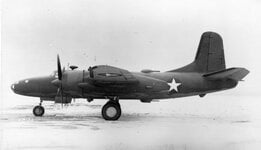
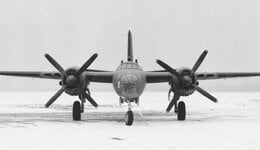
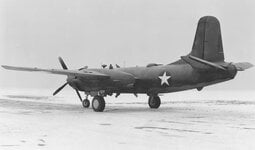
Ki-67 looks more like a North American XB-28.

Screenshot 2025-08-12 at 18-42-28 090625-F-1234K-007.JPG (JPEG Image 2710 × 2194 pixels) — Sca...png
 
Interesting thing about the Burma Banshee paint scheme. There was a Chinese unit equipped with P-40 that had the noses painted white. At a distance this gave them the effect of having stubby noses like Japanese fighters. So if those Chinese fighters did a mock attack on American aircraft there was trouble telling if it was really Japanese aircraft attacking. Finally the Americans told the Chinese that the next mock attack by those white nosed fighters would cause them to be shot down. I wonder if the Burma Banshees had any problem with being mistaken for Japanese fighters.
 
IMG_1441.jpeg
IJAAF ace Sgt Susumu Kajinami of the 68th Sentai poses with his camouflaged Kawasaki Ki-61 Hien (known as Tony by the allies) serial number 388, which was assigned to him at Kagamigahara in July 1943. He was one of the lucky ones who returned to Japan from New Guinea, surviving the war as a 24-victory (claimed real number around 8 or more) ace


During his service in New Guinea Sgt Kajinami claimed eight officially recognised aerial victories and another 16 unofficial probables or damaged for a total of 24, including six P-40s, five P-38s, a P-47, a F6F, a B-24, a B-25 and a C-47. In February 1944 he returned to Japan, where he was assigned to ferrying duties, attaining the rank of warrant officer and surviving the war to become a civilian flying instructor. Flying light aircraft well into the 1980s, Kajinami later confided to his wife that he thought the reason for his survival in New Guinea was down to three factors – firstly, the one-to-one fighter pilot training he had received at Akeno and from Akiro Okada, secondly, the robust and well protected Hien, and thirdly, the fact that he couldn't drink Sake (the Japanese rice wine)! Many of his contemporaries at Wewak drank heavily in the evening to alleviate their stress, and Kajinami believed it affected their performance. Rather than imbibing, he spent his time out of the cockpit carefully reviewing his combat performance and tactics, making notes and fixing in his mind the best manoeuvres and responses to enemy aircraft to improve his combat flying
 
View attachment 842350 IJAAF ace Sgt Susumu Kajinami of the 68th Sentai poses with his camouflaged Kawasaki Ki-61 Hien (known as Tony by the allies) serial number 388, which was assigned to him at Kagamigahara in July 1943. He was one of the lucky ones who returned to Japan from New Guinea, surviving the war as a 24-victory (claimed real number around 8 or more) ace


During his service in New Guinea Sgt Kajinami claimed eight officially recognised aerial victories and another 16 unofficial probables or damaged for a total of 24, including six P-40s, five P-38s, a P-47, a F6F, a B-24, a B-25 and a C-47. In February 1944 he returned to Japan, where he was assigned to ferrying duties, attaining the rank of warrant officer and surviving the war to become a civilian flying instructor. Flying light aircraft well into the 1980s, Kajinami later confided to his wife that he thought the reason for his survival in New Guinea was down to three factors – firstly, the one-to-one fighter pilot training he had received at Akeno and from Akiro Okada, secondly, the robust and well protected Hien, and thirdly, the fact that he couldn't drink Sake (the Japanese rice wine)! Many of his contemporaries at Wewak drank heavily in the evening to alleviate their stress, and Kajinami believed it affected their performance. Rather than imbibing, he spent his time out of the cockpit carefully reviewing his combat performance and tactics, making notes and fixing in his mind the best manoeuvres and responses to enemy aircraft to improve his combat flying
After the war in the 80s he flew light aircraft
he owned a FA-200 Aero Subaru and he had his kill marks from his time in New Guinea applied to his plane
l
 
In this colorized photo, 11-year-old cousins Wendy Atherton and Cathie Jones stand with Heinkel
He 111P-2 of 8./KG27 near their home at Border House Farm near Chester in Cheshire, August
14, 1940. The German plane had been targeting RAF Sealand along with two other planes and
was shot down (along with the other two planes) by Spitfires from RAF Hawarden after bombing
the airfield.

531941436_31451908824400196_2585095132883872763_n.jpg
 
Another shot of the only flying IL-2. From Flight Journal. The IL-10 was a later model, used by the DPRK in Korea, but it seems that they were not seem much after first encountering the F-80. I have some AM IL-2 kits, the earlier version without the tail gunner, a feature that made the airplane much more successful. You just can't beat having a guy looking out the back!

StormvikSide.png
 

Users who are viewing this thread

Back