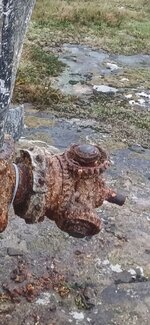
Unknown WW2 prop and engine part

Ad: This forum contains affiliate links to products on Amazon and eBay. More information in Terms and rules

TonyZ

Recruit
5
1
Mar 7, 2026
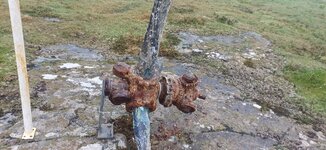
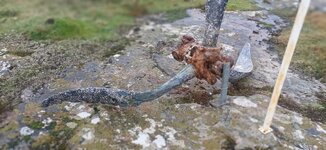
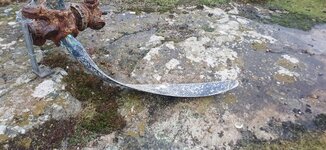
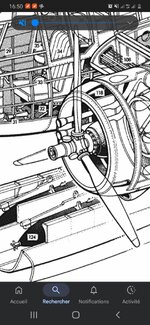
Hello all,First time for me on this forum. I am trying to idea the following parts which have been pulled out from the sea by a fisherman.The thin propeller, the counterweights, and the epicyclic reduction gear remind me of a Bristol Mercury engine + de Havilland propeller combination but I am not 100% sure.The Blenheim and the Lysander were equipped with them. As far as I know, no Lysander went down in the area where the parts were found however, a Blenheim was reported missing in '41.Would you happen to know how I could obtain the dimensions of the gears in the epicyclic gear train in order to compare them with the ones on the wreck?
What's your opinion on these parts?
Many thanks in advance.


Attachments

  • FB_IMG_1771860686787.jpg
    FB_IMG_1771860686787.jpg
    493.5 KB · Views: 32
  • FB_IMG_1771861631693.jpg
    FB_IMG_1771861631693.jpg
    343.4 KB · Views: 30
  • FB_IMG_1771861637126.jpg
    FB_IMG_1771861637126.jpg
    514.3 KB · Views: 34
  • Screenshot_20260223-165011_Google.jpg
    Screenshot_20260223-165011_Google.jpg
    333.4 KB · Views: 34
Hi,

A correct gear teeth count of a planet gear and the sun gear should be enough for a Bristol engine specialist to confirm the engine type, which does look to possibly be a Bristol fitted with a DeHavilland "Bracket" type prop (licensed Hamilton Standard counterweight type).
You are lucky that there is a very good blade and you should be able to get a spot-on diameter and chord profile for the prop. That might be enough for positive id, but if still ambiguous, the blade counterweights will have fine details that might be readable with expert examination.

Eng
 
Judging by these images the prop blades are painted black. Is there any yellow paint at their tips?
 
Judging by these images the prop blades are painted black. Is there any yellow paint at their tips?
I can check that. What's your idea ?
 
Hi,

A correct gear teeth count of a planet gear and the sun gear should be enough for a Bristol engine specialist to confirm the engine type, which does look to possibly be a Bristol fitted with a DeHavilland "Bracket" type prop (licensed Hamilton Standard counterweight type).
You are lucky that there is a very good blade and you should be able to get a spot-on diameter and chord profile for the prop. That might be enough for positive id, but if still ambiguous, the blade counterweights will have fine details that might be readable with expert examination.

Eng
When measuring a prop this situation, the measuring shall be done from the tip to the center of the hub or from tip to the foot of the blade?
Do you know someone who would be able to provide information about the number of teeths for the cogs? Many thanks
 
When measuring a prop this situation, the measuring shall be done from the tip to the center of the hub or from tip to the foot of the blade?
Do you know someone who would be able to provide information about the number of teeths for the cogs? Many thanks
Hi Tony,

Firstly then, Prop dia. Usually, if a "Propeller diameter" is quoted for a particular aircraft type, it is the overall propeller diameter (from the centre of the shaft to a prop tip multiplied by 2).
This measurement is accurate to about 1/16th inch or 1mm on an uncropped blade. However, individual blades do have their own very specific measurements and dimensions, but with a corroded prop like yours, you are not going to be able to measure that accurately because you probably cannot dismantle the hub, in any case the defining "prop dia" is the overall diameter that is more easily measured. OTOH, if you had aircraft with the same prop dia but different blades, you might be looking for specific dimensions or features of the blade. Also, if your prop blade or hub has readable stampings or markings you can usually look them up.
Now, to measure your bent prop dia accurately, you need an accurately measured length of the best blade from the tip, to where the blade enters the hub. You then need to correctly measure the radial distance from the centre of the hub to the point where the blade enters the hub, add the two together and multiply by 2. Obviously, the hub measurement requires accurate work to get the correct radial distance, and the blade length measurement must also be accurate along its curved (bent) shape.
As far as info about the gear teeth numbers goes, you can research about Bristol engines or ask on here when you have the particular numbers of teeth, and the prop dia.

Eng

 
Judging by these images the prop blades are painted black. Is there any yellow paint at their tips?
I have just asked the person who found the wreck, he said there is no paint left at all.
 
Hello,
I am trying to ID an aircraft engine from this epicyclic gear.
Does anyone knows the gear teeth counts for the planet gears and the sun gear for the Bristol Mercury engine so that I can compare them with the wreck?
Many thanks,
Tony
 

Attachments

  • Screenshot_20260307-210148_Photos.jpg
    Screenshot_20260307-210148_Photos.jpg
    361.5 KB · Views: 31
Just looking at your epicyclic reduction gear and others online, the angle of the Planet gear looks to possibly be closer to a Mercury VIII with the 0.572:1 ratio. The Mercury IX with 0.5:1 ratio had equal teeth on the front and rear Sun gears so the Planet gears were level on that ( your rear Sun gear that is engine driven is missing). The Mercury VII with 0.666:1 ratio had a larger rear gear and the Planet gears were even steeper angled.
Hopefully, you will get some good info. Looking forward to your gear teeth count and accurate prop dia.

Eng
 
Good find but the Gladiator also had that prop and engine combination. Were any lost in the area?

Unfortunately I have no manuals for any Mercury Engines and do not know of any sources but someone out there must have a few.
 
Just looking at some details, the Blenheim Mk IV is listed with the Mercury XV, with 0.572:1 reduction gear and the 10'6" dia DeHaviland counterweight type prop.

Eng
 

Users who are viewing this thread

Back