They were de facto medium bombers - they lacked the range and bomb load to be strategic weapons and even an RAF maximum effort couldn't smash a city
True Strategic effect is 300 bombers going after the enemies capital, and in one raid, burning out 16 square miles of the city, killing 125,000 people and making a million homeless for just 14 losses, many of these from the huge thermal updrafts.
By fall 1945, there USAAF had pretty much run out of targets in Japan and was throwing bombers at ever smaller towns and literally wiping them out.
Which ignores a number of significant differences between the targets in Japan and Germany.
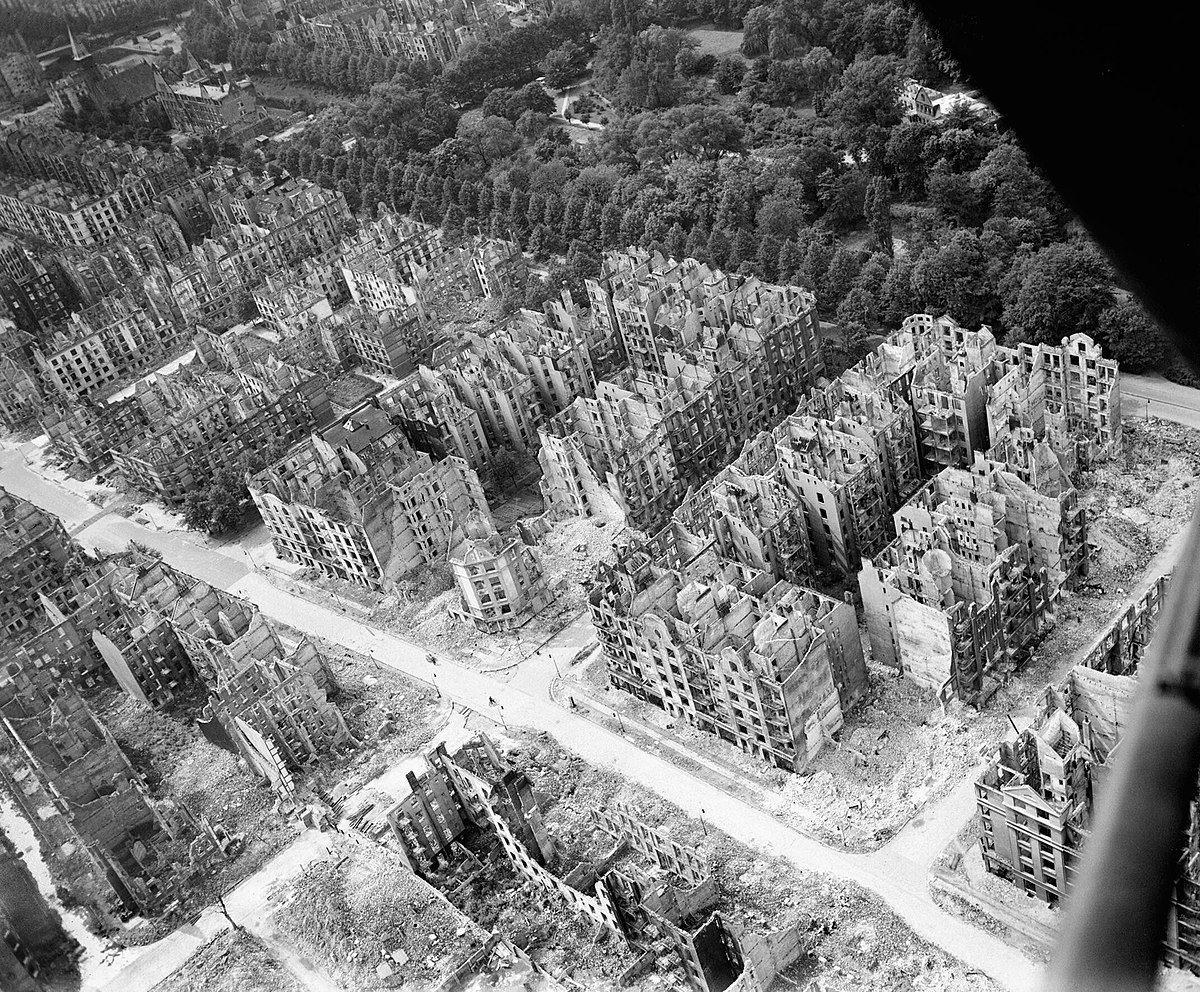
Buildings in Europe were largely constructed of brick and stone with solid roofs. Much more difficult to make burn without first breaking down walls and roofs to let the incendiaries inside to do their work. Hence the mixed loads favoured by Bomber Command. And Bomber Command raids could produce firestorms. One of the biggest in Hamburg in July 1943, Operation Gomorrah. The difference in construction is demonstrated by what was left.

en.m.wikipedia.org
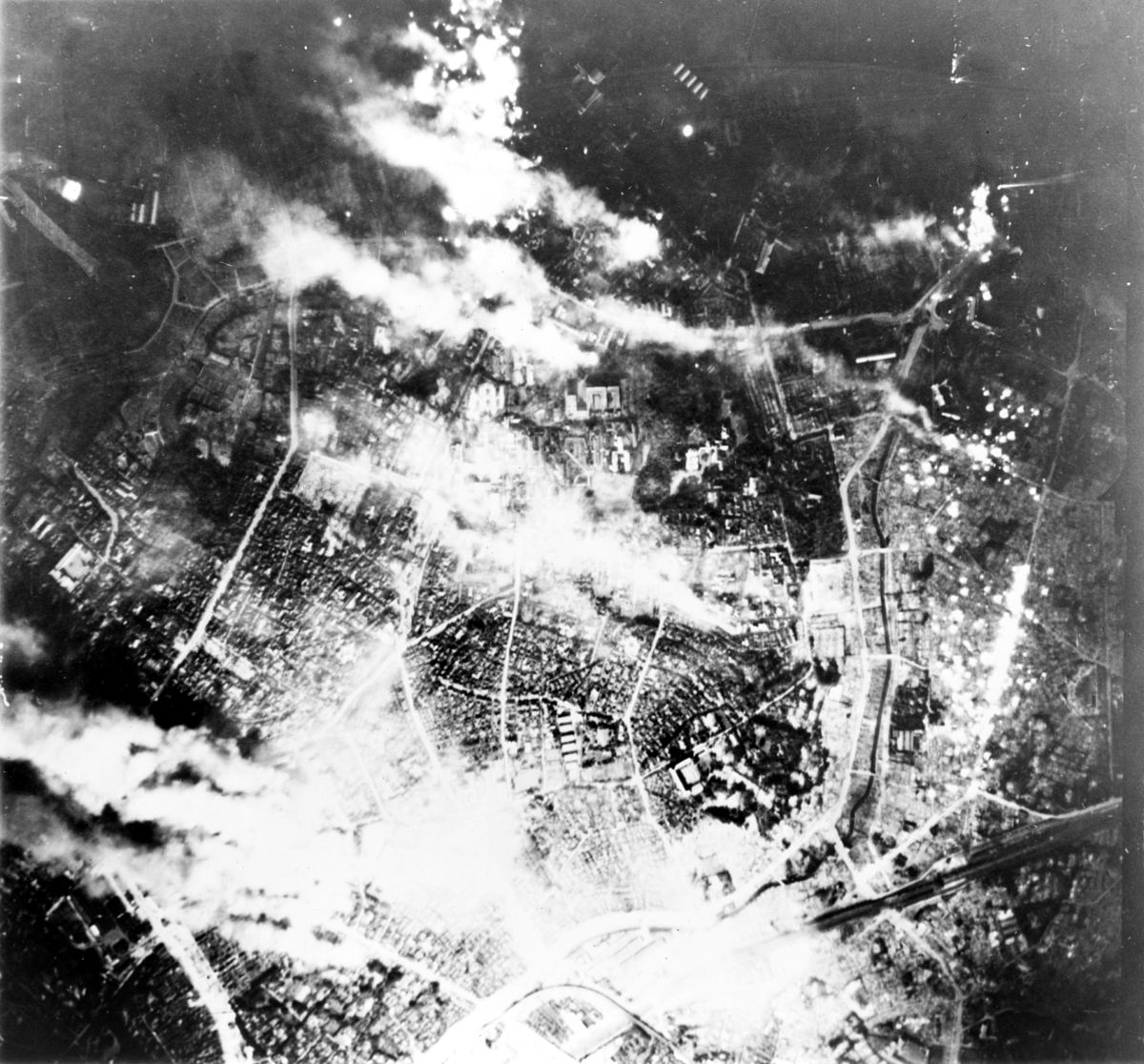
On the other hand Japanese houses were built of timber & paper. Many fewer brick & stone structures. That is why many photos of burnt out Japanese towns and cities show only the brick fireplaces and chimneys remaining. Much easier to burn out completely. Here is Tokyo immediately post war.
en.m.wikipedia.org
And let's not forget that these successful fire raids on Japanese cities occurred after the decision to bomb at night from lower altitudes. XXI Bomber Command had flown 6 missions in Jan/Feb 1945 where incendiaries exceeded HE, 3 against engine factories and 3 against cities. Of the latter, 2 were at night and all at 22,000-30,000 feet. All were deemed unsuccessful.
And the first low level night incendiary raid to Tokyo on 9/10 March 1945 was the very first time XX AF actually was able to put 300+ aircraft over a target due to the arrival of a third Bomb Wing in that AF, the 314th BW. That mission and the ones that followed, saw a significant increase in bomb loads able to be carried by each aircraft (they were increased from an average of 3 tons to 6.5 tons) due to the lower altitude and reduced gun armament.
Looking through the data I have, it is striking that of all the 331 missions flown by XXI Bomber Command from the Marianas, only 15 involved more than 300 aircraft.
By the end of the first 5 urban area attacks between 9 & 19 March 1945, XXI Bomber Command was running out of incendiary bombs and both flight and ground crews were exhausted by the pace of operations. Success or failure of incendiary missions depended on the following factors in order of importance:-
Pattern density - 0.3 tons of M-69 incendiaries per acre was necessary, but could not guarantee success.
Area density - concentration of bomb loads, their location and how accurately they were delivered.
Type of bomb - the M-69 proved best.
Time - compression of time and concentration in space, to allow individual fires to merge and prevent firefighters gaining control.
Surface winds - helped spread fires.
Precipitation - proved less of a problem than anticipated.





 Even though they carried more bombs as far as just about any contemporary aircraft when they went into service?


