Having visited quite a few port towns in this region, I believe most commercial harbors around the Med, on both sides, were set up for both loading and unloading of small and large cargo ships simultaneously, usually on different docks. The docks for the bigger ships often had cranes and large wharves, whereas the smaller coastal vessels can load and unload in much smaller harbors including fishing harbors. Locals have been loading and unloading these around the Med for thousands of years.
So you are confident the WWII axis ports in North Africa were in effect dual ports, one seagoing, one coastal, with independent berthing, loading, transport, warehousing and workforces. Given the problems the allies had I am less confident. And the point about sending rail is ignored.
According to the British Merchant Marine History with 1,600 tons as the smallest ship the average Italian merchant ship was 5,480 tons in 1938. Using a lower limit of 500 tons in June 1940 drops the average to 4,220 tons, deduct those outside the Mediterranean, the liners and the hospital ships and you are down to an average of 3,187 tons and a fleet of 548 ships 1,749,441 tons, all up. Down from a total fleet of 786 ships 3,318,129 tons. All data from The Italian Navy in WWII by M A Bragadin. What is your definition of coaster size wise? One that has the range to go from Tripoli to say Tobruk and back without refuelling. The F lighters the Germans had were around 240 tons with a 1,540 mile range, up to 140 tons of cargo, probably cruising at 7 knots. The general rule the smaller the ship the more fuel it uses to move a given weight of cargo.
According to Bragadin during the war the Italians built another 60 ships, 307,733 tons and salvaged another 24. Other sources were captures/purchases and transfers from Germany. They lost 565 ships of 2,018,616 tons of ships of 500 or more tons, and 759 ships of 87,905 tons of under 500 tons. Of the 883 important convoys sent to Libya 220 attacked by subs, 291 by aircraft
As for invading Malta, Let's get real.
Get real for a hypothetical? It would also help the case by avoiding a confident prediction of victory followed by the question how big is the opponent then discovering the answer is pushing 3 times the estimate. And then coming up with why the numbers should be discounted or other places were tougher.
The allies began evacuating Greece on 22 April, finishing 28 April, 12,712 men lost from a roughly corps sized unit, the evacuated units had lost lots of equipment as well and arrived at Crete or Egypt disorganised, lacking communications and heavier weapons. Little had been done on the Crete defences, the Greeks had needed all their good units and equipment to counter the Italian invasion, those left at Crete lacked training and equipment. Enigma cracked much of the German attack plan but at this stage of the war the trust in it was lower and risk of acting on it was usually considered too great to make full use of it. The attack began on 20 May.
Malta on 1 January 1942, Artillery regiments (battalions), 12th Field, Coast 4th and 1st RMA , Defence 26th, Heavy AA 4th, 7th, 10th, 2nd RMA, 11th RMA, Light AA 22nd, 66th, 74th, 3rd RMA. Malta/Southern/1st Malta/231st Brigade, 5 battalions. Northern/2nd Malta/232nd Brigade, 5 battalions, Central/3rd Malta/233rd Brigade 3 battalions, not sure but it seems the first Durham Light Infantry was present but not under any of the brigades and maybe one other infantry unit. In infantry terms a reinforced division. Go forward to July 1942 and there was the new Western/4th Malta/234th Brigade. Between them the now 4 brigades had 15 battalions. The idea No axis paratroops involved in any attack are a bonus for the garrison, no need to worry about their rear areas.
The Malta over sea invasion would be unique for the axis in Europe, as the allies proved plenty can go wrong well before the enemy intervenes. Have you looked at the evolution of allied landings? The early raids then the steady improvements as each operation provided lessons, enabling Overlord to succeed, with the downside so much effort was put on getting and staying ashore no one thought about Bocage country fighting. Malta provides limited numbers of landing beaches. Operational shore batteries have spent years carefully registering ranges and the axis have limited numbers of landing craft, there is the initial landing and then there is the crucial follow up waves.
I think it's a safe bet that the Germans could have Malta if they had blocked the convoys and destroyed the British air forces there, which they very nearly did.
As has been shown, the country came close to starvation, almost no need to actually destroy the Malta forces if the supply ships are blocked, but that requires being able to have the air and naval combat power as needed to stop the supply ships.
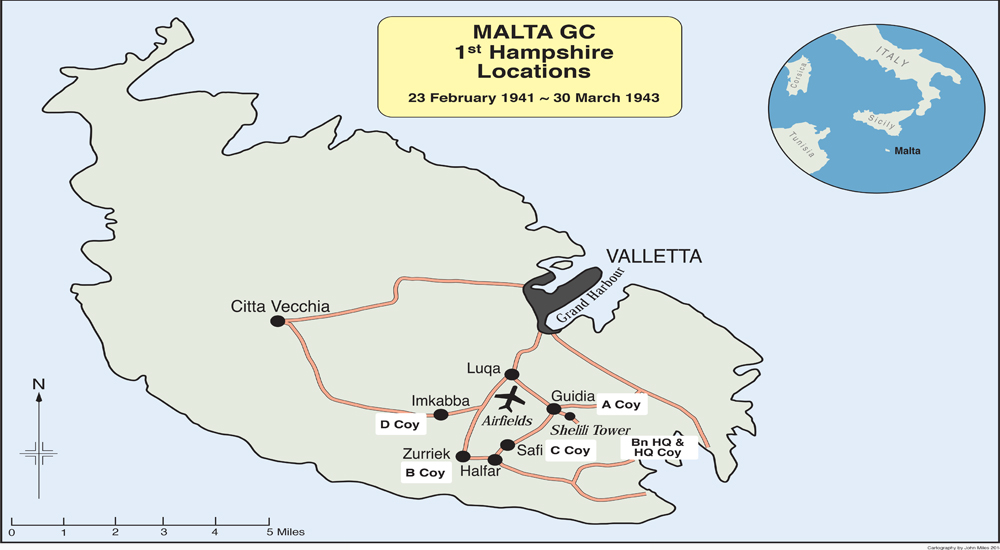
Operation Hercules, most of X Fliegerkorps and forces in Africa to Sicily, joining II Fliegerkorps, there will be a 1 to 2 week pause after the fighting is over in Africa to do this. 3 parachute regiments, 7 to 9 transport gruppen. A week or so to destroy the air defence then systematic elimination of all AA guns. Parachute jumps begin at 1330 hours on X day. Landing force in south west corner at 2400 hours, Gozo in the morning, Calafrana time not given, next day destroy coastal batteries with help from Italian warships. Timetable 18 June end of Theseus (attack on Africa), 29 June to 17 July preliminary operations, 18 July attack. Interestingly the air transports are to approach from the south west and leave that way.
If the Germans had theoretical better strike aircraft, or frankly if they had just sent a couple more squadrons of their existing Ju 88s and Ju 87s earlier in 1942, they probably could have taken it.
Or deployed the Italian Navy more, given the losses to and effects on the June and August convoys. Once again the solution to everything comes across as more and better airpower or destroying the enemy's.
Once Malta's air power is neutralized, it could be taken. Once it is taken, it becomes a base for Axis air and naval (esp. submarine) operations rather than British. This means not only are Axis supply convoys much better protected, increasing their supplies, it means that British supply convoys from the Suez to points west of Libya are going to be all but impossible.
Could a time line be provided? In August 1942 the British were not going to run convoys to Libya, in any case Malta was one base and not necessarily the best for the axis as it required sea supply.
Interesting theories.
Speaking historically and not in terms of any speculation about improved Axis aircraft, I would argue that air power, in particular the DAF, was actually decisive in the shift toward Allied victories in North Africa and the accelerating misfortunes of the Axis. The shift from uneven victories in favor of Rommel to catastrophic defeats.... this severely exacerbating all of the Axis logistics problems.
Interesting air power evangelist theories. The allied air forces were competing with a German decision to keep going forward in June 1942, then stay where they were. They could do the stay but only by giving up on the ability to attack and a lower chance to resist a prolonged attack. Are there any figures on how many supplies, trucks etc. the air forces actually destroyed? At the moment the default win the war option is keep adding airpower.
The structural issues in the WWII British Army start pre WWI, when the men who would become the generals in WWII entered the force, to become an officer in the British Army required an outside source of income, minimum 100 pounds up to 400 pounds for the (social) elite units, this rather narrowed the talent available. As well the best graduates from Sandhurst, like Auchinleck, were sent to the Indian Army where they had little exposure to modern weapons or the officers back in Britain who did. Since Cromwell's day Britain has tended to want a politically reliable army, versus a more competent navy, a small army only needs to find a small number of good commanders. Thrown in the peace time British army is small there is little chance for anyone to practice being a divisional commander or above apart from map exercises. Result, 8th Army had General Cunningham then General Ritchie, requiring Auchinleck to take over both times. Throughout the desert war the Germans made decisions and subsequent actions far faster than the British. The Germans had a supply of both better trained and better experienced officers throughout the desert war, think of how many other German and British armies were in combat to end 1941 then end 1942. Next comes Rommel's communication interception unit doing so well until destroyed at first Alamein and the recall of Colonel Fellers in the same time frame, his near daily detailed reports to Washington were in a code the axis had cracked, while the Ultra system was improving in both numbers of messages cracked but also correctly interpreting them, early the incorrect supply reports submitted by Afrika Korps were believed in London and so put pressure for action on the desert commanders.
Next comes the armour deciding their doctrine, which labelled infantry, anti tank and artillery as support but treated the non armour units as hindrance. It was easy to lure British armour into killing fields and see unsupported charges into axis defensive positions, at times the axis troops would surrender but since there was no infantry to round them up, go back to shooting when the tanks moved on. Almost inevitably the battlefield would be left to the axis to clean up, recover their tanks plus take the British tanks or make sure they were totally destroyed. There are a number of versions of this but the Australian, New Zealand and South African divisional commanders at Alamein had second roles, head of their military mission with appeal rights to their governments. They collectively and forcefully expressed a vote of no confidence in the armoured units, which proved valid when investigated by the new command team. The armour wanted to fight its own war and too many of its commanders would rewrite or ignore orders accordingly.
In theory Jock Columns were a form of combined arms but when one was issued with anti tank guns the commander wondered what to do with them. Trouble is the columns broke up divisions into smaller units easily destroyed by an enemy who kept striking power concentrated.
8th Army could not fight as an army and its corps often could not fight as corps. The attempted stand at the Mersa Matruth by two corps degenerating into everyone out when one corps withdrew without checking what the other was doing, or as summarised by the chair of the Board of Inquiry "XIII corps just disappeared and left X Corps up the pole". One attack in July 1942 is summarised scathingly as "two infantry and two armoured brigades had been employed. They had made three unrelated attacks from three different directions at three different times. A single small panzer division with some twenty or thirty tanks and a fifth rate Italian infantry division easily dealt with all three attacks in succession and inflicted crippling losses". Montgomery made the army fight as a whole and gained more control of the armour, the proposition the airpower could overcome these defects in the army is wrong. The shift in intelligence alone is significant, the return to divisions fighting as such, corps that co-ordinated attacks, armour more likely to act within the plan even more so.
Short term in limited circumstances the services can substitute for each other but the prime mission of each service branch is the defeat of their opposite number, the best way to do that is a common combined services plan taking into account the circumstances. If you like as a simple example the Brooklyn class cruiser going from a 6 inch gun cruiser to a battery of 15 high velocity 152.4mm anti tank guns, with a crew trained to fire at mobile targets and far better rangefinders than your average anti tank unit, but there are plenty of places hidden from naval gunfire, even in range, and by being so close to shore the risk to the cruiser is increased. The army needs to land its heavy weapons as part of the assault.
On the ground, Grant tanks had much greater ability to knock out Axis AT guns thanks to having HE ammunition for both 37mm and 75mm guns, (Stuart / Honey tanks also had HE and 'shot' ammunition for their 37mm guns) and the 75mm could destroy all available German tanks at their longest range, even if they still could not outrange the best German guns. Larger 105mm howitzers were more effective than the 25 pounder. Larger numbers of halftracks and trucks helped allied troops move around faster and a bit more safely.
The British were deploying things like 5.5 inch guns, using them more correctly, the number of 105mm guns was not a major increase in firepower, how many half tracks did 8th Army have at Alamein?
At Gazala the Army had 6 pounder AT guns, along with Grants and Stuarts, and lost lots of them really quickly without doing much to the Afrika Korps. The Stuarts were on the way out at Alamein. The tankers did not think of themselves as artillery, shelling anti tank guns or infantry, so what was the range the US 75mm could knock out a mark IVF2 with its long 75mm gun?
All of this improved by the time of second El Alamein by which time these technical advantages and tactical improvements had become decisive (far more than the advantages in numbers).
The application of much more airpower in Italy in 1944, operation Strangle, with a bigger quality gap, and even more airpower in Normandy with an even bigger quality gap still meant to force the Germans to retreat the army had to attack. By Second Alamein the allied air forces had won their battle over Egypt, next came translating that into effective support, Montgomery had put the 8th Army HQ beside the RAF one for the first time. You are exaggerating airpower effects.
Mosquito Missions with high losses were mainly during highly risky low-level (and fairly deep penetration) raids against well defended targets like Gestapo HQs in big cities, which basically no other bomber type could even attempt.
Aside from that the British high command chose to mostly use them as pathfinder and night fighter etc. missions which were deemed higher priority for the special advantages of this extraordinary aircraft which was never available in sufficient numbers. I.e. it wasn't used that much as a tactical or operational bomber.
Yet the thesis is about quality overcoming losses and includes longer range German fighters which would increase their deep penetration missions for a start. The Richard Davis Spreadsheets, quick search result, which is missing about 50 to 60 sorties versus the list in Mosquito by Sharp and Bowyer, so not final figures, and lists targets is Czechoslovakia as Germany, bomb tonnages by country, Mosquito Day raids 1942/43 Belgium 62.6, Denmark 7.1, France 144.5, Germany 158.7, Netherlands 77.8. Tonnages dropped by sighting method Visual 107.9, Visual (Low Level) 341, Visual Dead Reckoning 1.8. No Gestapo HQ's in the 35 target types given. Lost by country attacked/sorties sent, Belgium 5/107, Denmark 1/9, France 10/195, Germany 26/263, Netherlands 7/109.
What is an "operational bomber"? What is "not used much"? 2nd Tactical Air Force had its Mosquito units, mostly used for night interdiction. Bomber Command Mosquito sorties are twice as much as Stirling, coming in at number 4 in the sorties by aircraft type list.
Operation Oyster, 6 December 1942, 1 Ventura crashed in the North Sea inbound, 1 more shot down when they flew too near an airfield inbound. Mosquitoes were limited to Boston speed on the run in but acted as decoys, luring taking off fighters away. Venturas attacked the target 6 minutes after the Bostons. Bostons intercepted outbound over the North Sea. The Bomber Command Losses books say fighters shot down 3 Bostons and 1 Ventura, Flak 3 Bostons (2 made it back to Britain), 6 Venturas and a Mosquito, 2 more Venturas lost cause of damage unrecorded, one of these made it back to Britain. Michael Bowyer reports bird strikes damaged 6 Bostons, 16 Venturas and a Mosquito while flak damaged 4 Bostons and 16 Venturas, fighters damaged a Mosquito and a Boston and suspects some Venturas were lost to phosphorus splash from bombs. I also suspect there are some bird and flak damaged aircraft, so you cannot just add the numbers together. The different times and routes chosen plus it is easier for flak to hit a formation of 40+ versus 12 means there were different levels of exposure.
WO 169/3861 (Eighth Army), a document from the G(AFV) Branch dated 'End Sept.' [1942] headed "Tank Overhaul Programme." It gives the overhaul mileage limit/annual mileage rate/time in workshops for overhaul (weeks) as:
Crusader 1200 / 3000 / 8
Valentine 2500 / 3000 / 8
Matilda 1000 / 3000 / 8
Stuart 3500 / 3000 / 4
Grant 1500 / 3000 / 8
Which firstly shows how few miles per year the tanks were expected to do, and the distance they could travel before they needed a major overhaul. You would expect the time between overhauls to be at least basically related to the great "reliability" tag. And indeed looking at the above the Stuart became the Honey, and the Valentine has a good reputation for reliability.