KG200 used a lot of there heavy transports with civilian Lufthansa marking for secret flights to Spain and so forth.
The aircraft which you refer to were Ju290 A-9, not Ju390, 290s converted as A-9 version with MTOW raised from 41.3 tons to 45 ton and yes they did fly spies &/or guns to White Russian separatists in Soviet rear areas.
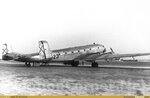
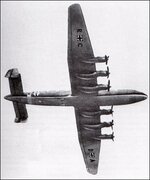
Ju290 A9 long range version
Once converted they were given civil registrations to operate as Duetsche Luft Hansa DLH airliners on cargo flights, however T9+UK was also photographed in Russia wearing stkz codes: Known A-9 stkz codes were: T9+UK, T9+VK & T9+WK IT is known these aircraft were flown deep into Soviet rear areas with arms & ammunition for Soviet separatist groups. one T9+UK, was caught on the ground by NKVD troops whilst anotherT9+VK was badly shot up by Soviet Hurricanes on a return flight.
These modifications began with three aircraft:
T9 + FK WNr.
J900153 Ju290 V4 Lost from Sarabus 1943 shot down by Soviet Hurricanes
T9 + UK WNr.
J900182Feb-Jun 44, Captured by NKVD raid on landing behind Russian lines
T9 + VK WNr.
J900183Feb-Apr 44, scrapped
Trial flights began in 1942 with Ju-290A-5 werke # J900170, Luftwaffe stkz code KR+LA. This aircraft earlier also wore KG200 codes 9V+DH. It was destroyed by air raids at Reichlin in 1945. It's fuel capacity was increased by 5,140 litres.for long range operation from Ju-290's standard tankage

In March 1944 three other Ju290 aircraft were transferred to Versuchsverband OKL then they were stripped of all weaponry and civilianised by DLH engineering for Deutsch Luft Hansa (DLH) service on flights to China, Spain, or the Kuril islands . Modification included fitting fuel tanks for 23,800 litres. Each of the aircraft also then received civil registrations. eg D-AITR ( D-AITR piloted by Captain Sluzalek crashed landing in fog on the night of 5/6 April 1945 running off the runway into a drainage ditch. Amid diplomatic protests the next morning a repair crew replaced a damaged tailwheel. It was flown back to Germany after repairs. This was not the same aircraft J900178 adopted by Spain after the war.
Manchuria flights
Pre war explorer Hans Bertram was commissioned by RLM apparently in July 1944 to write a report called Ostasienflug (east Asian Flight Project) to plan for a regular courier service to Tokyo using the Me-264.The mission called for a duration of 33 hours flown at 188 knots. Two routes were proposed. The longest from Berlin to Linz, Hungary, Roumania, Turkey, Iran, Afghanistan, Tsitsihar in china and finally to Tokyo. The other route proposed was through northern India and Burma to Rangoon. Ultimately, these flights may not have reached Manchuria, but that was an objective proposed by Bertram.
A War Ministry report (AIR 40/203) detailed in mid October 1944, a POW gave information under interrogation that since the beginning of 1944, there had been "
regular air travel between Germany and Japan established for the transport of high officials flown by old experienced Hansa pilots."
Luftwaffe Generalmajor Fritz Morzik, Chief of Air Transport for the Armed Forces in WW2 Germany wrote in an article for an official post war USAF study paper, in which he said that the Ju-390 was used for courier flights to Japan during the war.
A Post war US Navy Intelligence report drafted for the War Department, entitled "NA/HW 13/47 - German Technical Aid to Japan" dated 31 August 1945 at pages 134-145, discussed how three Messerschmitt engineers with technical documents for Japanese construction of the Me-209; Me 309; Me 264, Me 262; Me 410 and me 323 would be flown to Japan. Technical drawings were accompanied by engineers. The same report listed German engineers captured in Germany after hostilities ceased.
To accomplish this three Ju290 aircraft were withdrawn from military units, upgraded with 5140 L extra fuel capacity and more powerful engines to lift increased weight at take off. A standard Ju290A-5 aircraft had a range of 3,821 sm. further aircraft were converted after the first three.
.
Decrypted Magic signals revealed plans for flights to operate long range flights to Parumashiro in the Kurils: A Magic decrypt of a diplomatic signal from the naval attache at the Japanese embassy in Berlin dated 21st March discussed an impending flight to Japan within the week, which Albert Speer claimed was a Ju390 flight that occurred on 28 March 1945. One decrypted signal mentions a flight to Petsamo in the northern Kurils. More likely in my view was a flight to the ice free and fog free island of Matsawa Jima, whose airstrip is still populated with Nazi fuel drums.
Junkers test pilots who flew these flights are now deceased: In April 1983, Flugkapitän Erich Warsitz suffered a stroke and as a result died at the age of 76 years 12 July 1983 at Barbengo Switzerland; Hermann (aka Henry, aka Ivan) Quenzler was recruited after the war as a test pilot for Lockheed's CIA Skunk Works. He later went to Seattle and worked there for Boeing on the Boeing 707 and SST. He died in 9th September 2002
Ju290 A-9 aircraft
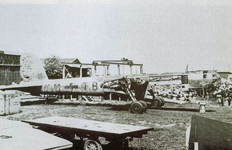
These three converted aircraft were Ju-290A-9 werke # J900183, former Luftwaffe code KR+LN. From February 1944 this aircraft became T9+VK. It was attacked on the ground at Finsterwalde in April 1944 and scrapped at Travenmunde in September 1944.
Also Ju-290A-9 werke # J900182, former LuftwaffeJu 290 A-5 code KR+LM. From February 1944 this aircraft later became T9+UK. This aircraft was destroyed on the ground refueling due to to straffing fire by four Soviet flown Hurricanes near the village of Utta, near Astrakhan in July 1944. DD.11.1943 (Ju 290 A-5)
Ju-290 A7 werke # J900185, former Luftwaffe code KR+LP was the third conversion to become T9+WK. Later in it's career it was attacked over the southern eastern front in May 1944 and returned from the mission beyond all hope of repair.*
All Ju290 swappedtheir Stkz fuselage codes incestuously, therefore individual aircraft can only be traced by their constructor numbers:
J900178, Ju290 A5/A9
Luftwaffe, KR+LI (later 9V+EK), Feb. 44 to Sep.44
to DLH Lufthansa, D-AITR, Okt. 44 to Apr.45, named 'Bayern', damaged on landing at Barcelona
Spanish Air force, 74+23, Apr. 50 to Jul.56, named ' ', wfu in 05.53, later scrapped
J900179, Ju290 A5/A9
Luftwaffe, KR+LJ (later A3+FK, 9V+FK), Jan. 44 to Feb.44, handed over to USAAF and scrapped
J900180, Ju290 A5/A9
Luftwaffe, KR+LK (later 9V+KH), Mrz. 44 to Apr.45, destroyed during air raid at Rechlin
J900181, Ju290 A7/A9
Luftwaffe, KR+LL (later 9V+GK), Apr. 44 to Aug.44, destroyed during air raid at Dessau
J900182, Ju290 A7/A9
Luftwaffe, KR+LM (later T9+UK, A3+AB), Feb. 44 to Jun.44, lost on secret mission at Russian Front
J900183, Ju290 A7/A9
Luftwaffe, KR+LN (later T9+VK, A3+BB), Feb. 44 to Apr.44, claimed damaged during air raid at Finsterwalde [actually damaged Utta Astrakhan] , scrapped at Travemunde constructive total loss
J900185, Ju290 A7/A6/ Le.290 Orel Adolf Hitler's personal aircraft completed as airliner postwar


) In recent investigations, It seems that Germany could have succesfully detonated a nuke near Ohrdruf on March 4 of 1945 (some, even before in Rügen the 11 October 1944). There has been an very intersting debate in a BBC special program sometime before concerning the author of the book and his theories (Rainer Karlsch, Book = Hitlers bombe). even there are some scientist taking samples of the soil to corroborate the possible theory. I don´t know if this is a new revisionist point of view, but... it´s very intersting to speculate about this. It may be the nuke to be carried by the Ju 390, or by the He 177 V38 to New York.



 Wow...a lot to unpack there. Usually people have to meet me before they form that kind of opinion about me. But be that as it may, I will consider it a challenge to pick apart your outlandish claim regarding the Ju 390. I hope when the dust has finally settled, one of us will be open to changing their belief. Though at this early stage in our interaction I am beginning to think that your not much of a fact based kind of guy. I could be wrong, but I will give it a go regardless.


