1940 Royal Navy Anti Battleship bomb (1 Viewer)

The graphs kindly posted by Reluctant Poster show the problem in the 30s (and later)

You need to drop the AP bomb from considerable height or in a high speed dive to get it to punch through thick armor.

Dropping the 1500-2000lb AP bomb from a torpedo bomber flying at a few thousand feet isn't going to work (even using a shallow dive).

A steep dive with a slow airplane at low altitude isn't going to work either.

It will work on cruisers or old battleships that need refitting.

If you bomb at the altitudes you need to punch through thick armor your accuracy is such that you will need to drop a lot of bombs. In the late 30s many navy's overestimated their accuracy.

What dive bombers of the 1930s could do was hit the target ship/s ahead of the torpedo bombers and destroy/suppress the AA guns to make the torpedo attack more successful.
As we all know, torpedo attacks had to be done low, slow and steady.

In 1939 the US was issuing a requirement for a dive bomber to use a 1500-1600hp engine. The British were issuing requirements for Barracuda. Both were 3-4 years away.
A good anti-battleship bomb before those planes became available is just a good (really good) HE bomb to do as much damage as possible to the superstructure and upper deck/s.

Forget the "one big blow" nonsense of a single bomb taking out a battleship.
 
Here is some more data on the Japanese 800kg bomb from the Navweaps site:-
1661236018468.png

Type 99 No 80 Mark 5 Bomb. Digital image by Andy Hall based upon a drawing by John F. De Virgilio. The grid in the background is in one-foot squares (0.09 m2​). Digital image copyrighted by the PAST Foundation and the Submerged Resources Center of the National Park Service and used here by their permission.

Great info thanks but there is one major error in that paragraph.

Those are identified as one-foot squares (as written) so the metric measurement should say 305 (or 304.8) mm squares.

Yes 1 ft by 1 ft is 1 square foot but in this case the identified measurement is the size of the vertical and horizontal dimension, not the area of each square.
 
A bit late to the party, but perhaps someone may be able to shed light on a germane topic: the first usage of the 2,000 pounder by the RAF.
22 Squadron (Coastal Command) records show definitively that they were the first to use it operationally by Beauforts on the 7th of May, 1940.

For Bomber Command, this is where it gets interesting, and to my experience so far, elusive.
According to Chaz Bowyer in "Hampden Special", the first usage of the 2,000 pounder is by 83 Squadron on a raid on the warships at Kiel on the 1st of July, 1940. Famously, P/O Guy Gibson took part in this raid. However, when going through squadron records, I can find no mention of the weapon, which is strange given that it had already been used and mentioned explicitly in 22 Squadron's records.
Gibson's posthumous book, "Enemy Coast Ahead" does confirm the 2,000lb bomb on that date, and I suspect that's the source for Bowyer's claim as well.

If anyone can shed further light on this, it would be appreciated, particularly on the following points:
What exactly was the weapon used? Is this the same weapon as used by the Beauforts earlier? How did it compare to the later 2,000 pounder AP that would be used by Bomber Command?

Many thanks in advance!
 
The British 2000lb AP bomb went through 4 marks but three of them just changed the tail assembly construction. The last (MK IV) also changed the tail fuse set up.
Body of the bomb (dimensions) and filling of the bomb (166lbs of Shellite) did not change. about 9% explosive weight.
large_CH_015854_1.jpg

Bomb in front is the 2000lb AP bomb, the one behind it is the 1900lb GP bomb and one with the small bomb held by the crewman on top of it is an 8000lb HC bomb.
2000AP bomb was 13.5 in diameter.
The 1900lb GP bomb was 18.7in in diameter.
There was a 2000lb HC bomb used by bomber command, but it had nothing to do with 2000lb AP bomb.
 
The British 2000lb AP bomb went through 4 marks but three of them just changed the tail assembly construction. The last (MK IV) also changed the tail fuse set up.
Body of the bomb (dimensions) and filling of the bomb (166lbs of Shellite) did not change. about 9% explosive weight.
View attachment 883634
Bomb in front is the 2000lb AP bomb, the one behind it is the 1900lb GP bomb and one with the small bomb held by the crewman on top of it is an 8000lb HC bomb.
2000AP bomb was 13.5 in diameter.
The 1900lb GP bomb was 18.7in in diameter.
There was a 2000lb HC bomb used by bomber command, but it had nothing to do with 2000lb AP bomb.
I should clarify, as this is something I have been researching for many months now, without a definitive answer.
Officially, the 2,000 lb AP enters service in 1942.
However, as mentioned, 22 Sqn records for May 1940, as well Gibson's account for the 1st of July, 1940 raid on Kiel state "2,000 lb AP". This is very specific, and at least in my view, does not lend to confusion with the already existing ordnance that was already in service at the time.

Furthermore, as stated in "ARMAMENT VOLUME I: BOMBS AND BOMBING EQUIPMENT" with regard to 2,000lb AP development:

"Two months later a contract for a limited supply was placed, and in March 1938
ballistic satisfaction was confirmed in full scale tests with an inert bomb.
Although 50/50 shellite was originally an emergency filling, it was decided to
accept this as the standard subject to satisfactory fragmentation trials. One
bomb detonated at rest on 23 September 1939 was sufficient to prove complete
satisfaction both for blast and fragmentation."

This demonstrates that the weapon testing was already successful prior to the war.
If, as I suspect, that these were early test examples being used operationally (and with Enemy Coast Ahead states the weapon, its target, and tactics employed), is there any documentation that can shed light on it?
 
There does seem to a hole in the British documentation.
But there is no other bomb that can be confused with it. The British made very few different 2000lb bombs and up until 1940 they made very few bombs of even 1000lb in size.
There were also not many targets that warranted a 2000lb AP bomb.
The standard British 500lb GP with 144lbs of TNT or 60/40 amatol would give as good or better HE effect.
The 2000lb AP was not good enough to be used against the Submarine pens although it was tried (?).
There were only about 6-7 ships it was worth using it on depending on height dropped from.
Agreed on that, however, my point was slightly different.
Clearly, the bombs existed (according to 22 Sqn's and Gibson's accounts). So where else might there be mention for this time period?
Also, the 2,000 lb AP was found to be ineffective against the capital ships it was originally intended for, as seen by the later fruitless attack on the Tirpitz with 2,000 pounders (as stated in "ARMAMENT VOLUME I: BOMBS AND BOMBING EQUIPMENT").

I wonder where else I can find documentation of the ordnance in these 1940 sorties.
Hi
Not sure if this info is of any use, 'Bombs Gone' by MacBean & Hogben, mention this on the 2000lb AP:
Scan_20260616.jpg

'The Bomber Command War Diaries' by Middlebrook & Everitt mention Gibson's mission:
Scan_20260616 (3).jpg

The Stirling was designed to carry the 2000 lb AP, as mentioned in 'The British Aircraft Specification File' Air-Britain publication by Meekcoms & Morgan:
Scan_20260616 (2).jpg

'The Stirling Story' by Bowyer has a list of missions during 1941 including the use of the 2000 lb AP (the 2000 lb HC was introduced later than these dates):
Scan_20260616 (4).jpg

Scan_20260616 (5).jpg

The weapon is also mentioned in Appendix 4:
Scan_20260616 (6).jpg

So a bit of confusion in the above as the Stirling in early 1941 as in the proceeding list of missions would not have had the 2000 lb HC to drop as according to sources this weapon did not go into production until the latter half of 1941.

Mike
 
Hi
Not sure if this info is of any use, 'Bombs Gone' by MacBean & Hogben, mention this on the 2000lb AP:
View attachment 883698
'The Bomber Command War Diaries' by Middlebrook & Everitt mention Gibson's mission:
View attachment 883699
The Stirling was designed to carry the 2000 lb AP, as mentioned in 'The British Aircraft Specification File' Air-Britain publication by Meekcoms & Morgan:
View attachment 883700
'The Stirling Story' by Bowyer has a list of missions during 1941 including the use of the 2000 lb AP (the 2000 lb HC was introduced later than these dates):
View attachment 883701
View attachment 883702
The weapon is also mentioned in Appendix 4:
View attachment 883703
So a bit of confusion in the above as the Stirling in early 1941 as in the proceeding list of missions would not have had the 2000 lb HC to drop as according to sources this weapon did not go into production until the latter half of 1941.

Mike
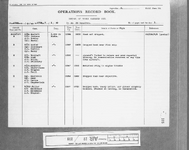
Thank you, Mike, excellent referencing. I would say that the sources used from these must be based off Chaz Bowyer. He himself is using Gibson's "Enemy Coast Ahead". As for the Beauforts of 22 Squadron, the actual date is slightly wrong, it was the 5th of May, and the weapons ended up unused (see attached 22 sqn ORB).

I have the Stirling Story, and I have to say, it is an incredible book. It was very useful for when I was researching sources for my documentary on the Stirling, and provided me with starting points to delve further into (such as the National Archives).

However, what I find frustrating is that (thus far in my research) I cannot seem to find definitive evidence in AHB publications for the usage in 1940, especially for the Kiel raid. Everything seems to revolve around Gibson's own words (such as Denis Richard's using that source for "RAF Bomber Command in the Second World War: The Hardest Victory").

If anyone is aware of such a publication, please do let me know!

Lastly, the 2,000 lb HC is a completely different weapon (and thus development), and was designed for a completely different type of target (i.e. not an armoured warship).
 
Maybe I am reading things a bit differently and quite possibly wrong but a book about the Stirling may only use the word/s "first use" or "first dropped" in reference to the Stirling and not other aircraft?

"The British Bomber since 1914" on page 311 has a picture of a Wellington IC in back of a 2000lb AP bomb and the caption says 1941. It also says that Wellingtons dropped 235 of these bombs, all in 1941.

The Hampden was supposed to be able to carry a pair of the 2000lb AP bombs over short distances.
Were the Wellington and Hampden designed to carry the 2000lb AP bombs? If so, that would make at least 3 bombers before the Beaufort designed or adapted to carry it.
What the stocks were in 1939 and in 1940 may be subject to question, but this was a special purpose bomb and nearly useless for normal attacks.
Hi
The original specification, B.9/32, that resulted in the Wellington and Hampden did not include the 2000 lb AP bomb, however, there were later specifications for these types that altered that, extracts from Air-Britain File below:
Scan_20260617.jpg

Scan_20260617 (2).jpg

On re-reading the sources by the end of 1941 there were 3 types of '2000 lb' bombs, the 2000 lb AP, the 1,900 lb GP (sometimes called 2000 lb) of which 482 were dropped in that year, and the 2000 lb HC. But as far as I can tell from the sources only the 2000 lb AP was in stock during 1939-1940.

Mike
 
If, as I suspect, that these were early test examples being used operationally (and with Enemy Coast Ahead states the weapon, its target, and tactics employed), is there any documentation that can shed light on it?

Great information Yakoyakdiddy Yakoyakdiddy

You might find some material here Bomb, smoke and flare manuals - and other related documents
 
re 2000 lb bomb type availability

The 2000 lb AP went operational in Apr'40, with first drop in anger by a CC Beaufort, 7 May 1940 over Norderney.

A small number of 1900 lb GP bombs were made in 1940 for trials at home, but the first one was not dropped in anger until sometime in 1941.

Officially, the 2000 lb HC bomb (aka 'cookie') went operational in Jan'42, but there were 194 produced in 1941 with several dropped in anger in the later part of that year.
 
Last edited:
Hi
The original specification, B.9/32, that resulted in the Wellington and Hampden did not include the 2000 lb AP bomb, however, there were later specifications for these types that altered that, extracts from Air-Britain File below:
View attachment 883727
View attachment 883728
On re-reading the sources by the end of 1941 there were 3 types of '2000 lb' bombs, the 2000 lb AP, the 1,900 lb GP (sometimes called 2000 lb) of which 482 were dropped in that year, and the 2000 lb HC. But as far as I can tell from the sources only the 2000 lb AP was in stock during 1939-1940.

Mike
Just as an aside, B.12/36 (Short Stirling and Supermarine Type 317) had numerous provisions and recommendations for 2,000lb bombs, demonstrating that the parallel development and testing of the weapon was positive enough for consideration at the planning stage.
I have many excerpts (of literally thousands of documents), but I am attaching two here to demonstrate that newer, larger bombs were already being factored in the specification.
 

Attachments

  • 20250204_124246.jpg
    20250204_124246.jpg
    1.7 MB · Views: 47
  • 20250204_124257.jpg
    20250204_124257.jpg
    1.6 MB · Views: 47
re 2000 lb bomb type availability

The 2000 lb AP went operational in Apr'40, with first drop in anger by a CC Beaufort, 7 May 1940 over Norderney.

A small number of 1900 lb GP bombs were made in 1940 for trials at home, but the first one was not dropped in anger until sometime in 1941.

Officially, the 2000 lb HC bomb (aka 'cookie') went operational in Jan'42, but there were 194 produced in 1941 with several dropped in anger in the later part of that year.
For those interested, here's 22 Sqn's ORB for the 7th of May. It clearly shows the 2,000 pounders for the operation, and throughout the ORB, delineates the different ordnance types and number carried, so it is definitively a 2,000lb bomb referenced here.
But the usage on the 1st July raid still doesn't have a reference in an ORB for Bomber Command squadrons on that day (58 and 83 Squadrons).
 

Attachments

  • 22 sqn first use of 2000lb against cruiser.png
    22 sqn first use of 2000lb against cruiser.png
    577.5 KB · Views: 31
Last edited:
The only additional information I have for the night of 1/2 July 1940 Hampden raid is that it was against Kiel.
 
A design requirement for the Bristol Beaufort was a torpedo or 2,000 pound AP bomb.

Ministry of Aircraft Production often uses weekly averages, so total production for the time period and divide by number of weeks.

Bomb types in production Q1/39, 250 and 500 pound GP, 250 and 500 pound SAP, 2,000 pound AP, "B" type, 4 pound incendiary. Table records empty bodies except for 4 pound.

"B" type production ended in Q2/41 and restarted in Q4/41 continuing to the end of 1945.

Statistical Review 1939 to 1945: 2,000 pound AP production, weekly average for the quarter in 1939 as 20, 18, 10, 7 then in 1940 as 0, 0, 0, 4 after which production continued until Q2/44. The quarterly figures for 1941 are 10, 13, 18, 22, giving around 800 bombs

1,000 pound GP production Q3/40 to Q2/43

1,900 pound GP production from Q1/41 to Q1/43

Ministry Of Aircraft Production Statistical Bulletin weekly average filled bombs, in this case a month is exactly 4 or 5 weeks, figures exclude shellite filling, 1941, 2,000 pound AP, monthly figures, 9, 0, 18, 14, 2, 19, 17, 18, 15, 12, 24, 16.

2,000 pound HC first production June 1941.

The figures in AIR 14/2664 to 2673, 3360 to 3363 provide the details.

All 2,000 pound bombs dropped by Bomber Command in 1940 were by Hampdens at night
On 4-Jul-40 at Kiel, 9x2,000 pound AP. Note: Scharnhorst
On 9-Jul-40 at Wilhelmshaven, 11x2,000 pound AP. Note: Tirpitz
On 9-Jul-40 at Borkum, 2x2,000 pound AP. Note: Alternate target
On 19-Jul-40 at Wilhelmshaven, 1x2,000 pound AP. Note: Von Sheer
On 3-Aug-40 at Kiel, 3x2,000 pound AP. Note: Gneisenau
On 7-Aug-40 at Kiel, 1x2,000 pound AP. Note: Gneisenau
On 5-Sep-40 at Wilhelmshaven, 1x2,000 pound AP. Note: Tirpitz
On 8-Oct-40 at Wilhelmshaven, 1x2,000 pound AP. Note: Tirpitz
On 11-Oct-40 at Wilhelmshaven, 1x2,000 pound AP. Note: Tirpitz

In 1941,
On 12-Jan-41 at Brest, 5 Group Hampden Night raid 3x2,000 pound AP. Note: Hipper class cruiser
On 22-Feb-41 at Brest, 3 Group Wellington Night raid 1x2,000 pound AP. Note: Hipper class cruiser.
On 24-Feb-41 at Brest, 5 Group Hampden Night raid 5x2,000 pound AP. Note: Hipper class cruiser
On 28-Feb-41 at Wilhelmshaven, 3 Group Wellington Night raid 5x2,000 pound AP. Note: GR.3366, Naval Base, Tirpitz
On 28-Feb-41 at Wilhelmshaven, 5 Group Hampden Night raid 8x2,000 pound AP. Note: Tirpitz
On 28-Feb-41 at Wilhelmshaven-1 M W of, 5 Group Hampden Night raid 2x2,000 pound AP. Note: Alternative Target
On 28-Feb-41 at Wilhelmshaven, 5 Group Hampden Night raid 2x2,000 pound AP. Note: Alternative Target
On 30-Mar-41 at Brest, 5 Group Hampden Night raid 2x2,000 pound AP. Note: Fleet
On 4-Apr-41 at Brest, 5 Group Hampden Night raid 1x2,000 pound AP. Note: Fleet
On 4-Apr-41 at Brest, 5 Group Manchester Night raid 9x2,000 pound AP. Note: Fleet
On 6-Apr-41 at Brest, 5 Group Manchester Night raid 7x2,000 pound AP. Note: Scharnhorst and Gneisenau
On 12-Apr-41 at Brest, 5 Group Hampden Night raid 2x2,000 pound AP. Note: Scharnhorst and Gneisenau
On 22-Apr-41 at Brest, 3 Group Wellington Night raid 14x2,000 pound AP. Note: Scharnhorst and Gneisenau
On 22-Apr-41 at Brest, 3 Group Stirling Night raid 11x2,000 pound AP. Note: Scharnhorst and Gneisenau
On 23-Apr-41 at Brest, 3 Group Wellington Night raid 19x2,000 pound AP. Note: Scharnhorst and Gneisenau
On 23-Apr-41 at Brest, 5 Group Hampden Night raid 3x2,000 pound AP. Note: Scharnhorst and Gneisenau
On 28-Apr-41 at Brest, 3 Group Wellington Night raid 7x2,000 pound AP. Note: Scharnhorst and Gneisenau
On 28-Apr-41 at Brest, 3 Group Stirling Night raid 12x2,000 pound AP. Note: Scharnhorst and Gneisenau
On 3-May-41 at Brest, 3 Group Wellington Night raid 10x2,000 pound AP. Scharnhorst and Gneisenau,
On 3-May-41 at Brest, 3 Group Stirling Night raid 10x2,000 pound AP. Note: Scharnhorst and Gneisenau,
On 3-May-41 at Brest, 5 Group Manchester Night raid 3x2,000 pound AP. Note: Scharnhorst and Gneisenau,
On 4-May-41 at Brest, 3 Group Wellington Night raid 28x2,000 pound AP. Note: Scharnhorst and Gneisenau,
On 4-May-41 at Brest, 3 Group Stirling Night raid 5x2,000 pound AP. Note: Scharnhorst and Gneisenau,
On 4-May-41 at Brest, 5 Group Hampden Night raid 7x2,000 pound AP. Note: Scharnhorst and Gneisenau,
On 7-May-41 at Brest, 3 Group Wellington Night raid 47x2,000 pound AP. Note: Scharnhorst and Gneisenau,
On 7-Jun-41 at Brest, 3 Group Stirling Night raid 24x2,000 pound AP. Note: Prinz Eugen
On 10-Jun-41 at Brest, 5 Group Hampden Night raid 5x2,000 pound AP. Note: Scharnhorst and Gneisenau
On 10-Jun-41 at Brest, 3 Group Wellington Night raid 14x2,000 pound AP. Note: Prinz Eugen
On 13-Jun-41 at Brest, 5 Group Hampden Night raid 14x2,000 pound AP. Note: Scharnhorst and Gneisenau
On 13-Jun-41 at Brest, 1 Group Wellington Night raid 2x2,000 pound AP. Note: Scharnhorst and Gneisenau
On 13-Jun-41 at Brest, 3 Group Wellington Night raid 6x2,000 pound AP. Note: Hipper class cruiser
On 18-Jun-41 at Brest, 3 Group Wellington Night raid 5x2,000 pound AP. Note: Scharnhorst and Gneisenau
On 18-Jun-41 at Brest, 3 Group Stirling Night raid 12x2,000 pound AP. Note: Scharnhorst and Gneisenau
On 20-Jun-41 at Kiel, 5 Group Hampden Night raid 6x2,000 pound AP. Note: Area of aiming point
On 20-Jun-41 at Terschelling- 10 M N of, 5 Group Hampden Night raid 1x2,000 pound AP. Note: Tanker
On 1-Jul-41 at Brest, 3 Group Wellington Night raid 3x2,000 pound AP. Note: Scharnhorst and Gneisenau
On 4-Jul-41 at Brest, 3 Group Wellington Night raid 30x2,000 pound AP. Note: Scharnhorst and Gneisenau, 1 Me110 shot down
On 6-Jul-41 at Brest, 1 Group Wellington Night raid 18x2,000 pound AP. Note: Scharnhorst and Gneisenau
On 6-Jul-41 at Brest, 5 Group Hampden Night raid 45x2,000 pound AP. Note: Scharnhorst and Gneisenau, 1 Hampden shot down by intruder over England
On 23-Jul-41 at La Pallice, 3 Group Stirling Day raid 7x2,000 pound AP. Note: 2 Me109 destroyed, 1 damaged
On 23-Jul-41 at Noirmoutier Isle, 3 Group Stirling Day raid 4x2,000 pound AP. Note: Alternative Target
On 24-Jul-41 at La Pallice, 4 Group Halifax Day raid 15x2,000 pound AP. Note: Scharnhorst, 4 Me109 destroyed, 1 probable, 2 damaged
On 24-Jul-41 at Brest, 4 Group Wellington Day raid 8x2,000 pound AP. Note: Gneisenau, 1 Me109 destroyed, 2 probable
On 3-Sep-41 at Brest, 3 Group Wellington Night raid 12x2,000 pound AP. Note: Scharnhorst & Gneisenau
On 3-Sep-41 at Brest, 3 Group Stirling Night raid 13x2,000 pound AP. Note: Scharnhorst & Gneisenau
On 13-Sep-41 at Brest, 3 Group Stirling Night raid 10x2,000 pound AP. Note: Scharnhorst and Gneisenau
On 13-Sep-41 at Brest, 4 Group Whitley Night raid 2x2,000 pound AP. Note: Scharnhorst and Gneisenau
On 13-Sep-41 at Brest, 4 Group Halifax Night raid 10x2,000 pound AP. Note: Scharnhorst and Gneisenau
On 13-Sep-41 at Brest, 5 Group Manchester Night raid 8x2,000 pound AP. Note: Scharnhorst and Gneisenau
On 29-Sep-41 at Hamburg, 5 Group Hampden Night raid 7x2,000 pound AP. Note: Blohm and Voss shipyards
On 2-Oct-41 at Brest, 4 Group Halifax Night raid 10x2,000 pound AP. Note: Scharnhorst and Gneisenau
On 3-Oct-41 at Brest, 3 Group Stirling Night raid 10x2,000 pound AP. Note: Scharnhorst and Gneisenau
On 22-Oct-41 at Brest, 3 Group Stirling Night raid 24x2,000 pound AP. Note: Scharnhorst and Gneisenau
On 22-Oct-41 at Brest - N of, 3 Group Stirling Night raid 5x2,000 pound AP. Note: Open country
On 23-Oct-41 at Brest, 3 Group Stirling Night raid 35x2,000 pound AP. Note: Scharnhorst and Gneisenau
On 1-Nov-41 at Brest, 3 Group Stirling Night raid 20x2,000 pound AP. Note: Fleet
On 23-Nov-41 at Brest, 3 Group Stirling Night raid 10x2,000 pound AP. Note: Fleet
On 23-Nov-41 at Brest Area, 3 Group Stirling Night raid 21x2,000 pound AP. Note: Alternative Target
On 23-Nov-41 at St. Brieuc?, 3 Group Stirling Night raid 4x2,000 pound AP. Note: Alternative Target
On 25-Nov-41 at Brest, 3 Group Stirling Night raid 30x2,000 pound AP. Note: Scharnhorst and Gneisenau
On 25-Nov-41 at Brest, 4 Group Halifax Night raid 15x2,000 pound AP. Note: Scharnhorst and Gneisenau
On 7-Dec-41 at Brest, 3 Group Wellington Night raid 4x2,000 pound AP. Note: Scharnhorst and Gneisenau
On 7-Dec-41 at Brest, 3 Group Stirling Night raid 15x2,000 pound AP. Note: Scharnhorst and Gneisenau
On 11-Dec-41 at Brest, 3 Group Wellington Night raid 2x2,000 pound AP. Note: Scharnhorst and Gneisenau
On 11-Dec-41 at Brest, 3 Group Stirling Night raid 11x2,000 pound AP. Note: Scharnhorst and Gneisenau
On 12-Dec-41 at Brest, 3 Group Stirling Night raid 25x2,000 pound AP. Note: Scharnhorst and Gneisenau
On 15-Dec-41 at Brest, 3 Group Stirling Night raid 26x2,000 pound AP. Note: Scharnhorst and Gneisenau
On 16-Dec-41 at Brest, 3 Group Stirling Night raid 14x2,000 pound AP. Note: Scharnhorst and Gneisenau
On 18-Dec-41 at Brest, 5 Group Manchester Day raid 4x2,000 pound AP. Note: Scharnhorst and Gneisenau
On 18-Dec-41 at Brest, 4 Group Halifax Day raid 64x2,000 pound AP. Note: Scharnhorst and Gneisenau
On 18-Dec-41 at Brest, 3 Group Stirling Day raid 64x2,000 pound AP. Note: Scharnhorst and Gneisenau, 3 Me109 destroyed, 3 probable, 9 damaged
On 23-Dec-41 at Brest, 3 Group Stirling Night raid 24x2,000 pound AP. Note: Scharnhorst and Gneisenau
On 27-Dec-41 at Brest, 3 Group Stirling Night raid 15x2,000 pound AP. Note: Scharnhorst and Gneisenau
On 30-Dec-41 at Brest, 4 Group Halifax Day raid 52x2,000 pound AP. Note: Scharnhorst and Gneisenau, 1 Me109 destroyed, 1 probable, 1 damaged.

First use of 1,900 pound bombs night 4 February 1941, first use 2,000 pound HC night 7 April 1941.

AIR 22/203

2,000 AP bombs dropped
Hampden, 30 in 1940, 113 in 1942
Wellington, 235 in 1941
Whitley, 2 in 1941
Manchester 31 in 1941, 39 in 1942
Stirling, 461 in 1941, 41 in 1942
Halifax, 166 in 1941, 2 in 1942
Lancaster, 66 in 1943, 1,104 in 1944

Stirling 1941, 461x2000 AP, 1,930x1000 GP, 3,989x500 GP, 296x500 SAP, 112x250 GP, 11x250 SAP, 24x40 pound GP HE bombs, 354x50, 42,060x4 pound incendiaries

 

Users who are viewing this thread

Back