Brewster Buffalo - what is the verdict? (4 Viewers)

Ad: This forum contains affiliate links to products on Amazon and eBay. More information in Terms and rules

I've never heard of a single Model 339 being sent to Finland.

There wasn't one, but it's my mistake for not being more clear. Belgium, having lost her Spitfire order from September 1938 to the RAF because of the outbreak of WW2 a year later, struck a deal with BAC for 40 Model 339s on 11 December 1939. Finland, as mentioned, struck her own deal with BAC for 44 Model 239s mere days later on 16 December 1939. However, under attack by the USSR, the Finns were also interested in purchasing another 60 F2A type aircraft on top of their existing order of 44. This would've included all the aircraft BAC was constructing for Belgium at the time. On 29 December 1939 James Work suggested to Zilliacus that the Finns ask the Belgians that they move their purchase order so that they'd receive their aircraft later, while the Finns would buy the aircraft already under construction for Belgium, ensuring all the 104 or so F2A type aircraft the Finns wanted to buy would arrive in consecutive batches ASAP. Finland would then pay Belgium the late fees owed to the country by BAC for missing the original delivery dates on the Belgian Model 339s agreed to in Belgium's purchase order from 11 December 1939.

"Why not simply place new orders of F2A type aircraft, instead of trying to buy the existing Belgian order?", one might ask. The answer to that is the poor availability of engines. The Belgian order was already earmarked to receive its engines. Placing a brand new order would've meant months of waiting, while Finland was fighting for her very existence and needed the aircraft yesterday.

At any rate, the Belgians did not budge, but agreed to divert six of their order of Model 339s already under construction to the Finnish order of 44 Model 239s. These six aircraft under construction were then converted into Model 239s, engines and all (they received R-1820-G5s), which required modifying the front of the fuselage. This was still faster than waiting for BAC to produce six Model 239s from scratch. To clarify, these six conversions were not extra 239s, but included as part of the total of 44 Model 239s agreed to in Finland's purchase order from 16 December. I do not know if they retained any noticeable differences to the other 38 Model 239s. I suppose had the Belgians agreed to the Finnish request in full, the Finns would've received 44 Model 239s and 40 Model 339s, with possibly another 20 being of either model, or a mix of both.

Jos Heyman identifies the aforementioned six ex-339s as construction numbers 57-62. According to Jukka Raunio, one of these aircraft, c/n 61 and later BW-383, bore the test registry of NX-15694, and was test-flown on 30 December 1939 in the US by American test pilot James Taylor, who was commissioned by the Brits to do so (the Brits were deliberating their own purchase of Model 339Es at the time). Taylor gave high praise to the aircraft:

It is one of the most enjoyable machines I've ever flown. Unlike most low-wing aircraft, it has no tendencies whatsoever to stall at high angles of attack and high g-forces. It's even better than most biplanes. Its agility at great speeds depends entirely on what the pilot is capable of withstanding.

The quote is my translation from Finnish back into English, so the exact wording probably differs slightly from the original quote.

Here's a photo from the Cradle of Aviation Museum of NX-15694 in the US. The engine looks to be running, so perhaps it was taken right before or after Taylor's test flight.

1767124153944.png


Sources:

Jukka Raunio (2018): Brewster: Taivaan helmi vai maailman huonoin?, pp. 6-7.
Jukka Raunio (1993): Lentäjän näkökulma II, p. 174.
Jos Heyman (2007): BREWSTER BUFFALO - Production listing (reconstructed), pp. 11-13.

EDIT:

Thanks Frog. I thought it was in France but couldn't quite remember. Appreciate the additional detail.

There was a single 339B that was caught in France on its way to Belgium and evidently ended up seeing test service in the Luftwaffe, but other than being from the same order of 339s Belgium placed on 11 December 1939, it doesn't have anything to do with the six that were converted into 239s and sent to Finland.
 
Last edited:
There wasn't one, but it's my mistake for not being more clear. Belgium, having lost her Spitfire order from September 1938 to the RAF because of the outbreak of WW2 a year later, struck a deal with BAC for 40 Model 339s on 11 December 1939. Finland, as mentioned, struck her own deal with BAC for 44 Model 239s mere days later on 16 December 1939. However, under attack by the USSR, the Finns were also interested in purchasing another 60 F2A type aircraft on top of their existing order of 44. This would've included all the aircraft BAC was constructing for Belgium at the time. On 29 December 1939 James Work suggested to Zilliacus that the Finns ask the Belgians that they move their purchase order so that they'd receive their aircraft later, while the Finns would buy the aircraft already under construction for Belgium, ensuring all the 104 or so F2A type aircraft the Finns wanted to buy would arrive in consecutive batches ASAP. Finland would then pay Belgium the late fees owed to the country by BAC for missing the original delivery dates on the Belgian Model 339s agreed to in Belgium's purchase order from 11 December 1939.

"Why not simply place new orders of F2A type aircraft, instead of trying to buy the existing Belgian order?", one might ask. The answer to that is the poor availability of engines. The Belgian order was already earmarked to receive its engines. Placing a brand new order would've meant months of waiting, while Finland was fighting for her very existence and needed the aircraft yesterday.

At any rate, the Belgians did not budge, but agreed to divert six of their order of Model 339s already under construction to the Finnish order of 44 Model 239s. These six aircraft under construction were then converted into Model 239s, engines and all (they received R-1820-G5s), which required modifying the front of the fuselage. This was still faster than waiting for BAC to produce six Model 239s from scratch. To clarify, these six conversions were not extra 239s, but included as part of the total of 44 Model 239s agreed to in Finland's purchase order from 16 December. I do not know if they retained any noticeable differences to the other 38 Model 239s. I suppose had the Belgians agreed to the Finnish request in full, the Finns would've received 44 Model 239s and 40 Model 339s, with possibly another 20 being of either model, or a mix of both.

Jos Heyman identifies the aforementioned six ex-339s as construction numbers 57-62. According to Jukka Raunio, one of these aircraft, c/n 61 and later BW-383, bore the test registry of NX-15694, and was test-flown on 30 December 1939 in the US by American test pilot James Taylor, who was commissioned by the Brits to do so (the Brits were deliberating their own purchase of Model 339Es at the time). Taylor gave high praise to the aircraft:

It is one of the most enjoyable machines I've ever flown. Unlike most low-wing aircraft, it has no tendencies whatsoever to stall at high angles of attack and high g-forces. It's even better than most biplanes. Its agility at great speeds depends entirely on what the pilot is capable of withstanding.

The quote is my translation from Finnish back into English, so the exact wording probably differs slightly from the original quote.

Here's a photo from the Cradle of Aviation Museum of NX-15694 in the US. The engine looks to be running, so perhaps it was taken right before or after Taylor's test flight.

View attachment 862104

Sources:

Jukka Raunio (2018): Brewster: Taivaan helmi vai maailman huonoin?, pp. 6-7.
Jukka Raunio (1993): Lentäjän näkökulma II, p. 174.
Jos Heyman (2007): BREWSTER BUFFALO - Production listing (reconstructed), pp. 11-13.

EDIT:


There was a single 339B that was caught in France on its way to Belgium and evidently ended up seeing test service in the Luftwaffe, but other than being from the same order of 339s Belgium placed on 11 December 1939, it doesn't have anything to do with the six that were converted into 239s and sent to Finland.
Wonderful post!
 
There wasn't one, but it's my mistake for not being more clear. Belgium, having lost her Spitfire order from September 1938 to the RAF because of the outbreak of WW2 a year later, struck a deal with BAC for 40 Model 339s on 11 December 1939. Finland, as mentioned, struck her own deal with BAC for 44 Model 239s mere days later on 16 December 1939. However, under attack by the USSR, the Finns were also interested in purchasing another 60 F2A type aircraft on top of their existing order of 44. This would've included all the aircraft BAC was constructing for Belgium at the time. On 29 December 1939 James Work suggested to Zilliacus that the Finns ask the Belgians that they move their purchase order so that they'd receive their aircraft later, while the Finns would buy the aircraft already under construction for Belgium, ensuring all the 104 or so F2A type aircraft the Finns wanted to buy would arrive in consecutive batches ASAP. Finland would then pay Belgium the late fees owed to the country by BAC for missing the original delivery dates on the Belgian Model 339s agreed to in Belgium's purchase order from 11 December 1939.

"Why not simply place new orders of F2A type aircraft, instead of trying to buy the existing Belgian order?", one might ask. The answer to that is the poor availability of engines. The Belgian order was already earmarked to receive its engines. Placing a brand new order would've meant months of waiting, while Finland was fighting for her very existence and needed the aircraft yesterday.

At any rate, the Belgians did not budge, but agreed to divert six of their order of Model 339s already under construction to the Finnish order of 44 Model 239s. These six aircraft under construction were then converted into Model 239s, engines and all (they received R-1820-G5s), which required modifying the front of the fuselage. This was still faster than waiting for BAC to produce six Model 239s from scratch. To clarify, these six conversions were not extra 239s, but included as part of the total of 44 Model 239s agreed to in Finland's purchase order from 16 December. I do not know if they retained any noticeable differences to the other 38 Model 239s. I suppose had the Belgians agreed to the Finnish request in full, the Finns would've received 44 Model 239s and 40 Model 339s, with possibly another 20 being of either model, or a mix of both.

Jos Heyman identifies the aforementioned six ex-339s as construction numbers 57-62. According to Jukka Raunio, one of these aircraft, c/n 61 and later BW-383, bore the test registry of NX-15694, and was test-flown on 30 December 1939 in the US by American test pilot James Taylor, who was commissioned by the Brits to do so (the Brits were deliberating their own purchase of Model 339Es at the time). Taylor gave high praise to the aircraft:

It is one of the most enjoyable machines I've ever flown. Unlike most low-wing aircraft, it has no tendencies whatsoever to stall at high angles of attack and high g-forces. It's even better than most biplanes. Its agility at great speeds depends entirely on what the pilot is capable of withstanding.

The quote is my translation from Finnish back into English, so the exact wording probably differs slightly from the original quote.

Here's a photo from the Cradle of Aviation Museum of NX-15694 in the US. The engine looks to be running, so perhaps it was taken right before or after Taylor's test flight.

View attachment 862104

Sources:

Jukka Raunio (2018): Brewster: Taivaan helmi vai maailman huonoin?, pp. 6-7.
Jukka Raunio (1993): Lentäjän näkökulma II, p. 174.
Jos Heyman (2007): BREWSTER BUFFALO - Production listing (reconstructed), pp. 11-13.

EDIT:


There was a single 339B that was caught in France on its way to Belgium and evidently ended up seeing test service in the Luftwaffe, but other than being from the same order of 339s Belgium placed on 11 December 1939, it doesn't have anything to do with the six that were converted into 239s and sent to Finland.

This peculiar B-339B, later found at Darmstadt in 1945, had been assigned a provisional SN NX56B at Newark.
 
Last edited:
This peculiar B-339B, later found at Darmstadt in 1945, had been assigned assigned a provisional SN NX56B at Newark.

What I'd like to know is how have people been able determine which NX test registry belonged to which aircraft. NX56 (apparently later NX56B) supposedly had the construction number 56, hence NX56. But then why is the aircraft that's purported to be c/n 61 coded NX15694? Shouldn't it be NX61? Was it first NX61, then NX15694 after being modified into a 239 for the Finnish order? And how is it known that NX56 is the very same aircraft that ended up captured by the Germans? I assume there is some primary source documentation somewhere, but I've never seen it referenced for any of this.

Furthermore, I've seen drawings of the German-captured 339B in German livery, but in the photo purportedly from Darmstadt in 1945 the remains of the aircraft clearly have a pre-German paintjob, presumably the one it received in the US prior to delivery to Europe, Belgian markings and all. So is the German livery another post-war fiction? And if so, then I wonder, did the Germans actually even test-fly the aircraft?

Here's another confusing point of interest, Jos Heyman's reference #8 in his previously mentioned list of F2A type aircraft:

E-mail from Luc Wittemans, 19 Jan 2002: two Belgian aircraft were unshipped in
Bordeaux and either dumped or confiscated by Germany.


So were there two Model 339Bs that made it to France (as far as I know there was only one), or was the other aircraft mentioned here of an altogether different type? Worth noting is that in his list Heyman only mentions c/n 56 as being captured by Germany.

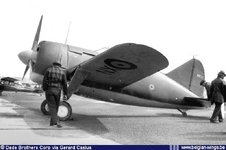
1767140066788.png
This photo is purported to have been taken on Long Island, NY, in 1940.

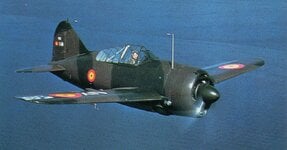
Belgian-Buffalo.jpg
Apparently the same aircraft, presumably some time later, purportedly on a pre-delivery test flight in early 1940.


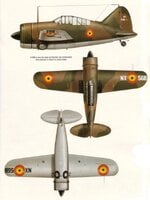
1767143536897.jpeg
An artist's drawings I assume based on the photo, or photos, of the same aircraft.

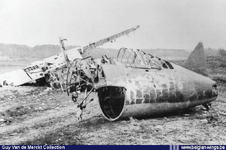
1767140663762.png
Purportedly the same aircraft in Darmstadt, Germany, in 1945.

Images posted as thumbnails for forum ergonomics. Click them to view them in full size.
 
The first U.S Naval fighter to utilize NACA230 airfoils, and NACA had took a good care of its desgin and improvement. The new airfoil gives the aircraft a very high CLmax of 1.52 power-off clean and 2.08 power-off landing, a very impressive value for any WWII era fighter.


1768785832135.png
 
Yesterday I wrote a post on Reddit addressing some of the myths about the Brewster Buffalo in Finnish service. Some of the things I mention have been addressed in this thread, some haven't. It may be of interest to some here, and can be found here:


View: https://www.reddit.com/r/WWIIplanes/comments/1qqqcno/addressing_some_myths_about_the_brewster_buffalo/?utm_source=share&utm_medium=mweb3x&utm_name=mweb3xcss&utm_term=1&utm_content=share_button
 
What I'd like to know is how have people been able determine which NX test registry belonged to which aircraft. NX56 (apparently later NX56B) supposedly had the construction number 56, hence NX56. But then why is the aircraft that's purported to be c/n 61 coded NX15694? Shouldn't it be NX61? Was it first NX61, then NX15694

Aircraft registration numbers/letters are similar to vehicle registrations - and vary in a similar manner. Although each aircraft registration identifier is unique, some countries, including the USA, allow it to be re-used when the aircraft has been sold, destroyed or retired. When applying for the registration code for your aircraft you can request any letter/number that suits you and, if it has not been allocated to another aircraft which is still currently registered, you can be granted that code. One other restriction in most countries is that no two aircraft of the same make and model can be given the same registration code. Otherwise, like with vehicles, you take the code you are given.

The first aircraft to have the registration N (meaning it is a US registered aircraft) X (meaning experimental - just like C meant commercial passenger carrying) 64 would have been the 64th aircraft given an experimental category licence when registrations were first introduced around the very early 1920s. By the time Brewster was registering NX64 that registration had become "vacant", probably not for the first time, so Brewster were able to obtain that code.

When Brewster registered aircraft 61 either NX61 was not available or they were in a hurry and just accepted the next available number, that being NX15694. That number in itself gives you an indication of how many experimental aircraft had been registered in the USA in that 20 odd years. Remember you must add to that the number of codes that had been reallocated.

The same system is in use today in the USA except that the X and C designators are virtually extinct. To stop the numbers becoming unwieldy the system allows many fleet operators to lock up a group of letters that are added after the registration number. For example United airlines aircraft have N(#)UA registrations and American Airlines aircraft have N(#)NN registrations. This means that, for example, person one has rego N500 but United has N500UA and American has N500NN.

I do not know of any site that has a complete copy of the US registry from day one but if one exists you will find many cases where desirable numbers have been reused many times over the years.

If you want a more detailed look at this run a search like how to understand registration numbers of US aircraft. You can probably substitute tail for registration on US aircraft and you can run similar searches for Russian and Japanese aircraft and for MOST other countries you can run a search like how to understand registration letters of Finnish aircraft (or try OH registered aircraft).
 
Last edited:
...

When Brewster registered aircraft 61 either NX61 was not available or they were in a hurry and just accepted the next available number, that being NX15694. That number in itself gives you an indication of how many experimental aircraft had been registered in the USA in that 20 odd years.
Is it really the case?
My understanding is the "plain N", NX, or NC follow one and the same number sequence, from 1 to 99999 (not sure if zero is accepted). There are few NX, part of them on a temporary basis, which can be converted to NC, as an example, with the same number-letter sequence at the end.
Best regards,
Yavor
 
As I understand it from 64 years in the industry, including in the US, yes. That does not mean I am correct though even though I did put several aircraft on the US register including converting one from experimental to utility category so that we could fly it in to Van Nuys when they blocked experimental aircraft in 72..
 
If in 1941 you had a choice between fighting in Brewster F2A, Vultee P-66, Curtiss CW-21, or a Whiraway, which would you pick?
Here's a quick Ai comparison, FWIW:

AircraftRoleEngineMax SpeedClimb RateRangeArmament (typical)Notes
Brewster F2A-2 BuffaloFighterWright R-1820-40 (1,200 hp)~323 mph (520 km/h)~2,600 ft/min~960 mi4 × .50 cal MGTough, stable gun platform; overweight in later marks
Vultee P-66 VanguardFighterPratt & Whitney R-1830-S3C4G (1,200 hp)~340 mph (547 km/h)~2,800 ft/min~1,000 mi4 × .50 cal MGGood speed, mediocre handling; poor Chinese service record
Curtiss CW-21 DemonInterceptorWright R-1820-G5 (1,000 hp)~314 mph (505 km/h)~4,000 ft/min~780 mi2 × .50 cal MGOutstanding climb, fragile, lightly armed
CAC WirrawayAdvanced trainer / COINPratt & Whitney R-1340 (600 hp)~220 mph (355 km/h)~1,300 ft/min~720 mi2 × .303 MG + light bombsNot a fighter; trainer pressed into combat

I'll take the Vanguard. It looks good in RAF colours too.

fsdwba0823_07.jpg

 
P-66 Vanguards In USAAF service were taken off/written off 1942-43 according to Joe Baugher lists. Apparently not sent on to mechanic training.
 
I would agree.

Now, what if you added in the Grumman F5F? I think that would beat them all handily.
It probably would, but you are getting into P-38 land, One F5F costing about double what an F2A-2 would cost or the Curtiss "Demon".

I am not sure the XF5F-1 ever reached it's estimated numbers despite a number of modifications.
XF5F-1-with-a-new-nose-1.jpg

We are supposed to believe that this could do 383mph at sea level while A P-38G with 1325hp good for just over 340mph?
 

Users who are viewing this thread

Back