FulmenTheFinn
Airman 1st Class
I've never heard of a single Model 339 being sent to Finland.
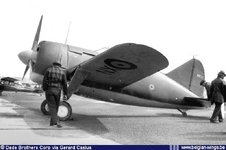
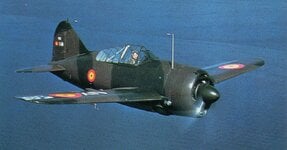
There wasn't one, but it's my mistake for not being more clear. Belgium, having lost her Spitfire order from September 1938 to the RAF because of the outbreak of WW2 a year later, struck a deal with BAC for 40 Model 339s on 11 December 1939. Finland, as mentioned, struck her own deal with BAC for 44 Model 239s mere days later on 16 December 1939. However, under attack by the USSR, the Finns were also interested in purchasing another 60 F2A type aircraft on top of their existing order of 44. This would've included all the aircraft BAC was constructing for Belgium at the time. On 29 December 1939 James Work suggested to Zilliacus that the Finns ask the Belgians that they move their purchase order so that they'd receive their aircraft later, while the Finns would buy the aircraft already under construction for Belgium, ensuring all the 104 or so F2A type aircraft the Finns wanted to buy would arrive in consecutive batches ASAP. Finland would then pay Belgium the late fees owed to the country by BAC for missing the original delivery dates on the Belgian Model 339s agreed to in Belgium's purchase order from 11 December 1939.
"Why not simply place new orders of F2A type aircraft, instead of trying to buy the existing Belgian order?", one might ask. The answer to that is the poor availability of engines. The Belgian order was already earmarked to receive its engines. Placing a brand new order would've meant months of waiting, while Finland was fighting for her very existence and needed the aircraft yesterday.
At any rate, the Belgians did not budge, but agreed to divert six of their order of Model 339s already under construction to the Finnish order of 44 Model 239s. These six aircraft under construction were then converted into Model 239s, engines and all (they received R-1820-G5s), which required modifying the front of the fuselage. This was still faster than waiting for BAC to produce six Model 239s from scratch. To clarify, these six conversions were not extra 239s, but included as part of the total of 44 Model 239s agreed to in Finland's purchase order from 16 December. I do not know if they retained any noticeable differences to the other 38 Model 239s. I suppose had the Belgians agreed to the Finnish request in full, the Finns would've received 44 Model 239s and 40 Model 339s, with possibly another 20 being of either model, or a mix of both.
Jos Heyman identifies the aforementioned six ex-339s as construction numbers 57-62. According to Jukka Raunio, one of these aircraft, c/n 61 and later BW-383, bore the test registry of NX-15694, and was test-flown on 30 December 1939 in the US by American test pilot James Taylor, who was commissioned by the Brits to do so (the Brits were deliberating their own purchase of Model 339Es at the time). Taylor gave high praise to the aircraft:
It is one of the most enjoyable machines I've ever flown. Unlike most low-wing aircraft, it has no tendencies whatsoever to stall at high angles of attack and high g-forces. It's even better than most biplanes. Its agility at great speeds depends entirely on what the pilot is capable of withstanding.
The quote is my translation from Finnish back into English, so the exact wording probably differs slightly from the original quote.
Here's a photo from the Cradle of Aviation Museum of NX-15694 in the US. The engine looks to be running, so perhaps it was taken right before or after Taylor's test flight.
Sources:
Jukka Raunio (2018): Brewster: Taivaan helmi vai maailman huonoin?, pp. 6-7.
Jukka Raunio (1993): Lentäjän näkökulma II, p. 174.
Jos Heyman (2007): BREWSTER BUFFALO - Production listing (reconstructed), pp. 11-13.
EDIT:
Thanks Frog. I thought it was in France but couldn't quite remember. Appreciate the additional detail.
There was a single 339B that was caught in France on its way to Belgium and evidently ended up seeing test service in the Luftwaffe, but other than being from the same order of 339s Belgium placed on 11 December 1939, it doesn't have anything to do with the six that were converted into 239s and sent to Finland.
Last edited: