British 1936-42 purchase options, logistics and export/import of military hardware

Ad: This forum contains affiliate links to products on Amazon and eBay. More information in Terms and rules

Hence the suggestions presented earlier in this thread to adopt some kind of 6pdr gun with modest MV. About equal AP performance compared to the historical 2pdr, but can be provided with a half decent HE load too. Obviously not as good as a 75mm, but better than what they had historically (aka nothing). And still small and light enough to fit into early war tanks.
The part about fitting into early war tanks is certainly up for debate. A lot depends on the armor penetration desired, the amount of ammo required (by doctrine, not experience until the summer of 1940 or later) and what sacrifices we are willing to make for crew size/ergonomics and wither better choices could have been made.
Given unlimited money (materials, labor, factory space, bridging equipment and tractor-trailers for road transport) the British could have done a lot of things different.
If the British won't even buy/build capped shot the chances of them buying larger APCR shot is pretty poor.
You do have to get around the NO HE for tanks thing no matter size you gun you are pushing. Once you get past that the 2pdr is no worse than every other 37-40mm gun in the world.
Wikipedia mentions the Priest was more or less a stopgap solution in British service, replaced with the Sexton once those started showing up in order to simplify ammunition logistics. Sexton was a very Priest-like vehicle made in Canada based on M3/M4 chassis but mounting the 25pdr. So it used the same ammunition as the 25pdr the rest of the army was already using. The 105mm was probably a better gun with substantially more punch as you point out, but logistics matter, it seems.
The British dug themselves a hole in 1930s concerning logistics and shell design. The US 105 was sort of star when it came to HE content but the British 25pdr was only slightly better than some 75mm guns. Problem is that the British divisions didn't often have anything better.
American/French 75mm guns (and tank guns) held 1.5lbs of TNT or 1.36lbs of Amatol. The 25pdr fired a 10lb heaver shell that held 0.3lb more HE.
The German 10.5cm Howitzer fired a 32.66lb shell with 3.04lbs of HE for quick comparison.

The British, once production of guns/carriages gear up, were issuing 72 guns per division (24 guns per Regiment) but except in rare cases anything larger/heavier was in support units.
1940 France sometimes had mixes of guns but the 4.5in Howitzer was very short ranged and was there to make up numbers, especially in units that still had 18pdr guns.
A "Standard German division" (in quotes because non-standard probably out numbered standard) had 3 Battalions of 10.5 Howitzers (12 guns each) and one Battalion of 15cm Howitzers (some times one 4 gun battery was replaced by a 4 gun battery of 10.5cm long guns). British were trying to make up in numbers for the smaller "throw weight".
However this also does not give a good picture. The Germans issued 6 of the small 7.5mm infantry guns to each regiment of the Infantry division (sometimes split into 2 gun detachment per Battalion) and 2 of 15cm infantry guns per Regiment. This brought the total number of artillery tubes to 72 (?)for the German division.
Ability to control guns outside a particular command train changed during the war in many armies.
A British division could, at times, bring down a heavier volume of fire. But the Germans could, at times, bring down a more destructive fire against entrenchments.
If you needed smoke the 25pdr needed more shells.

If WW II had gone the way of WW I, Static warfare against the Germans just a few dozen miles from the English channel, perhaps using lots and lots of cheap shells might have been a smart choice. Once you start shipping hundreds of thousands (millions?) of shell around the Cape of Good Hope cheap shells don't look so good but it is too late.

To also show the difference between a decent SPG conversion and a SPG crappy conversion we can also look at the Bishop and the Sexton.
Unfortunately there was almost a 1 year delay between initial request and delivery (for a box mounted on top of a Valentine hull) and the need for the vehicle as either an assault vehicle or as a SP artillery had pretty much vanished. It showed up in NA within a few months of Grants and Shermans with 75mm guns so the need for direct fire 25dpr was a lot less and the Bishop was pretty poor SP gun.
ar_sph_bishop_p07.jpg

Ability to fire the gun closed up was very limited.
3 man crew in the box even opened up is difficult, trying to fuse shells, set fuses and adjust charges in the cartridge cases is difficult, slowing rate of fire, limited elevation restricts range.
32 rounds was the official ammo capacity. Sometimes helped by towing a standard 25pdr ammunition limber behind the vehicle (towing fuel trailers was considered dangerous but 25pdr ammo?) and the slow speed meant it was only good for accompanying slow tank units.
The Sexton, when it showed up, had a 6 man crew or 5 not counting the driver. It could fire much further and traverse over a larger arc. It carried a huge (comparatively speaking ) amount of ammo. 75 rounds of HE or smoke and 18 rounds of AP with 96 cartridges. Adjust as needed. Still will not reach full elevation/range. Sexton, with it's greater speed, can reposition faster, keeping up better with the movements of the tanks, truck mounted infantry.
 
The part about fitting into early war tanks is certainly up for debate. A lot depends on the armor penetration desired, the amount of ammo required (by doctrine, not experience until the summer of 1940 or later) and what sacrifices we are willing to make for crew size/ergonomics and wither better choices could have been made.
Given unlimited money (materials, labor, factory space, bridging equipment and tractor-trailers for road transport) the British could have done a lot of things different.
If the British won't even buy/build capped shot the chances of them buying larger APCR shot is pretty poor.
You do have to get around the NO HE for tanks thing no matter size you gun you are pushing. Once you get past that the 2pdr is no worse than every other 37-40mm gun in the world.

Presumably had they adopted some form of 6pdr size gun they would have required tanks to be designed to fit them as well. In any case, a moderate velocity 6pdr shouldn't be hugely larger than the high velocity 2pdr.

But, as you mention with no doctrinal need, no HE either. And without HE, the historical 2pdr is arguably the better choice.

The British dug themselves a hole in 1930s concerning logistics and shell design.

If WW II had gone the way of WW I, Static warfare against the Germans just a few dozen miles from the English channel, perhaps using lots and lots of cheap shells might have been a smart choice. Once you start shipping hundreds of thousands (millions?) of shell around the Cape of Good Hope cheap shells don't look so good but it is too late.

Cheaping out on shells is very much false economy, I think. Once you take into account the cost of the gun and crew, and all the logistics related to that, wear of gun barrels etc, a slightly (?) cheaper shell doesn't sound like a good trade, if you need 30% more guns and crew to deliver the same amount of HE to a target.

As for a rerun of WWI, IIRC the French found out that the ubiquitous 75mm was almost useless for the trench warfare. Bigger shells could destroy dugouts and collapse trenches.

They also wanted to avoid
mid_000000.jpg

hence they designed the 155mm to use bagged charges.
 
Presumably had they adopted some form of 6pdr size gun they would have required tanks to be designed to fit them as well.
The British were very much trying to design/build tanks to a size/weight. They were trying for about 16 tons for the Covenanter, didn't make it but the squashed hull and turret the lead to the disastrously flat 12 engine was an attempt to reduce weight while using thicker armor (weight was saved by lower height). But a bigger gun and ammo means a larger turret and larger hull if you want the same elevation/depression and the same number of rounds. The Crusader was supposed to be a bigger/heavier Cruiser than the Covenanter but the difference got smaller when they decided to go to 40mm armor basis and they went to steel instead of aluminum road wheels.
British were NOT doing a good job on mockups.
gb-cruisermark6-crusaderprototype-a15e1_121.jpg

Prototype Crusader built at least in mild steel if not armor. Notice the gun in the Driver's box in addition to the MG turret. Turns out the driver could not get into the tank (Or out of it) when the gun was fitted. Nobody figured this out on a plywood mockup? The Covenanter was supposed to be fitted with a similar gun/mount. Both the driver's gun and the MG turret forced the respective crewmen to abandon the position due to gun fumes. Nobody thought about ventilation? I don't know if it was the driver or the prototype MG turret that almost killed a crewman in testing. It took a considerable amount of time to get the man out of the position and into a space with Fresh air. If it was the MG turret they later fitted a fan which made it survivable but effectiveness of the whole arrangement was so questionable that the turrets were later pulled out, plated over, crewman deleted and space used for storage.
Fitting a short 6pdr might have been quite possible IF they had lifted the weight restriction and allowed for a slightly taller turret and perhaps enough hull length to fit in another ammo rack? It is not the weight of the bare gun that is the problem. It is the size/weight of the turret that allows for ease of handling (including loading).
I believe both the Covenanter and Crusader designs were actually started in peace time (if only by a few weeks).


Cheaping out on shells is very much false economy, I think. Once you take into account the cost of the gun and crew, and all the logistics related to that, wear of gun barrels etc, a slightly (?) cheaper shell doesn't sound like a good trade, if you need 30% more guns and crew to deliver the same amount of HE to a target.
I can kind of understand the British choice of cheap shells. Cheaper steel and easier manufacturing? The British government in 1914/15 had almost fallen (new elections) due to the "Shell Scandal" of the time. Consumption of shells in the first months of WW I was well in excess of what was planned. Production could not keep up with demand which lead to
1. Rationing of shells fired.
2. Issuing contracts to companies that had never made shells before
3. Accepting designs of shells using substitute materials/methods
4. Which lead to hundreds of blown up guns and hundreds of gunners killed/wounded.
5. Sales of millions of newspapers with almost daily articles about government/military incompetence.

Nobody in the Military/Government wanted a repeat of that episode ;)

Unless the enemy shot up the gun/s a good gun would last for thousands of rounds. In WW II manufacture of the 3.7in mountain gun was transferred to India. They made 805 barrels and 2.7 million rounds of HE ammo. Please note that other places in the Commonwealth (and Britain) were producing Shrapnel shells, two kinds of smoke, Star shells and a small quantity of HEAT ammo.
An American 105mm Howitzer was good for 5000-10,000 rounds depending on rate of fire and charges used. US was running out of barrels in NW Europe in the fall of 1944.
Shell supply was not as easy as we think but yes, at some point there maybe a cross over between plentiful cheap shells of low effectiveness and expensive shells of greater effectiveness. British were testing a lighter 25pdr shell (higher quality steel) during WWII that held more HE, ranged a bit further and was judged to be 20% more lethal starting in Sept 1943 but trials had not been completed by the end of the war.
Changing ammo is not something to be done lightly. Even if the projectiles work as desired (don't go bang when you don't want them to and do go bang when you do want them to) any change in weight or shape can affect range tables/fuse settings and/or sight settings.
 
S Shortround6
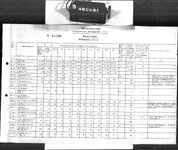
IIRC you were asking about the German tank 5cm HE shell use vs. the AP ammo. Here is the table noting, among other stuff, the real production in Januar of 1941, as well as the plans for the time between April and December of 1941; all in thousands. The item 'M 13a' in the table is for the 5cm tank (5 cm 'short') HE shells production, while the items M13b and M13c are for the AP ammo for the 5cm 'short' tank gun. Almost 1:1 ratio, HE vs. AP + APCR.

0048.jpg
 
The Germans seem to think that 3.7cm & 5cm HE shells had something to offer even if not in the same arena as 7.5cm HE shells.

The British actually had a few very low powered 2pdr HE shells in France in 1940.
However most of the British armored effort in France was overshadowed by very poor planning, tactics, supply, doctrine and some other failings. Very little of which would have been overcome by a change in main gun size.
Most (all?) of the tank regiments were only sent to France in early May of 1940 and most of the troops were not even told they were going to France. Even most of the officers thought they were going to a training camp in France and unfortunately a lot of the stores (like ammo) they brought with them were more suited to training than to active combat service.
Some memoirs refer to 2pdr HE shell but it seems that the 1st Armored division had 3 types of 2pdr ammo. The Early 2pdr APHE shell, the 2pdr APHE shell with the HE removed and replaced by an an inert filling (sand?) and the newer 2pdr AP shot (uncapped). It seems that a lot of tanks went into action with a lot of the first two types which had been earmarked for training. Some tanks/commanders did try using the APHE shell against trucks and AT guns instead of using solid shot.
Some of the the tanks were so new they didn't have their machine guns fitted and the Units were fitting the MGs on the docksides in France, also a lot their radios and they were trying to sort out their radios on the march (or in rest periods) before going into action.
Now we get into a real quirk of the British Army of the time. How cheap they actually were (treasury). Only the driver had any Army mechanical training. Because if the driver completed a mechanic's course he qualified for a pay raise. In a similar way, the loader usually had been to a radio/telegraphers school and got higher pay. Leaving the gunner as the lowest payed. least mechanically trained member of the crew. It didn't take too long before most crews figured out they were all in it together and a driver who had driven all day was not in good shape to do all the maintenance work in the evening/night by himself, But the BEF didn't even have a short time to figure this out.
While the 3.7in CS mortar/howitzer was supposed to have HE available it doesn't appear to have shown up in France. In fact many of the CS tanks didn't even have smoke shells or very many and the CS tanks seemed to operate as command tanks (radio links) and MG tanks. Some tanks/units did not have the 4in smoke bombs for the two turret mounted dischargers so the British tanks in France didn't even have anywhere near the "planned" smoke support/capability they had on paper.
Perhaps if the Germans had waited a few weeks or things had gone better in Belgium/Northern France the British might have had another 5-10 days to get some of the supply issues shorted out, Perhaps not.
Blaming the 2pdr for the British troubles in France (or Greece) seems a like picking on an easy scapegoat.
Now relying on the 2pdr in Spring/Summer of 1942 is going to far. Conducting firing trials in 1943 comparing the 6pdr to the new types of 2pdr ammo is really showing that somebody (or several somebodies) were running well over a year late at best.

I will note that the 25pdr solution was not quite as easy at seems. The 20lb shot was fired at 3 different velocities during the war. The 18/25pdr guns using in France used a 1550fps velocity. The MK II gun (the common one) could use a supercharge and 1850-1880fps and there was a super + supercharge load that required a muzzle brake and got 2000fps velocity. It also turned out in the 1943 firing trials that 25pdr HE ammo was more effective than anticipated but there may have been a few problems with the test. Since they were shooting up captured tanks the targets had already been hit by a number of smaller AP rounds which may have weakened the structure/welds causing them to fail under the HE explosions.
German face hardened armor also showed a few problems. One test shot b a 6pdr failed to penetrate but threw off a 6in dia chunk of metal from the inside of the plate.
 
A lot of this had to do with trying to reinvent the wheel, while having the faulty doctrine that put premium on the ability to move and shoot, meaning that small & light tank guns are needed. Expecting that Army can do with feeble air support 20 years after the aircraft proved themselves time and again was another thing needing rework.

Reinventing the wheel:
- 2 pdr gets designed and produced despite British industry making mid- and high-power 47 and 57mm guns already 50 years now.
- 25 pdr/88mm howitzer, despite the other 'modern' countries opting for 105mm stuff; requirement to make 88mm barrels, while industry is tooled up for 4in barrels. A modern 4.5in howitzer would've been good, too. Bigger calibers have more stretch, and British army was going motorized anyway.
- 3.7in AA gun, again despite the industry capable for making modern 4in AA guns.
- 5.5 in gun, despite the 6 in guns being bread & butter both for the Army and Navy needs.
- 7.2 in howitzer?

When one needs to make it all new - carriages, ordnances, ammo - things get expensive, late and complicated.
 
Reinventing the wheel:
- 2 pdr gets designed and produced despite British industry making mid- and high-power 47 and 57mm guns already 50 years now.

Perhaps metallurgy, powders, etc had developed sufficiently in the past 50 years that they thought a clean sheet design was warranted?

But maybe we can also blame doctrine. If their pre war tank doctrine had put some emphasis on HE and not only on AP, maybe they would have come up with another design?

- 25 pdr/88mm howitzer, despite the other 'modern' countries opting for 105mm stuff; requirement to make 88mm barrels, while industry is tooled up for 4in barrels. A modern 4.5in howitzer would've been good, too. Bigger calibers have more stretch, and British army was going motorized anyway.

Wasn't the idea partly to save money by reusing the WWI era 18 pdr barrels and carriages?

Secondly, seems the Soviets were also happy with their 76mm field guns, even smaller than the 25pdr. Maybe there's some value in a piece that is light enough to be towed by a jeep? OTOH, if you plan on equipping batteries with trucks anyway, maybe a 105mm (gun-)howitzer would have been a better choice?

- 3.7in AA gun, again despite the industry capable for making modern 4in AA guns.

Seems all the big powers ended up with the majority of their heavy AA in this size, or actually slightly smaller. High MV and high elevation mounts added a lot of weight, and seems guns in this size were about the biggest ones that were considered decently road mobile.

- 5.5 in gun, despite the 6 in guns being bread & butter both for the Army and Navy needs.
- 7.2 in howitzer?

As mentioned upthread, adopt the 155mm for ammo commonality with the French and the Americans. A howitzer for general purposes, and then a cannon for counter battery and other long range missions.

If you want to rationalize, forget bigger guns than that, mobility starts to suffer too much. Use aircraft or railway guns if you need to deliver a bigger bang or to longer range than what the 155mm/6" is capable of.
 
The 2 Pounder was not a tank gun. It was an anti tank gun for the infantry divisions. However it was put to use in tanks as it was cheaper than making a new gun and was an effective anti armour gun for its day. As it was light and succeeded previous shoulder elevation guns which had been proved able to fire accurately on the move it was mounted thus and was not, in itself, an issue. The consequent need for an internal mantlet to balance it was an ongoing drawback however. The more serious drawback in period was not the lack of a general issue 40mm HE round which was really just a grenade you could throw a lot further than a man could but rather the lack of a worthwhile dual purpose gun. It had been established before the Great War that one needed at least a 75mm bore to carry a worthwhile HE round and the French 75mm was an existing sound model. Thus the short 75mm on the Char B which was an existing 1920s design base.

A significant difference between Britain and continental peers was that they were established to fight a continental land war and their armies were the principal force. Britain's principal force was the Royal Navy followed by the Royal Air Force and funding followed these priorities. This is not an ex use but it is an explanation.
 
A lot of this had to do with trying to reinvent the wheel, while having the faulty doctrine that put premium on the ability to move and shoot, meaning that small & light tank guns are needed. Expecting that Army can do with feeble air support 20 years after the aircraft proved themselves time and again was another thing needing rework.

Reinventing the wheel:
- 2 pdr gets designed and produced despite British industry making mid- and high-power 47 and 57mm guns already 50 years now.
- 25 pdr/88mm howitzer, despite the other 'modern' countries opting for 105mm stuff; requirement to make 88mm barrels, while industry is tooled up for 4in barrels. A modern 4.5in howitzer would've been good, too. Bigger calibers have more stretch, and British army was going motorized anyway.
- 3.7in AA gun, again despite the industry capable for making modern 4in AA guns.
- 5.5 in gun, despite the 6 in guns being bread & butter both for the Army and Navy needs.
- 7.2 in howitzer?

When one needs to make it all new - carriages, ordnances, ammo - things get expensive, late and complicated.
A rule of thumb in naval Architecture as that weight of the mounts/turrets/structure and magazine went up with the cube of the caliber of the gun. Things get heavy and large real quick.
Complicating things for British tanks is the fact that the British, for some reason, wanted about 15 degrees of depression and 25 degrees of elevation. I don't know if this was actually wanted for the main gun or if it was wanted for the co-ax machine gun. This lead to a larger (taller) turret than was really needed. By the time they get to the Comet the limits were +20 and -12, the Sherman was +25 and -10. Depression on the Firefly depends on source. -5 or -6 seems a lot more reasonable than the standard -10 for other guns.

British navy had two 47mm guns, the old black powder Hotchkiss (later smokeless loads didn't gain much velocity) and this was basis for the Vickers Medium tanks.
The short barreled tank gun used in the Medium MK 1 was shorter and lighter than even the 1880s Hotchkiss gun.
The 1900 47mm gun was about 650lbs and just over 2.5 meters long.
We are back to doctrine, What kind of elevation and depression was wanted, even they gave up on the free elevation. How much ammo was wanted? How big a hull/tank are you willing to buy? The British had decided not to buy the A7s or even the later A14s because of cost.
The 1st Armored Division went to France with 150 Cruisers of all type and 134 light tanks. They were using light tanks to fill in for Cruisers (although they never would have gotten all cruisers) because of low production and low production was partially due to cost per tank. The Treasury did not want to pay more per tank.

The British did screw up with the complicated 360 degree mount for the 2pdr AT gun. They could have cut the cost by about 50% by using a simple split trail. It would have been easier to handle. Then don't cheap out on the ammo.

For the 25pdr the British were trying to have it both ways. The 10.5cm Howitzer was the standard howitzer of the 1930s/early 40s. It was NOT the standard field gun of the 1930s/early 40s.
Field guns used pretty much fixed ammo, non-adjustable powder charges and they had limits in regards plunging fire. (Germans used varying powder charges in the 7.5cm field guns)
Americans did not get their 105 into production until 1940. US had several thousand 75mm field guns.
The French had thousands of 75mm field guns.
The Italians used either old 75mm field guns or ex Austrian 100mm howitzers with a few new 75mm field guns.
Soviets used 76mm field guns with just a scattering of old 12cm howitzers. and so it goes.

The British were trying to use one gun to replace the 18pdr (83.4mm) and the 4.5in Howitzer.
3 zone charges to allow for plunging fire and standardizing on one caliber. Most of the WW I 75mm guns (not French) had a companion 100-105mm howitzer that fit on the same carriage. But most/all of those had a much shorter range than the German and American 105s (they were lighter). The British 25pdr was supposed to have more range than the old 100-105mm howitzers but a bit less than the best of the new 75-76mm guns. It was actually a good, well thought out gun/concept but then they went cheap on the ammo (we are are all going to get tired of this phrase).

The British 3.7in AA gun was actually a very good gun. It was about as heavy as you could make a mobile AA gun unless you do silly things like use a lot of aluminum in the carriage.
The original 1933 specification called for an 8 ton gun (they missed) that could be emplaced in 15 minutes and could be towed at 25mph.
The change in size doesn't sound like much but compared to the German 88/56 (which weighed a lot less) the British shell was 33% heavier.
The RN 4in gun was bit heavier (600lbs) , fired a shell that was 7lbs heavier.
The 3.7 went through several versions and was fitted with an automatic fuse setter/loader. Once the round was loaded into the tray and the operating switch was slapped everything was completely automatic. Fuse setter set the fuse, tray lined up with the breech, the round was rammed, the breech closed and the tray retracted and the gun fired and ejected the casing. By which time the next round should be sitting in the tray waiting for the operating switch to be slapped. Guns so fitted could fire up to 25rpm.

The British 5.5in was another one of these of combination guns and/or carriages. The 5.5 was actually a howitzer with 4 zone charges and the carriage would hold the 4.5in cannon barrel which had 3 charges. 55lb shell instead of the 100lbs. Please note that the US built a 4.5in barrel to use the same shells (different powder charge) and they mounted it on the US 155mm M1 Howitzer carriage. The British 5.5 was not a 6in gun. A 6in gun would have been almost twice as heavy and ranged about 25% further. Big guns get into diminishing returns.

British 7.2 howitzer came about due to ballistics. They wanted a 200lb projectile with good streamlining that could be fired from a modified old 8in Howitzer barrel and carriage.
This may have done with more try it and see what happens than careful calculation ;)
Using 2 1/4 lbs more cordite they managed to get about 200fpm more velocity and and other 4500yds range (much better shaped shell).
They could bore out or reline the existing 8in howitzer barrels so they got useful increase in range for not much cost. Although using the maximum charges went from just somewhat scary to down right frightening.
7.2%20pol%20howzer%20039.jpg

The increase recoil overpowered the recoil system at the higher charges and the gun recoiled up the ramps and back down with every shot when everything went right. When it did not go right (wet weather, one ramp started to sink into wet ground, passing humming bird) the whole gun could recoil up and over the ramps to land somewhere behind while bouncing around on the pneumatic tires like an 11 1/2 ton demon from hell.
By 1944 the British had designed and built 7.2in barrels to fit on US 155 M1 & US 8in Howitzer carriages
_inch_howitzers_at_Rhine_crossing_1945_IWM_B_15776.jpg

and being a 7.2in gunner became a lot less exiting ;)
This version of the 7.2in lasted until the 1960s.
It could out range the US 8in by just under 1100yds both using 200lb shells.
The US shell held a bit more HE.
 
Perhaps metallurgy, powders, etc had developed sufficiently in the past 50 years that they thought a clean sheet design was warranted?
But maybe we can also blame doctrine. If their pre war tank doctrine had put some emphasis on HE and not only on AP, maybe they would have come up with another design?

Metallurgy etc. certainly developed a lot in these decades. All the advances allowed for the reasonably-sized tank guns, without the need to go to the door-knocker.
Yes, doctrine was to blame a lot.

Wasn't the idea partly to save money by reusing the WWI era 18 pdr barrels and carriages?

British can reuse a lot of 4-4.5in gun barrels, too.
The ww1 carriages were bad. Reusing them was a mistake in the time people were going with split trail carriages, that fact was obvious even before 1920.

Secondly, seems the Soviets were also happy with their 76mm field guns, even smaller than the 25pdr. Maybe there's some value in a piece that is light enough to be towed by a jeep? OTOH, if you plan on equipping batteries with trucks anyway, maybe a 105mm (gun-)howitzer would have been a better choice?
The 102/105/114mm (take your pick) modern howitzer gets my vote.
Soviets were also using the 122mm howitzers, that British have had no equivalent come late 1930s.

Seems all the big powers ended up with the majority of their heavy AA in this size, or actually slightly smaller. High MV and high elevation mounts added a lot of weight, and seems guns in this size were about the biggest ones that were considered decently road mobile.
British 3.7in was almost double the weight of the German 88mm L56 (and a much more capable gun than the L56), and about the weight of the L71, so perhaps we're talking about two categories of mobility here - the 'short' 88mm as a really mobile piece that can follow the troops need-be, and the two heavier guns being preferably in the static positions?

Seems like that the 3in AA gun was preferred as a mobile heavy piece by the British.
 
Wasn't the idea partly to save money by reusing the WWI era 18 pdr barrels and carriages?
Not really. The British had designed a new 18pdr (keep the ammo) that used a different carriage (or two) and a different barrel and different recoil mechanism and perhaps a different breechblock. Had the war extended into 1919 the new gun/s would have become a lot more common.
Between the wars some of the best of the old guns were given new wheels and brakes for motor towing but that was as far as it went. It was the 1919 guns/carriages that got more improvements or got 25pdr barrels.
Secondly, seems the Soviets were also happy with their 76mm field guns, even smaller than the 25pdr. Maybe there's some value in a piece that is light enough to be towed by a jeep? OTOH, if you plan on equipping batteries with trucks anyway, maybe a 105mm (gun-)howitzer would have been a better choice?
You might be able to tow the gun with a jeep, now how do you move the ammo?
Some armies loved field guns, they were simple. If you aren't fitting in hills or mountains, just figure out how far away you want to shoot, elevate the gun to the right elevation, load and shoot. no pesky figuring out which different powder charge to use or anything complicated. Field guns often had much higher rates of fire.
As mentioned upthread, adopt the 155mm for ammo commonality with the French and the Americans. A howitzer for general purposes, and then a cannon for counter battery and other long range missions.
This actually assumes everything works out the way you want. US spent quite a bit of time working on a 4.7in gun, or more than one from 1919 on. Since only a few countries were actually spending money on artillery in the 1920s and early 30s a lot of designs were placed in storage for a number of years. In Jan 1940 the US standardized the 4.7in gun to be used on the 155 howitzer carriage. But at this time 'standardization' did rear it's head and the the idea of at least using British 4.5in ammo was adopted. The Gun was rebored (lined?) to 4.5in from 4.7in and it was standardized in May 1941. This weapon was disliked by the Americans for it's entire career and it was declared obsolete in Sept 1945. Mainly because the US disliked the British designed shell of low grade steel with it's low HE payload.
The US 155mm M1 gun was a wonderful gun, one of the best in the world and it lasted well into end of the century in some armies. But it weighed 13,880kg when traveling and required some pretty hefty tractors to move it. US didn't have 100% compatibility with their own 155ammo.
If you want to rationalize, forget bigger guns than that, mobility starts to suffer too much. Use aircraft or railway guns if you need to deliver a bigger bang or to longer range than what the 155mm/6" is capable of.
Well, railroad guns are sort of dead end. Really expensive for what you get out of them. As for aircraft, you just fell into the same trap that the British did in the 1930s. Why spend money on heavy artillery when airplanes can do the job? Right up until the Air force doesn't order the right planes or even give priority to Army missions even using the wrong ones.
British can reuse a lot of 4-4.5in gun barrels, too.
British army didn't have much in the way of 4-4.5 gun barrels. They had 4.5in Howitzers, no guns. The 4.5in Howitzer was pretty good.....................in 1909. Production stopped in 1918 or beginning of 1919. The weapon was light, it was about 70in long. You need a new longer barrel to get any more range out of it. Existing carriage only traverses 3 degrees each way, for all of it's 4.5in bore the shell only weighs 35lbs. There is nothing to save unless you want to send some to Burma.
The 102/105/114mm (take your pick) modern howitzer gets my vote.

Soviets were also using the 122mm howitzers, that British have had no equivalent come late 1930s.
The 120mm size tended to fall out of favor, except for the Soviets after WW I.
Soviet 122mm howitzers used 21.7-22kg shells. the most common Soviet 122mm how in June 1941 this
330px-122_mm_howitzer_M1910-30-4605.jpg

It weighed 2500kg under tow, it had about 5-6 degrees of travers(?) and it had about 8900meters of range with the most modern ammo.
The classic 122 mm howitzer M1938
Haubica_wz38_122mm_RB.jpg

is much more capable, it also didn't enter production until 1940 and it weighs
about 650kg more than 25pdr. and ranges about 500 meters less.
You have to juggle your requirements carefully.
The 100-105mm howitzers were hitting the limit for horse traction between the wars and still getting good range.
You also need to move enough ammo, Granted the British used the poor quality steel in the shells but the establishment called for
114 rounds of HE, 16 smoke and 12 rounds of AP per gun in the Battery with more ammo in higher level ammunition trains.
 
I don't know if the British knew about this, but adopting 155mm may also have been premature considering that during the early and mid 30s, before war was seen as within a few years instead of a decade or more, the French had been looking at standardizing on new artillery calibers. 115mm instead of 105, and 145mm instead of 155mm. It is only with war looming closer that the French reverted to improving on the existing calibers.

Standardization on an international level wasn't really encouraged at that time. More often than not, standardization was incidental and caused by the breakups of European empires leaving factories tooled up for specific calibers within the successor countries; or by deliberate decisions in wartime that were unlikely to reoccur in peacetime. It took the near-annihilation of Western and Central European military industries and weapon stockpiles and the creation of huge military industries in the US and USSR to warrant mass standardization as there was now far less legacy systems to rely on.

Had Metropolitan France not fallen, taking the French MIC out of the equation and making the remaining neutral countries easy prey for the belligerents, most of these industries would not have been affected and we may very well never have seen the historical postwar standardization efforts.
 
Last edited:
You might be able to tow the gun with a jeep, now how do you move the ammo?

You carry them in the shirt pockets of the gun crew, duh.

For a jeep-towed gun you probably(?) need two jeeps per gun to have space to carry the crew and supplies. Second jeep can be loaded with ammo, or tow an ammo trailer. Are two jeeps cheaper than one light truck? I don't know, but perhaps not?

US spent quite a bit of time working on a 4.7in gun, or more than one from 1919 on. Since only a few countries were actually spending money on artillery in the 1920s and early 30s a lot of designs were placed in storage for a number of years. In Jan 1940 the US standardized the 4.7in gun to be used on the 155 howitzer carriage. But at this time 'standardization' did rear it's head and the the idea of at least using British 4.5in ammo was adopted. The Gun was rebored (lined?) to 4.5in from 4.7in and it was standardized in May 1941. This weapon was disliked by the Americans for it's entire career and it was declared obsolete in Sept 1945. Mainly because the US disliked the British designed shell of low grade steel with it's low HE payload.

Seems the British weren't entirely happy with the 4.5" either. From wiki: "It was withdrawn from field service in 1945, relegated to training purposes and finally declared obsolete in 1959 with the 5.5 inch gun replacing it."

The US 155mm M1 gun was a wonderful gun, one of the best in the world and it lasted well into end of the century in some armies. But it weighed 13,880kg when traveling and required some pretty hefty tractors to move it. US didn't have 100% compatibility with their own 155ammo.

Well, railroad guns are sort of dead end. Really expensive for what you get out of them. As for aircraft, you just fell into the same trap that the British did in the 1930s. Why spend money on heavy artillery when airplanes can do the job? Right up until the Air force doesn't order the right planes or even give priority to Army missions even using the wrong ones.

I'm not saying you shouldn't have heavy artillery. Just saying that as you increase the size there's a point wrt. road mobility, shells becoming very difficult if not impossible to handle without a crane, etc., where they become increasingly difficult to justify. Something like the 155mm M1 gun might be getting close to that limit.
 
I don't know if the British knew about this, but adopting 155mm may also have been premature considering that during the early and mid 30s, before war was seen as within a few years instead of a decade or more, the French had been looking at standardizing on new artillery calibers. 115mm instead of 105, and 145mm instead of 155mm. It is only with war looming closer that the French reverted to improving on the existing calibers.

Interesting, any info why they were considering this change? What was wrong with the 105 and 155mm?
 
For a jeep-towed gun you probably(?) need two jeeps per gun to have space to carry the crew and supplies. Second jeep can be loaded with ammo, or tow an ammo trailer. Are two jeeps cheaper than one light truck? I don't know, but perhaps not?
Using a jeep or light truck to tow a 75mm field gun works rather well in a diorama, not so good in real life off pavement.
British used 36 Morris Quads to tow 24 25pder guns and their ammo. Each gun Quad carried a 5 man crew +driver. Each Quad held 24 complete boxed rounds of ammo + 8 boxed AT rounds. Each Quad towed a no 27 limber that held 32 rounds between the Quad and the gun. The extra 12 Quads on the march towed two limbers apiece.
Other armies substituted trucks of various sizes (or horse wagons) as ammo supply vehicles. US and Germans sometimes used half tracks as tow vehicles. The US for the 105s had the half tracks as a middle ground. 2 1/2 ton trucks and M 5 high speed tractor (starting in 1943) were used as prime movers for 105mm howitzers.
75-76mm field guns could fire 15-25rpm rapid fire and 3-6 rpm 'normal'. Ammo was usually transported in wooden crates. 1 or 2 rounds per crate. Ammo supply is/was often over looked. Weight of just the projectiles for the basic load for a 25pdr is 3550lbs (over 1600kg) and that does not include cartridge cases, propelling charges and the wooden crates.
The British Quad worked but it left somethings to be desired. Using a 4 cylinder 3.5 liter 70hp engine to move 9 tons (vehicle, limber and gun) was certainly better than using horses but speed on hills or off road was on the low side. The winch saw a lot use in poor conditions.
Using two jeeps plus a trailer (or 3 jeeps plus 2 trailers) gets real expensive and trying to tow guns that weigh more the jeep off road, in mud, gets rather dangerous.
Seems the British weren't entirely happy with the 4.5" either. From wiki: "It was withdrawn from field service in 1945, relegated to training purposes and finally declared obsolete in 1959 with the 5.5 inch gun replacing it."
Yes, even the British didn't like the 4.5" and it was because of the cheap steel used in the shells. Once the British started using the 80lb shell in 5.5" that made up part of the range difference (and got some US 155mm guns) the need for the 4.5" disappeared.
Interesting, any info why they were considering this change? What was wrong with the 105 and 155mm?
Only the French can say. Perhaps they were looking for a common carriage/recoil system?
The German 10 cm sK 18 weighed 5,642 kg and fired a 15.14kg shell 19km. You needed a workshop to do it but you could swap a 15cm barrel onto the same carriage/recoil system and get a 5512kg weapon (in service) that fired a 43.5kg shell 13,325 meters.
Perhaps they were looking for more range?
But trying to use a 115mm field howitzer in the late 30s is getting into iffy territory. Especially for an army that was still using horse traction for some of their guns. If we go by the cube rule a 115mm howitzer is going to be about 31% heavier than a 105mm howitzer of similar range and with similar shell construction. If you are willing to accept a bit less range maybe it works. You can use heavier guns with horses but then they can't keep up with marching infantry.
The French and Germans had sold 120mm Howitzers to several customers before and just after WW I. Heavy shells (about 20kg) but short range (7-9km?)
The 145mm size seems strange. The French did have some 145mm guns but were ex naval guns. In 1939 there were 215 left (just 145mm or both sizes?) but they had old style carriages, 6 degrees of traverse, and were mostly used for coast defense. The strange part is that when they got worn they re-bored or lined them to 155mm to fire standard French 155mm shells. The re-bored guns with the heavier 155mm shells gained 1200meters range? Better streamlining or higher elevation? most of these Coast defense/fortification guns were mounted so that the guns were tilted to allow for more elevation.
Actual thinking may make sense but the common reasons don't come to mind and the French had crap load of left over 155m howitzer and guns (5 different models) left over from WW I.
 
Interesting, any info why they were considering this change? What was wrong with the 105 and 155mm?
Only the French can say. Perhaps they were looking for a common carriage/recoil system?

Perhaps they were looking for more range?
But trying to use a 115mm field howitzer in the late 30s is getting into iffy territory. Especially for an army that was still using horse traction for some of their guns. If we go by the cube rule a 115mm howitzer is going to be about 31% heavier than a 105mm howitzer of similar range and with similar shell construction. If you are willing to accept a bit less range maybe it works. You can use heavier guns with horses but then they can't keep up with marching infantry.
The French and Germans had sold 120mm Howitzers to several customers before and just after WW I. Heavy shells (about 20kg) but short range (7-9km?)
The 145mm size seems strange. The French did have some 145mm guns but were ex naval guns. In 1939 there were 215 left (just 145mm or both sizes?) but they had old style carriages, 6 degrees of traverse, and were mostly used for coast defense. The strange part is that when they got worn they re-bored or lined them to 155mm to fire standard French 155mm shells. The re-bored guns with the heavier 155mm shells gained 1200meters range? Better streamlining or higher elevation? most of these Coast defense/fortification guns were mounted so that the guns were tilted to allow for more elevation.
Actual thinking may make sense but the common reasons don't come to mind and the French had crap load of left over 155m howitzer and guns (5 different models) left over from WW I.
Most of the answers would be in the documentation related to the new artillery program of June 4th 1926 which I have yet to find. I do not have direct explanation for the 115mm caliber, but I do for the 145mm.

The general trend after WW1 for French artillery research was to extend range. For Army level artillery, a range of 25km was desired, something which the current 155mm GPF couldn't do. The 1926 program set the caliber for such a system at 145mm explicitly to not have an excessively heavy gun. At the time there were beliefs that the 155mm caliber was already more than lethal enough and that 145mm would still suffice. This led to research for both a new 145mm gun with 25km range, and retubing of the GPFs in 145mm to achieve 22km.

By 1936 or so it appears that the French reconsidered the idea possibly on the grounds that extra system weight would be preferable over having two calibers (moreover, there weren't many 145mm rounds on hand). This led to new research into a long range 155mm system with the same 25km target range, with a program to compare the experimental mle.1916 long range tube, and a new "GPAL" tube both able to be mated to GPF carriages. This coincides with related work to generally modernize the GPF and create a thoroughly modernized gun (increased elevation, greater mobility, more convenient and faster setup). As of 1940 only the new Touzard carriage was in production, leading to the GPF-T.
Meanwhile research on shell aerodynamics during this time period led to new service rounds between 1936 and 1939 for artillery calibers which notably extended range without sacrificing lethality.

The 1926 program for long range smaller caliber guns involved both a 105mm gun with a weight of 4 tonnes and a max range of 19km which could be towed by animals, or a heavier 115mm system (5.3 tonnes in battery and 6 tonnes on road) with a range of 20km which would only be exceptionally towed by animals, and most of the time would instead use mechanical traction. In 1934-35 the evolution of this 115 into a 120mm to use existing ammo was also contemplated, but it appears that this caliber was completely cancelled in 1936 in favor of just 105mm. Given the meagre increase in range, I believe that the 115mm was originally considered to increase lethality so that it could be used in more roles, especially in replacement of less common and heavier 145/155mm artillery. This also makes sense as another document about lightweight 155mm rounds indicates the standard 43kg projectile was expensive and overkill for certain missions and that a lighter round with reduced payload would be acceptable for certain missions.
The 105mm program led to the development of the Tarbes arsenal 105mm gun with a range of 19km, the carriage of which was too unstable and needed a complete redesign. The less ambitious Schneider mle.1936 was adopted instead, especially now that new ammo brought range much closer to the 19km target.

It is worth noting that 105/115 with greater range was required because the 105mm mle.1913 was deemed too short ranged. At one point there was even a proposal to retube it to 95mm to extend range to 15km while using existing 95mm ammo stockpiles, but this time lethality was deemed too low. It did benefit from the new ammo in development in 1936 to extend range.

As private ventures, French companies used a lot of other calibers (90 and 100mm) but these didn't pan out.

As for the 145/155mm mle.1916 guns, the ability to rebore them to 155mm was integrated from the start to keep using the barrels after the 145 rifling was shot out. Many were rebored after 1920 but some were still not worn enough in 1940 and saw service. Interestingly enough, the 145/155 mle.16 was itself a successor to previous WW1 145mm artillery created by reboring naval 138mm guns.
 
Ignoring for the moment the notion of international standardization by choosing the French 155mm for British heavy artillery needs, what about some inter-service standardization by using naval guns and ammunition for long-range guns (obviously not for howitzers)? Say the BL 6" Mk XXIII gun used on lots of light cruisers classes, United Kingdom / Britain 6"/50 (15.2 cm) BL Mark XXIII - NavWeaps . That would have a nice range of around 23.3 km, comparable to the US M1 155mm gun. Of course, being a naval gun even the M1 Long Tom would probably be a featherweight by comparison.

As an aside, it seems naval 6" guns in the era used much heavier shells than comparable land based artillery, even before going to the US superheavy shells (59kg for a 6" superheavy AP shell!). The above mentioned BL 6" Mk XXIII fired a 50.8kg shell, compared to 43.2kg for the 155mm.

In addition to weight, a big downside of this gun seems to be the shells, poor British shells not being limited to the Army it seems. 3.6kg bursting charge compared to 6.86kg for the US 155mm shell. Oof.

But maybe there are other interesting naval guns that could be used? The UK sure had a plethora of naval guns in the 4.5-6" size range.
 
But maybe there are other interesting naval guns that could be used? The UK sure had a plethora of naval guns in the 4.5-6" size range.

The 5.25 in gun? Modern, powerful, not too heavy for the land use. Make a no-nonsense split carriage for it and call it a day.
Bore out the 5in guns so they can fire the same ammo, even if with the less powerful propellant load.
 
Thank you.
Not much information is given on some of the guns getting more elevation to help with extending range. The original GPFs had 38 degrees of elevation? Germans got 45 degrees out of the 12.8mm mounted on the GPF-T carriage but how much due to the GPF-T carriage and how much due to the new German upper part I don't know. US got 63 degrees out of their modern carriage but anything more than low 40s just means you can fire in upper register and doesn't extend the range any.
Getting 6-7 degrees of elevation may only have been good for 1000-1500meters?
The extra range using longer barrels and larger charges may not have been worth a lot as it comes with a lot of barrel wear. The US M1 gun for max range used 25% more powder than the M1917/1918 gun.
The "105mm gun with a weight of 4 tonnes and a max range of 19km which could be towed by animals" might have been a nice goal but it seems out of reach.
The Schneider mle 30 sold to Denmark (and mounted on the Schneider mle 29 155 howitzer carriage) exceeded the range requirement by 1000 meters but was heavy at 5645kg traveling and 5120kg in action.
Schneider sold some 105mm mle 36 guns to the French and while the weight was close (4090kg traveling with horses) the traverse was not all it could be (25 degrees?) and the crew had to hammer stakes into the ground at the end of trails. More importantly is that the shorter, lighter barrel (and propelling charge?) dropped the range down to 16km.
The Czechs, Swedes (Bofors sold to Holland), and Japanese were not able to meet the French specification with their 105mm long range guns although the Japanese came closest.
4368kg traveling and a range of 18.3km. traverse may have been 36 degrees(?) and there were 3 stakes in each trail arm that had to be hammered in (and dug out) .
Model_92_carriage.jpg

Japanese gun.

Some of these French proposals don't look worthwhile.
" At one point there was even a proposal to retube it (the 105 mle 1913) to 95mm to extend range to 15km while using existing 95mm ammo stockpiles, but this time lethality was deemed too low. It did benefit from the new ammo in development in 1936 to extend range."
Not sure if there was any 95mm ammo (what gun?) but even assuming there was, the mle 1913 carriage only allowed for 6 degrees of traverse and 37 degrees of elevation.
Re-tubing old carriages with limitations seems like a lot of money for limited returns. The British re-tubing 18pdrs to 25pdrs got larger shells and the only equipment re-tubed were the post war (WW I) equipment's with box trails and platforms (MK IV) like the modern 25pdrs with 37 degree elevation and the MK Vs with split trails (50 degree traverse) and 38 degree elevation.
 

Users who are viewing this thread

Back