Fixing the Italian Military, 1933~1945 (5 Viewers)

Ad: This forum contains affiliate links to products on Amazon and eBay. More information in Terms and rules

P-35A (the one with the better engine) was making 290 mph, the Re 2000 was good for 330 mph. While speed is not everything, saying that a 330 mph fighters is as good as the 290 mph does not come as a fair assessment.
Fuel tanks' thing can be rectified, as it was with the later Reggianne fighters.
Sorry I was not clear. The Re 2000 was basically P-35 in form/shape and construction but with a better engine. The engine in the P-35 was only good for 850hp at 8,000ft so performance even in the teens was poor. P-35A (ex Swedish aircraft) had a later engine that was good for 1050hp at 7700ft but that is not as good as the Piaggio engine giving 986hp (?) at 13,000ft.
The extra 5,000ft of altitude means a lot. Re 2000 had much more streamlined landing gear and quite possibly better intake.
Fuel tanks are possible to be fixed, depends on the fix and the desired fuel capacity after the fix. P-35s and their cousins could hold a lot of fuel. They just sealed up the wing and poured fuel in. The trouble was keeping the fuel in the wing. Fixing it and putting in separate tanks could be done but it was not simple and the smaller tanks reduced fuel capacity, the design did have room inside the fuselage for some sort of tanks. Seversky had built about 70 aircraft as two seaters.
The Re 2000 first flew in May 1939 but was an older design, however the C.200 and G.50 were both about two years older than the Re 2000.
All of the Italian fighters lacked fire power as built, which can be rectified although the Italians tended to max out at two 12.7mm and two 7.7mm guns for 1940-41 and a lot of 1942.
Gun shortage? Lack of power from engines?
Even four 7.7mm's in the wings doesn't seem like a big stretch
 
All of the Italian fighters lacked fire power as built, which can be rectified although the Italians tended to max out at two 12.7mm and two 7.7mm guns for 1940-41 and a lot of 1942.
Gun shortage? Lack of power from engines?
Even four 7.7mm's in the wings doesn't seem like a big stretch

My preference would be to rip out the 7.7mm and replace them with an additional pair of 12.7mm. 4x12.7mm, while not awesome, is pretty decent up to, say, mid-war. And towards the end of the war Italy has been knocked out of the conflict anyway.
 
I'm somewhat skeptical about the prospects for Italian carrier aviation in the WWII time frame. To have time to develop the equipment like carriers, aircraft, catapults, doctrine and procedures how to use them etc. etc. they need to start earlier. All the navies that operated significant carrier forces during WWII (RN, USN, IJN) got started in the 1920'ies or even earlier. And then you need several carriers so you can actually afford to use them and to not be without an aviation capability because your carrier is under repair/refit/etc. A carrier as a harbor queen because you don't dare to risk your single precious carrier is an expensive waste of money.

With an extraordinary amount of clairvoyance, and wishing away the navy vs. air force turf wars, sure they might have built a carrier in the 1920s instead of extensively modernizing the Dorias and Cavours, and then when the treaty system breaks down in the mid-1930s rapidly building, say, 4 carriers. Scale down the Vittorio Veneto program to 2 battleships to pay for the carriers?

That being said, by efficiently utilizing land bases in Siciliy, Sardinia, Aegean islands, Rhodes&Greece, they could have covered a fairly large fraction of the Mediterranean, so maybe the added value they would have gotten from carriers is limited in any case? A big question here is the navy vs. air force turf wars, but building a carrier doesn't magically make those disappear either.
 
The 'long range fire' doctrine showed up in very high velocity guns all the way from battle ships to destroyers. But the Italians never got this to actually work. They fired more than their share of shells and got very, very few hits at long range. Of course, few people did but the Italians seem to have been well below average in an area where even one to two percent would be considered good. This also bit them in the butt because they didn't train for much of anything else.

I wonder if part of the blame for the high velocity approach can be laid on the treaty system? With the treaties limiting gun sizes withing each ship class, there was perhaps a desire to have the longest range and hardest hitting gun in each gun size class. Perhaps they should have stepped back a bit and though about the compromises this meant in terms of barrel life and gun size and weight. Italians additionally seemed to have a lot of trouble with accuracy, as you mention, though to which extent this is correlated with the high velocity I'm not sure. Some problems were due to having the guns too close to each other, IIRC some of the issues with the larger guns appear to have been due to differences between powder batches, or too large tolerances in shell manufacturing?

In retrospect it seems to me that a MV around 750-800m/s was the sweet spot for WWII era naval guns, with the metallurgy of the day this still gave a decent enough barrel life.

Germany also seems to have preferred high velocity guns, though not to the same extent as the Italians.

Perhaps this also reflects priorities of smaller navies? Someone like the RN can think that if the enemy shows up with a, say, light cruiser, we'll show up with two of them. Or with a heavy cruiser. Whereas smaller navies were more obsessed with the idea of beating another ship of the same type in a 1v1 engagement?

For some reason, while the Italians went to war in June of 1940 with 115 submarines (a lot more than the German had) they were way behind the times for ASW. Few ships had sonar, they had few DC throwers and only small racks to drop DCs over the stern. They hadn't really practice tactics or convoy escort. They did sink a fair number of British subs but the British subs inflected large losses on the Italian navy and merchant ships. The Italians don't seem to have made large changes in their surface fleet to handle the British Subs.

I suppose one thing they could have done at modest expense is mass producing convoy escort ships. Something like a 1000 ton corvette or frigate, with sonars, depth charges, and AA guns (including, say, a couple of 100mm guns for heavy AA and for shooting at surface targets). Modest top speed, say, around 17-20 knots, should be achievable with a coal fired boilers (save the fuel oil for higher speed warships) and triple expansion engine(s).
 
Last edited:
I'm somewhat skeptical about the prospects for Italian carrier aviation in the WWII time frame. To have time to develop the equipment like carriers, aircraft, catapults, doctrine and procedures how to use them etc. etc. they need to start earlier. All the navies that operated significant carrier forces during WWII (RN, USN, IJN) got started in the 1920'ies or even earlier. And then you need several carriers so you can actually afford to use them and to not be without an aviation capability because your carrier is under repair/refit/etc. A carrier as a harbor queen because you don't dare to risk your single precious carrier is an expensive waste of money.

With an extraordinary amount of clairvoyance, and wishing away the navy vs. air force turf wars, sure they might have built a carrier in the 1920s instead of extensively modernizing the Dorias and Cavours, and then when the treaty system breaks down in the mid-1930s rapidly building, say, 4 carriers. Scale down the Vittorio Veneto program to 2 battleships to pay for the carriers?

That being said, by efficiently utilizing land bases in Siciliy, Sardinia, Aegean islands, Rhodes&Greece, they could have covered a fairly large fraction of the Mediterranean, so maybe the added value they would have gotten from carriers is limited in any case? A big question here is the navy vs. air force turf wars, but building a carrier doesn't magically make those disappear either.
I don't think it can be said that it was a lack of effort on the part of the RM inter-war that it didn't have at least one carrier by 1939. Over the last 20 years or so, there has been a series of articles in the annual Warship publication that details the evolution of Italian ambitions with respect to carriers.

Warship 2007 - "Search for a Flattop: The Italian Navy and the Aircraft Carrier 1907-2007" by Enrico Cernuschi & Vincent P O'Hara ("story of internecine battles which bedevilled the development of naval aviation in Italy between the wars.....")

Warship 2015 - "The Bonfiglietti Project: An Aircraft Carrier for the Regia Marina" by Michele Cosentino (then new information about carrier projects 1927 to 1931).

Warship 2020 - "The Quest for an Italian Aircraft Carrier 1922-1939" by Michele Cosentino.

Warship 2021 - "The Italian Aircraft Carrier Aquila" by Michele Cosentino. A detailed account of the rebuilding of the former liner Roma during WW2.

Warship 2026 - "The Italian carrier Falco / Sparviero" by Enrico Cernushi.

By Nov 1918 the Italian naval air branch had grown to 638 aircraft (wheeled, flying boats and floatplanes including both fighters and bombers), 26 airships and 13 blimps. At that point they had one seaplane carrier, but with the main part of their WW1 sea war having been fought in the Adriatic, it is easy to see why.

1919-1921 a number of proposals were made for seaplane and aircraft carriers, but all ran into the problem of money. The navy budget had shrunk to just 80% of its 1913 figure. These included a fast seaplane carrier, a conversion of the salvaged battleship Leonardo da Vinci and a conversion of the uncompleted super-dreadnought Caracciolo. What they did get was seaplane carrier Giuseppe Miraglia, converted from an incomplete hull they were able to pick up cheaply.

1922 Washington Treaty gave Italy 60,000 tons standard displacement for carriers (max 27,000 tons each) led to a revised Caracciolo proposal. Again money was the problem.

Mussolini's rise to power in Oct 1922 brought hope of a revived 9,000 tonne carrier design being ordered in late 1924 but again sacrificed because of budget constraints, as were proposals for it in 1925 and another design in 1926.

Then disaster! On 28th March 1923 legislation was approved merging the Army and Navy air arms into the Regia Aeronautica. It became the Italian Navy's " most vicious and dangerous opponent". After that aircraft procurement was a matter for the RA not the RM (shades of RAF v RN in the 1920s and 1930s).

Another problem to emerge at this time was the lack of building slips in Italian yards of 200m or longer. Only 3 such slips existed and they were occupied through to 1931/32 with building liners and heavy cruisers. So there was no opportunity to build a carrier at a time when the Admirals heading the navy were at best lukewarm to the idea around 1925. But it was still a battleship centric world and would remain so into WW2.

In 1928 a new requirement for a carrier emerged, with the chief designer Bonfiglietti drawing up a design in 1929 for a 15,000 ton ship carrying 42 aircraft on a 210m long between perpendiculars, at up to 29 knots. Double hangar forward for fighters (18 Fiat CR20) and single hangar aft of that (for 12 Fiat BR1 bombers and 12 IMAM Ro 1 recce) design with 3 lifts but no catapult (deemed unnecessary for the types envisaged but was available from the various cruiser designs of the period). Various designs based on this emerged before the project was canned in late 1931. There were three issues around this period - slips, finance and a new naval limitation treaty with France brokered by Britain.

From 1931-34 plans were drawn up for conversion of the liners Conte di Savoia & Rex into "fleet catapult ships" with a capacity of 30 recce flying boats and fighters plus 5 smaller vessels as "escort carrier catapult ships".

Then with the looming Abyssinian Crisis in 1934 the subject of a proper carrier again arose. Conversion proposals of the old dreadnoughts Doria & Dulio were dismissed in a week based on the work of a decade earlier. Two new designs of 22,000 tonne and then 14,000 ton purpose built ships emerged inspired by USS Ranger, with the hope that one could be laid down in 1937 following the launch of the battleship Littorio. With the end of the Abyssinian Crisis in 1936, these plans were dropped along with the aircraft being designed for it (Ca.165 biplane fighter and a version of the Cant Z.1012 as the torpedo bomber).

1935/36 saw a couple of proposals to convert the liners Roma and Augustus with new Fiat 18,000shp diesels for 26 knots during a 12 month refit schedule. Plans dropped as naval staff thought they lacked protection.

In 1935 naval aviation received a small boost when the head of the RA was forced to admit in front of Mussolini, that they couldn't protect the fleet against the RN while it was at sea. This proved short lived however as in 1936 a group of SM 81 level bombers succeeded in turning back a flotilla of Spanish destroyers, allowing the RA to say it could do the job!

In March 1939 the RM tried again to get two 15,000 tonne carriers. But again a financial crisis intervened. At that point it was anticipated that they could possibly be ordered in 1940 for completion in 1943 & 1944.

With the outbreak of WW2 the liner Roma was called home and the 1936 plans for a 12 month conversion dusted down. But the diesels weren't available (in fact they did not become available until 1943) so the project was assigned a lower priority in Oct 1939 and then suspended altogether. At that point the RA ordered a batch of twelve Caproni Vizzola F.5 as carrier fighters. Work was able to begin in late 1940 but ground to a halt again in Feb 1941 when the RA announced it had no aircraft in service or projected that could operate from a carrier. Another redesign finally got approval in July 1941 with the RM envisaging use off the Re.2000 as the aircraft it would carry.

The RA had little interest in supporting the RM. It was mid-1940 before the first SM 79 torpedo bomber unit was formed. It was only after the July 1940 Action off Calabria that the RM succeeded in getting an increase in maritime recce to reduce the number of missed and delayed ship contacts.

 
One aspect of the MTO operations by the Axis (and French?) combatants that kind of surprised me was the lack of very long range land-based high-speed reconnaissance airframes.

To me the theater seems ideal for the type, particularly for the Italians. They understood speed:), and even with Italian aero engines on 87 grade fuel it would have been relatively doable. As was seen with the Japanese Ki-46 and the Mosquito, even a true 350-380 mph recon aircraft had a high degree of immunity to interception for the first years of the war - at sea in the Med maybe upto late'43 or early'44? The UK did not have anything at sea that would have much chance of catching one at altitude until the F4U and F6F? Both the Ki-46 and Mosquito proved the long range capability as well.

AFAIK the fastest of the Seafire Mk I/II/III variants (with Merlin 45/55/46) only reached about 350-360 mph at altitudes above 15,000 ft, so catching a fast recon plane would be problematic.
 
One aspect of the MTO operations by the Axis (and French?) combatants that kind of surprised me was the lack of very long range land-based high-speed reconnaissance airframes.

To me the theater seems ideal for the type, particularly for the Italians. They understood speed:), and even with Italian aero engines on 87 grade fuel it would have been relatively doable. As was seen with the Japanese Ki-46 and the Mosquito, even a true 350-380 mph recon aircraft had a high degree of immunity to interception for the first years of the war - at sea in the Med maybe upto late'43 or early'44? The UK did not have anything at sea that would have much chance of catching one at altitude until the F4U and F6F? Both the Ki-46 and Mosquito proved the long range capability as well.

AFAIK the fastest of the Seafire Mk I/II/III variants (with Merlin 45/55/46) only reached about 350-360 mph at altitudes above 15,000 ft, so catching a fast recon plane would be problematic.
I think the Ca.331A would've worked, but why that one never entered service is a mystery. Taking a full year to fix the propeller probably didn't help.

On another note, the British got lucky in that they barely had to send the wooden Mosquito to the MTO in larger numbers until the fighting moved to Italy. I know some were used over the MTO before the Italian campaign, but still. The wooden Z.1007 wasn't so lucky, and it had to struggle much more with the humid climates and dry heats.
 
Italian navy was not very good at the two most important jobs in had in WW II. These may be a bit different than what was planned/envisioned for it.
1. Stop the British (and French?) from transiting the Med. For the French this means stopping/interfering with the trade from North Africa. The Italians did stop the British from transiting the Med from 1940 to 1943.
2, Prevent the British and French from interfering with Italy's trade or supplies going to North Africa. Communications with Eritrea were pretty much a lost cause although they tried airlift.
This was a major shift for the Italian navy which up to and including WW I was pretty much focused on the Adriatic and Austro-Hungaria.
The French were seen as the biggest threat/rival and the med was seen as an easier place to operate than the Atlantic. Which caused several miscalculations as to needed stability for ships and the need for both high speed and short range. To be fair a number of navies miscalculated the needed range/endurance for smaller ships. Arial reconnaissance in the 1920s/30s forced higher cruising speeds than in WW I to change location overnight or between sightings.

Had the Italian navy been better at either job or both the war in the Med might have lasted somewhat longer and been more costly for the British.
Malta may have been either neutralized or even invaded?
The Italians might have gotten a much higher percentage of shipped supplies to their forces in North Africa.
Invasion of Sicily/Italy might have been delayed a few months to nearly a year?
Once the US gets in the war and starts shipping tanks/artillery and other stuff by the hundreds Italy was going to go down. Question is how long was that going to take?
But the Italian navy failed to do either job well.
Not due to lack of bravery but due to poor equipment and poor doctrine/training for the situations they found themselves in.
A few factoids. Of the 59 Destroyers the Italians had at the start of the war, none sank an enemy ship by gun fire.
The 59 ships only scored one torpedo hit during the war sinking a British destroyer.
Of the 59 ships 10 were sunk in surface action, 5 by subs, 13 by air attack and 22 by other causes (mines, scuttling. etc)
Not asking for the Italians to dominate the RN, just do better than they did.
This is all nice, but Italy's problem as they entered WWII was that they lacked resources. They lacked the mechanised transport needed to get from Libya to Egypt, or from Albania into Greece. Their airforce was obsolete. If we put proper radar on Italian battleships, do we forget about monoplane fighters? How about improved tanks?
 
I think the Ca.331A would've worked, but why that one never entered service is a mystery. Taking a full year to fix the propeller probably didn't help.

On another note, the British got lucky in that they barely had to send the wooden Mosquito to the MTO in larger numbers until the fighting moved to Italy. I know some were used over the MTO before the Italian campaign, but still. The wooden Z.1007 wasn't so lucky, and it had to struggle much more with the humid climates and dry heats.
In fact, when compared with home / NWE or even the Far East, there were relatively few Mosquito squadrons in the Med.

From late 1941 a few PR sorties were made to Malta from Britain and then back again. That was followed by two PR.I being sent to Malta in early 1943 but didn't last in service for very long before being destroyed.

The first full squadron to reach the Med was 23 squadron which departed Britain on 20th Dec 1942 with 18 specially modified Mosquito II intruders, bound for Malta. It remained in theatre until May 1944 before returning to Britain.

60 SAAF got a couple of PR.II in March 1943 and gradually converted fully to various PR versions of the Mossie over the following six months.

683 squadron operated a few PR Mosquitos in May / June 1943.

A detachment of Mk.XII night fighters from 256 squadron was sent to Malta temporarily in July 1943 to cover the landings on Sicily. Subsequently in Oct the entire squadron moved to Malta spending the rest of the war in the Med.

Feb 1944 saw 680 squadron, another PR unit, begin to receive PR.IX and the PR.XVI which it used for the rest of the war.

108 operated some NF.XII from Feb-July 1944 in the intruder role from Malta.

600 squadron converted from Beaufighter NF.VI to Mosquito XIX in Italy in Jan / Feb 1945, as did 255 squadron (which also received some NF.30 from April).

The 416th NFS USAAF swapped its Beaufighter NF.VI for Mosquito NF.XIX & NF.30 from Dec 1944.

By comparison in Aug 1945 there were 6 FB.VI squadrons, 2 NF.XIX and a PR squadron with PR.XVI / 34 in India / Burma / Cocos Islands.
 
I wonder if part of the blame for the high velocity approach can be laid on the treaty system? With the treaties limiting gun sizes withing each ship class, there was perhaps a desire to have the longest range and hardest hitting gun in each gun size class. Perhaps they should have stepped back a bit and though about the compromises this meant in terms of barrel life and gun size and weight. Italians additionally seemed to have a lot of trouble with accuracy, as you mention, though to which extent this is correlated with the high velocity I'm not sure. Some problems were due to having the guns too close to each other, IIRC some of the issues with the larger guns appear to have been due to differences between powder batches, or too large tolerances in shell manufacturing?
Perhaps. The smaller navies (3rd place and down) seem to have put more emphasis on high velocity than the Americans and British. US went the other way and at least down to 6in gun went for heavier than normal shells, around 30% heavier. But this also meant a rather curved trajectory and needed more accurate range finding and fire control.
CA-26_Northampton.gif

USS Northampton with the very high mast mounted fire control station, pre radar and when they thought they could use floatplanes to spot long range fire. Only had 4 large AA guns at this point. Things changed a lot in the next 10 years. Americans made the same mistake as the Italians and put the main guns on a common cradle, all elevated together. The US stopped that just before WW II.
For the Italians there were a number of factors to the long range dispersion. I will note that the US backed off about 100fps on some of their BB guns, the 8in cruiser guns a perhaps the 6in cruiser guns to get better accuracy. British were all over the place on the 15in guns but since that one of the oldest BB guns used in WW II that is perhaps understandable. Most changes to shell design, powder charges and so on.
Getting consistent powder charges is very hard and backing off peak velocity can help. Everything you mentioned plays a part and more.
They had around 15 years to figure this out (going from the 8in cruiser guns).
Germans went for high velocity before WW I. In part so the ships could be lighter (actually more armor) and figured that their 11 in guns were equal to British 12in guns. They also shot flatter at ranges under 20,000 yds (or under 16,000yds in WW I) and at North Sea battle ranges (fog/mist) that worked.
Changing theories was hard.


I suppose one thing they could have done at modest expense is mass producing convoy escort ships. Something like a 1000 ton corvette or frigate, with sonars, depth charges, and AA guns (say, a couple of 100mm guns for heavy AA and for shooting at surface targets). Modest top speed, say, around 17-20 knots, should be achievable with a coal fired boiler (save the fuel oil for higher speed warships) and triple expansion engine(s).
Italians had the Orsa class (4 built) in 1936-38 which showed the way. More of a Hunt than a Frigate or Corvette.
They waited to build more (the Ciclone class) until 1941, entering service in 42 and later. Which was too late.

For the Italians this shows at least one weakness. As built the Orsa did not have asdic, they had hydrophones which are passive. The Orsa's got asdic after going into service. Very few of their destoryers were built with Asdic and refitting was sketchy.
The Italians waited too long to build slower escorts like the Gabbiano class

Not as cheap as what you propose with Diesel engines but not a bad effort.
Problem was that out of 59-60 ordered only 29 made it into the Italian Navy. Many of those wound up being used by the Germans as did another 20 ships after completing.
 
Last edited:
This is all nice, but Italy's problem as they entered WWII was that they lacked resources. They lacked the mechanised transport needed to get from Libya to Egypt, or from Albania into Greece. Their airforce was obsolete. If we put proper radar on Italian battleships, do we forget about monoplane fighters? How about improved tanks?
What you say is true, except that while a better navy would not have helped in Albania/Greece a better (not a lot bigger?) navy might have gotten a lot more resources to Libya including more trucks and more truck fuel, instead of resources lying on the floor of the sea.
Monoplane fighters with powerful V-12 engined don't do much good without fuel.
Better tanks do not require very much in more resources, they require better choices to be made earlier.
The Italian 47mm gun was a bad joke. They could have/should have built a 47mm gun with somewhere between 100-200m/s more velocity. This would have given the Italian tankers and AT gunners a weapon that much closer to the German 5cm tank and anti tank guns.
But none of these improvements do a lot a of good if they can't get them to North Africa or supplies once they get there.

The Royal Navy and the RAF sank 3,082 Axis merchantmen in the Mediterranean, amounting to over 4 million tons.
What would have happened if those losses could have been reduced by 1/3 to 1/2?
Or losses reduced by 1/4 in 1940-41?
 
An interesting factoid.
During the war in the Med there were 29 subs that made 158 missions transporting supplies to North Africa, moving 10,641 tons of supplies (5,592 tons of fuel and 4,193 tons of munitions). 6 boats were lost on these missions.

This sort of shows the desperation the Italians were operating under. Using subs to try to supply even a partially mechanized army of over 100,000 men showed that the logistics had broken down.
 
An interesting factoid.
During the war in the Med there were 29 subs that made 158 missions transporting supplies to North Africa, moving 10,641 tons of supplies (5,592 tons of fuel and 4,193 tons of munitions). 6 boats were lost on these missions.

This sort of shows the desperation the Italians were operating under. Using subs to try to supply even a partially mechanized army of over 100,000 men showed that the logistics had broken down.
Desperation? Or a realistic way of getting badly needed supplies to the troops on the ground. Note it was fuel & munitions and that was to augment the convoys that were being sent, not replace them.

Look at the contribution of RN submarines to the resupply of Malta. Again fuel, especially aviation fuel, was a significant component of what was transported between July 1940 and Dec 1942. That includes periods of intense bombing of the island as well as the quieter periods in between. Paraffin was the main fuel used by the civilian population for cooking etc IIRC. Maltese population was about 270k with a garrison that rose from about 15k to 34k in 1941. Again these were augmenting the supplies delivered by convoy.
 
Thank you for the reference.

I did find this which we all sort of knew/guessed.
From the commencement of hostilities with Italy, it became clear that the supply of Malta by surface ship would be a hazardous operation involving both Force H at Gibraltar and the Fleet at Alexandria. From either base, a passage of some 1,000 miles was involved for merchantmen i.e. four days steaming of which a considerable proportion would be in daylight, outside British air cover and within range of Italian air bases.

Italian sea supply routes were much shorter. The Axis in North Africa needed huge amounts of fuel for the truck transport from the port/s. Both situations called for ingenuity and sacrifice, but the axis (Italian) problem was different in that they needed to move a lot more tonnage but over shorter distances.
Part of the British problem was geography. Providing enough escorts (air and sea) for 4 day (one way) voyages. Italian voyages were much shorter and had land based air (assuming the air force and navy would cooperate with each other) over much of the distance.
 
In my opinion, the Regia Marina took ASW seriously, witness the Gabbiano class. They may not have been as effective as the Allies in the Atlantic but, a) I think the RN submariners were better than the Germans and b) protecting convoys from air, surface, and submarine attacks is much more difficult than just dealing with U-boats
 
Last edited:
45 of the 76 RN submarines lost in WW2 were lost in the Med between 14th June 1940 (just 4 days after the outbreak of war with Italy until 16th June 1944 (Sickle was the only boat lost in 1944). 37 of those were attributed to the Italians. Now that is due to all causes including mines. I've not analysed those 45 by cause but the information is here to allow you to do so should you wish.

But laying minefields is just as effective as an ASW weapon as any other method especially when waters are shallow as they were around the central Med.

Britain was still laying deep anti-submarine minefields to April 1945 to protect vital shipping channels around Britain, to make life difficult for U-boats operating in inshore waters.
 
In my opinion, the Regia Marina took ASW seriously, witness the Gabbiano class. They may not have been as effective as the Allies in the Atlantic but, a) I think the RN submariners were better than the Germans and b) protecting convoys from air, surface, and submarine attacks is much more difficult than just dealing with U-boats
Problem with the Gabbiano class was that they showed up late. First ones were not launched until the Spring of 1942, completed and commissioned when?
The Italian destroyers and steam torpedo boats were too focused on surface attack when designed and the conversions didn't start soon enough or do enough.
Granted the same could be said of just about everybody else...............except the Italians were not everybody else. The Italians had no far east colonies or Pacific colonies. Aside from Libya the only colony was Italian East Africa Italian Somaliland, Italian Eritrea and the Ethiopian territories. Italian high command figured that due to the Suez Canal/Red Sea or the voyage though Gibraltar and the voyage around the Cape of Good Hope this colony was a right off anyway. Cause as much trouble as possible but there was no way to reinforce Italian East Africa in any meaningful way.
Italian fleet goals should have been smaller and focused on the Med. And one of the main goals was to stay connected with Libya.
Granted ideas and technology changed a lot in the 20 years between WW I and WW II.
Even this was large step up from 1920s aircraft.
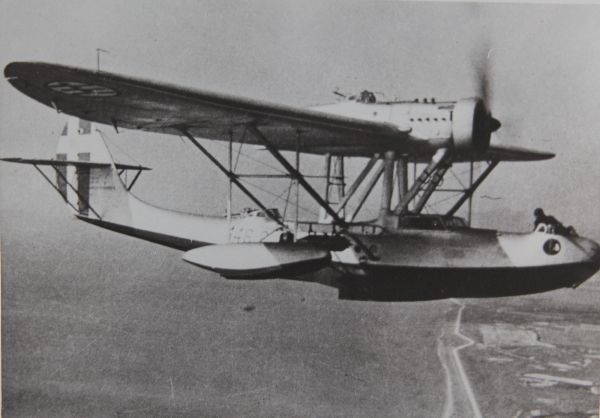
CANT_Z501.jpg

But it was not enough for 1941-42. Italians lagged behind in radar and sonar/asdic.
But Italians also lagged behind in depth charge size (weight) and numbers for the small number of escorts did build. Also didn't fit side depth charge launchers in decent numbers until things got bad.

Italians also lagged behind in AA, so did just about everybody else. But the Italians were well behind. The US adoption of the .50 cal Browning with water cooling and belt feed looks
likes a wonder weapon (it wasn't).
Italian torpedoes were not bad, they just weren't above average. They did work which is more than be said for others. And they didn't fit enough tubes on most of their ships.
Gunnery, either short or long range was not a strong point for Italian navy and night fighting was certainly not a strong point.
Italian ships were fast but fast in not what is needed in night convoy escort missions.
Basically, the Italian navy did not prepare for the war that was coming even to take advantage of the weapons/armament they did have.
 
The Italians had no far east colonies or Pacific colonies. Aside from Libya the only colony was Italian East Africa Italian Somaliland, Italian Eritrea and the Ethiopian territories.
Not entirely true. Italy had minor interests in China from the late 19th Century until 1943, as did most European nations.
 
Thank you for the correction.
I do think that the Italians were not going to spend much money/effort trying to secure trade with China and get convoys to and from China to Italy.
Mussolini had much grander ambitions (delusions) closer to home.
960px-Imperial_Italy_Ambitions.png

But until Mussolini secures Egypt and more of Africa the Navy needs to secure supply routes between Italy and Libya and stop British and French supply routes.
 
Under the assumption that Italy does better in the early stages of the war with what was discussed here, they would likely need better stuff come 1943, so let's get the ball rolling on that discussion.
They need a tier 2 engine (1,250~1,500 hp range) followed by a tier 1 engine (1,750~2,000 hp range) for aircraft. The tier 2 is relatively easy, I-F could probably get that done sharpish with an Asso derivative. The tier 1 is much trickier however - maybe the Re 103 or AS.8 as a basis?
They also need better guns for their tanks. We can keep the 47/52 for light tanks like the AB 43 or Sahariano but the medium tanks need something better. The 75/46 is a great place to start for the medium cannons (KwK40, 76 mm M1, ZiS-S-53, 77 mm HV, Type 5, Pvkan m/43) but the 90/53 is obviously a shoe-in for a heavy cannon (KwK36, KwK42, 17-pounder, 90 mm M3). For my money, shoot for the P.43bis (sloped front armour 60~80 mm in thickness, 3-man turret, decently powerful engine, using a suspension designed for something heavier than a tractor) with a 75/46 by 1943.
 
Last edited:

Users who are viewing this thread

Back