Soren said:
And about #3, no the cruising speed for P-51D was much lower at 275mph, and that is also what vets say it did.
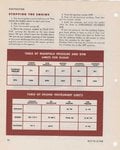
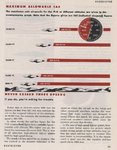
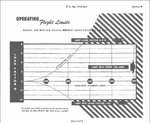
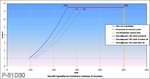
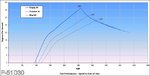
Jeeze Soren, I've posted the P-51 handbook data which clearly shows a 395 mph and an over 400 mph cruise. P-51's often cruised at lower speeds to extend their filght time, but cruises up to 395 mph were used while hunting/patroling ahead of the bomber groups. There was almost no actual range penalty for doing so (~50 miles less at 395 than at 275 TAS).
Soren said:
And the Kommandogerat was an advange... right up to the point it got the divide by zero error and stopped working.
Example perhaps ?
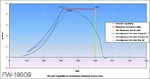
Again, in the past I've posted the NACA documents regaurding this. When the Kommandargat reaches a critical altitude, the ambient pressure drops to an unmeasureable level. Since it is used as an effective divisor in the hydrolic analog computer, this results in a divide by zero error condition. In the A series, this caused the plane to go into a safe mode - running rich and at low power. I believe but am not positive that in the Dora there was a bypass to allow manual operation when altitudes exceeded the system capabilities, at around 24,000 feet.
Soren said:
And the weight figures are based upon full fuel, where in actual combat the P-51 would have a lower proportion of its full fuel load than the D9.
Would it really ? I think not, as the P-51D first dropped its main source of fuel, its drop tanks, when engaged by enemy fighters, having to fight with full internal fuel load. On the other hand many 190's and 109's flew on low fuel, partly because of the trip to engage their target and because of fuel shortages.
You seem to want to play games with the facts. When it suits you you want to talk about a likely historic encounter situation of your choosing. Yet in the same argument you will use theoretical "fair" encounter conditions where it suits the outcome you support. For instance you wish to totally ingore the fact that the P-51's had the advantage at high altitude and would most likely initiate an egagement from an altitude advantage.
Yes, certailnly if the enemy fighters were encounted while the P-51's still had their drop tanks they'd have a fair bit of fuel. Something on the order of 70% or so since it was common practice not to fill the rear tank to capacity and then to burn it off before switching to the drop tanks on the climb out for stability reasons.
On the other hand, usually P-51's flew in a relay system. The bombers would take off, the Britis would escort them part of the way to the target, the P-47's would pick it up from there, and then 3 or 4 sets of P-51's would rendevous with the formation handing off the tight escort duty. By this point the P-51's being relieved were finished with their external fuel, and still had around 750 miles of range to play with, and only a less than 300 mile trip to a safe landing field. At this point they started doing high sweeps, and if no enemy planes were encountered they'd go down and look for targets to strafe before heading home. Up to being relieved from tight escort after dropping tanks they'd have about 70% internal fuel. After that point they'd have less and less until they got down to about 30% and had to turn for home.
The likely encounter would have the P-51 at about 50% fuel, and the Dora9 would probably have more than 50% (since it went directly into the combat rather than patrolling for it). So for sake of argument lets assume both had 50%. Since the P-51 carried more fuel as a % of its total takeoff weight, it would loose more weight to get down to that 50% level.
Soren said:
Vision from the D9 was good (compared to many other WWII fighters), but it was not nearly as good as that from the P-51 both because of the canopy design and the pilot position (try reclining and then looking back over your shoulder while strapped in).
Agreed, however forward vision was better in the Fw-190.
Why? The Dora pilot sits lower in the cockpit, and the distance between the dash and the brim of the front canopy section is smaller. The Dora pilot also sits further back of the wing, limiting his forward and down view, but improving his down and behind view slightly. The nose of the Dora is broader and also the panel in front of the cockpit is higher. Finally, the P-51 flies with a more nose down rake to it allowing the pilot to see even better to the front.
Look at your own posted images!
In just about every respect the P-51D and beyond had the best pilot vision of any plane in WWII.
Soren said:
Also, actual top speed of the P-51D was 448 mph. For the P-51B it was 451 mph. 437 mph is under Military Power, not Combat Power (WEP). (Source - Kit Carson amoung others)
Kit Carson ?! Now THAT's a guy which is full of it, and I think most people will agree with that ! I personally believe nothing he says, what so ever, and Im surprised if anyone does.
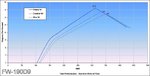
Well, his quoted speed figures are strait from the Maryland US Naval Air Station flgiht tests conducted in January 1944 and are verifiable. The P-51B pulled 451 mph TAS at 29000 feet, not the 440 mph top speed typically quoted - the USA made a practice of quoting MP rather than WEP performance throughout this period. The P-51D was about 3 mph slower than the P-51B.
=S=
Lunatic