I'm going off this footnote on p.831 from
The Crucible of War 1939–1945 by Brereton Greenhous, Stephen J. Harris, William C. Johnston, and William G.P. Rawling, which is Volume III of the official history of the RCAF.
Striking power depended on payload as well as numbers. The range of an American Boeing B-17 — the workhorse of the US Eighth Air Force — carrying 4000 lbs of bombs was about 2000 miles. The Avro Lancaster could carry an internal load of 18,000 pounds without modification to the standard bomb bay, while specially modified machines could carry the 22,000-lb 'Grand Slam' over a range of 1500 miles. Even the maligned Halifax III could carry an 8000-lb 'Blockbuster' to Berlin.
Of course, could carry is a different thing from having actually carried.
The reference to the Halifax III being able to carry the 8,000-lb bomb is interesting, because
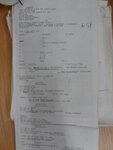
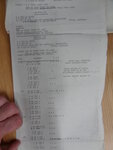
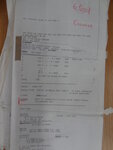
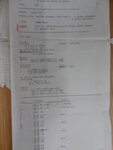
Handley Page Halifax by Anthony L. Stachiw and Andrew Tattersall also mentions the Halifax being able to carry that size of bomb. But the ORBs I've examined (admittedly a small sample) shows the largest bomb carried being the 2,000-lb size, which is what I recall reading somewhere as the largest size possible due to the particulars of the Halifax's bomb bay design. (Maybe I'm confusing that the Stirling?) Although I did come across one reference to a 4,000-lb bomb being carried by aircraft of 77 Squadron on 25/26 Feb. 1943 to Nuremberg (1 x 4,000-lb, 830 x 4-lb, 32 x 30-lb, for a total nominal weight of 8,280 lbs). It's possible the 4,000-lb bomb size was a typo and it should actually read 2,000 lbs.
The heaviest load carried to Berlin I've come across thus far is 7,160 lbs by a Halifax II of 77 Squadron on 22/23 Nov. 1943. The load consisted of 1 x 2,000-lb, 810 x 4-lb, and 64 x 30-lb bombs.
With the National Archives in the U.K. in recent months having allowed free downloads from much of its digital collection, I've been scooping up many more squadron ORBs in order to eventually make a much more comprehensive examination of actual bomb loads carried.