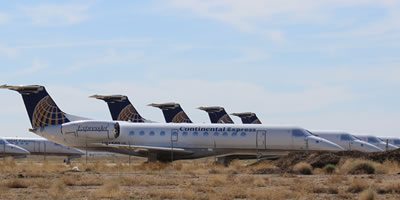
Are they new builds being disassembled? They are so clean and untouched I find it hard to see how they can have been used in any capacity.
These aircraft, some barely used during the war, were destined for disassembly and eventual smelting. This site became known as the "Kingman Boneyard" due to the sheer number of aircraft awaiting their fate
The RFC established depots around the country to store and sell surplus aircraft. By the summer of 1945, at least 30 sales-storage depots and 23 sales centers were in operation. In November 1945, it was estimated a total of 117,210 aircraft would be transferred as surplus.
One of the locations chosen was Kingman, with its huge open spaces, good weather for aircraft storage, and three runways, one of which was 6,800 feet in length.
The RFC quickly established
Storage Depot No. 41 at Kingman, and by October of 1945 planes were being flown in, parked, and processed. Planes were typically parked by type. As many as 150 airplanes a day were soon flying into Kingman, and the total aircraft inventory by the end of 1945 reached about 4,700.
Aircraft parked and awaiting sale, or the furnaces, at Kingman AAF after World War II |
It is estimated that a total of about 5,500 airplanes were flown to Kingman in 1945 and 1946 for sale and disposal.

www.airplaneboneyards.com