Viking1066
Brigadier General
OS2U-2 Kingfisher of Scouting Squadron 2 at NAS Quonset Point 1941 WW2B


Follow along with the video below to see how to install our site as a web app on your home screen.
Note: This feature may not be available in some browsers.
OS2U-2 Kingfisher of Scouting Squadron 2 at NAS Quonset Point 1941 WW2B
View attachment 876820
I think my father spent some time in this one I know he did the B-10 he enlisted in 1937 AAC'sOverhead view of a Douglas B-18 Bolo bomber in flight mid-1930s WW2B
View attachment 876748

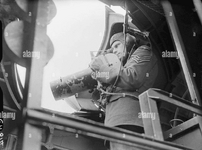
Wojtek, thanks for the input!I have found another shot of a such device ... and merged these two. IMHO these are the same goggles or just based on the same project. The caption found on the side with the link below say these are the night/day goggles. The one seen in the left pic seems to be of the "open" state for the level of the daylight or night light.
View attachment 876816
the pic source: Magic lantern slide circa 1920 .Victorian/Edwardian.Social History. Slide set: A pilot with night/day goggles and head set Poster Print by John Short (19 x 13)
In the enlarged shot you may notice the inscription 2 1/2C. The light filter temperature? IMHO the device could be used for training pilots in flights with the limited light level. In other words for the blind flying.
View attachment 876814
 - I don't know. 2.5 degrees C is too low for a color temperature. There are 2 more hinged parts in the first photo: the horizontal, which can be turned down (another filter maybe). In the second photo this second filter is down IMHO. The third part is the opaque cover. In the first photo it's vertical, in the second it's horizontal. The only difference is that some sort of cable goes to the top of the goggles in the second photo. Maybe this is some small integrated light? Here's the photo you posted with the original text, speaking of 1 filter and shield only:
Wojtek, thanks for the input!
The 2 models are pretty much the same. Those are goggles with some filter (light, infrared?) The first photo shows the cover open (to above) and the filter 21/2C is visible. 2.5C could be a bifocal lens (not Celsius)
View attachment 876832
Maybe these are goggles for night fighter pilots with a filter or filters and cover for darkening during the day. I remember night fighter pilots had to wear black goggles during the day to train their eyes for the dark ours.
View attachment 876833


Short Sunderland flying boats in Kalamata Harbor to evacuate British troops in Operation DEMON,
Kalamata, Greece, April 28, 1941.
View attachment 876911
Should be O-47A, not Q. Check the interesting s/n - those are the pre-war numbers from the 30s. The full s/n is 38-301. The 108th Observation Squadron is part of Illinois National Guard. Some information about those Observations Squadrons can be found in the attached article. I had it as a free Internet download, many moons ago.North American Q-47AA assigned to the 108th Observation Squadron, mainly for anti-submarine patrols Panama City 1942 AIRH
View attachment 876957
They were informally known as "Flitfires"Forty-eight light airplanes landed on La Guardia field, New York City airport, April 29, 1941, for christening ceremonies before starting a tour of the United States on behalf of the Royal Air Force benevolent fund of the United States of America. Here are some of the planes on the field awaiting christening by models from each of the 48 states. Each ship was named for native.
View attachment 877010
Good catch. Made me curious and found some more cool photos. Will post soon.Should be O-47A, not Q. Check the interesting s/n - those are the pre-war numbers from the 30s. The full s/n is 38-301. The 108th Observation Squadron is part of Illinois National Guard. Some information about those Observations Squadrons can be found in the attached article. I had it as a free Internet download, many moons ago.
Cheers!
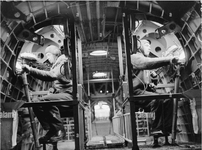
I gave it winner because of the interesting gun emplacements. I can't call them turrets but do not know what else to call them. Too complex for waist guns. Somewhere I have the vol I for the Sunderland Mk I so I will have to see if it is mentioned.

Years ago I downloaded these pictures of early Sunderland Dorsal gun positions from a site on the web. You can see they effectively a high manual waist gun position. With the raised fairings acting as wind breaks. I also don't think they can fire forwards.I gave it winner because of the interesting gun emplacements. I can't call them turrets but do not know what else to call them. Too complex for waist guns. Somewhere I have the vol I for the Sunderland Mk I so I will have to see if it is mentioned.