SaparotRob
Unter Gemeine Geschwader Murmeltier XIII
Knew it!Because the Bomber Mafia was desperate to suppress the P-39.

Follow along with the video below to see how to install our site as a web app on your home screen.
Note: This feature may not be available in some browsers.
Knew it!Because the Bomber Mafia was desperate to suppress the P-39.
Really? Escorting the USAAF and RAF medium bombers freeing up the USAAF units with the longer ranged fighters to perform the long range daylight bomber escort role? Providing the ingress and egress escort, again removing the longer ranged USAAF fighters from that part of the escort requirement. Providing the home airfield protection for the airfields the USAAF medium and heavy bomber units operated from, freeing up the USAAF longer ranged fighters to perform the daylight bomber escort role. If they don't do that, who does?But the RAF did escort daylight raids but due to a lack of range were pretty much useless,

Yes, they did - Feb through April 1944 - 122 Wing with Mustang III's, but without fuselage tank so they were performing same mission and tactical radius of the 8th and 9th AF P-47sBut the RAF did escort daylight raids but due to a lack of range were pretty much useless,
69 on Mission 250, 6 March, 1944.The lost ~70 in one raid to Berlin in 1944 - with escort all the way.
Also worth noting the fact that the RAF were flying other missions, like diversionary raids over Northern France and the Low Countries, so that the bomber formations would have a better chance of getting through. They also attacked German fighter stations and radar. Any notion that the RAF was just sitting around pinching buttons... well, that's rather unfair.Like I stated earlier, use the P47 and MkV's to sweep ahead of the longer ranged MkXVIII/IX's as escorts, use what you have, make it work, the P47's that were used on these raids were fitted with unpressurised ferry tanks just to get a bit further, I'm looking at the USAF that were desperate enough to use whatever they could, who cares if Spitfires were hit earlier in the fight, use the top 42g rear tank to get out over France at 30,000ft, at that height they won't be bounced and won't be hit by FW190's, if they do get intercepted by 109's great, ditch the dropper and get stuck in, that's one less fighter attacking the bombers.
James Stewart story, his B-24 group was returning, no escort, under sustained fighter attack, then the Luftwaffe fighters broke off only for the B-24 crews to spot another group of fighters coming fast, just before they came within range the fighter leader broke formation and showed off that elliptical wing and the B-24 people relaxed.But the RAF did escort daylight raids but due to a lack of range were pretty much useless,
Do NOT go to Schweinfurt or ANY other target beyond escort range. Not only theoretical fighter range but keeping distances short enough to ensure the numbers of escorts are adequate at all times based on available Luftwaffe interceptors.That's all well and good but 60 bombers went down in one raid over Schweinfurt, I'm just looking at what we had and what we could use to combat this.
That would be 6 March 1944, Roger Freeman reports losses as 69 bombers MIA plus 6 write offs (53+5 B-17, 16+1 B-24), total 75, from 730 sorties, escort being 65 P-38, 615 P-47, 100 P-51 total 801, with 11 MIA and 3 write offs, 55th FG P-38 aborted due to engine failures, 358th, 359th and 362nd FG, P-47, flew double missions. The fighters claimed 81 and the bombers 97 enemy aircraft destroyed. The Luftwaffe Quartermaster puts Luftflotte Reich fighter losses in combat as 25 Bf109, 17 Fw190, 10 Bf110, 6 Me410, plus 10 Bf110 night fighters, total 68The lost ~70 in one raid to Berlin in 1944 - with escort all the way.
The Spitfire IX theoretical combat radius was around 155 miles, the Spitfire V would be slightly more, regardless of how much external fuel carried. The Merlin 40 series engines were shorter and weighed around 200 pounds less than the Merlin 60 series, that makes a difference when trying to carry loads aft of the cockpit, 33 gallons of 100 octane is about 235 pounds, plus tank weight, piping and support structure. Spitfire aft tanks were a second half of 1944 appearance.Like I stated earlier, use the P47 and MkV's to sweep ahead of the longer ranged MkXVIII/IX's as escorts, use what you have, make it work, the P47's that were used on these raids were fitted with unpressurised ferry tanks just to get a bit further,
I would be surprised if a Spitfire V could be combat cleared with any fuel in a rear tank, and that is the majority of Fighter Command's force. A Spitfire VIII or IX with more than 33 gallons aft has to avoid combat, to escape interception means losing the drop tank, which would be full if any rear tank has yet to be drawn down to safe levels. Assuming 42 gallons has to be lost, it takes 23 gallons to get to 20,000 feet (no external fuel carried), the remaining fuel is good for say 90 miles plus about another 30 to 40 moved during the climb.I'm looking at the USAF that were desperate enough to use whatever they could, who cares if Spitfires were hit earlier in the fight, use the top 42g rear tank to get out over France at 30,000ft, at that height they won't be bounced and won't be hit by FW190's, if they do get intercepted by 109's great, ditch the dropper and get stuck in, that's one less fighter attacking the bombers.
Not to Berlin, Ruhr Valley from 1943, leave Berlin to Mustangs from '44.Why couldn't they make internal eternal tanks?
That would be much better, and Pat could have his wish of Spitfires escorting bombers to Berlin.
Not to Berlin, Ruhr Valley from 1943, leave Berlin to Mustangs from '44.
With "Eternal tanks" range won't be a limiting factor…Eternal tanks will get Spitfires to Berlin!

Even I know that.With "Eternal tanks" range won't be a limiting factor…
Fixed itThe zero only nearly got it right with its Inferno tanks

24 B-17 were lost to flak.69 on Mission 250, 6 March, 1944.
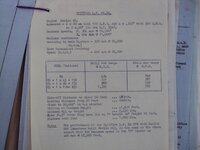
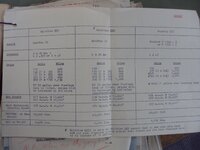
So it could be done, there ya go.The first page of the following is the page after the one in message 213, note the dates, schedules and how extra fuel was going to be added to the Spitfire.
On the first Schweinfurt mission August 17th, the 56th FG did precisely that for the Withdrawal escort. He led the mission inbound at 18,000 feet until all of the 200 gallons loaded for that mission and dropped the empty tanks over Belgium, then climbed to 28,000 feet on internal fuel, met harassing GAF fighters near Aachen for a successful interception at the R/V point.
Because the new keel kits arrived with standard AN-B-7 bomb rack capable of utilizing all the 75-gal drop tanks delivered during the 8th AF build-up July through August 1942. The kits arrived circa August 24 and completed on al C-2 through D-4 in theatre as the new D-5 and D-6 had production articles installed. The 75-gal pressurized tank enabled the same basic combat radius and were far better with respect to flight speed/stability and altitude capability.First, thank you for the detailed reply (sorry it took me so long to acknowledge it). My question now is, why did they not continue to use that approach? Rattling in my head was the recollection of reading about a very successful interception by P-47s at around this time so I looked it up in a couple of sources and found that 56th FG claimed 17 fighters shot down for the loss of 3 of their own (The Mighty Eighth War Diary, 90). Of course, as per normal, that number was inflated as it seems they only shot down 2 with 3 more damaged (a couple of which force landed, so perhaps total losses after all), but they did not know that at the time (even the source for the true GAF losses, The Luftwaffe over Germany, p. 273, termed it "the most successful escort mission to date by an American fighter group"). So why no repeat performances? Or did they, with less success? Or perhaps they thought they would not be so successful in the future since the Germans would not be so surprised going forward?
"If the Bomber Mafia did not exist it would be necessary for the P-47 Bros to invent it" - with apologies to Voltaire.Yes. Yes. We know the history. But think what you could do with eternal tanks on a P-39. It's the Expert's fever dream.
| Group | Sqn | Qty | ftr | time | enemy | enemy | enemy | enemy | Friendly | Location | Personnel |
| Group | Sqn | Qty | ftr | time | Type | Dest | prob | Dam | Lost | Location | Personnel |
11 | 341 | 12 | Spitfire | 1000-1140 | Fw190 | 1 | 1 | Bruges | Sgt. Poiquier missing | ||
11 | 485 | 12 | Spitfire | 1000-1130 | Bf109 | 2 | Bruges | ||||
11 | 183 | 8 | Typhoon | 1005-1220 | 1 | Poix | |||||
11 | 222 | 12 | Spitfire | 1308-1429 | Bf109 | 4 | Westerschelde | ||||
11 | 126 | 12 | Spitfire | 1315-1429 | Fw190 | 1 | Westerschelde | ||||
| 8thFC | 1 | P-47 | 0923-1123 | Bf109 | 1 | South of Diest | Maj. McCollum | ||||
83 | 182 | 6 | Typhoon | 1047-1148 | 1 | Lille | F/Lt. Bewg missing | ||||
| 8thFC | 63 | n/a | P-47 | 0924-1140 | Bf109 | 1 | Hasslet | ||||
11 | 303 | 12 | Spitfire | 1309-1459 | Fw190 | 3 | 1 | Antwerp | |||
11 | 331 | 11 | Spitfire | 1614-1755 | Bf110 | 1 | Antwerp | ||||
11 | 332 | 13 | Spitfire | 1614-1755 | Bf110 | 1 | Antwerp | ||||
11 | 1 | Spitfire | 1614-1755 | Bf110 | 1 | Antwerp | Maj. Birksted | ||||
83 | 403 | 12 | Spitfire | 1652-1706 | Bf110 | 1 | 1 | Ghent | F/lt. Conrad missing | ||
83 | 403 | Fw190 | 1 | ||||||||
| 8thFC | 84 | 16 | P-47 | 1312-1549 | Bf110 | 1 | Aacen | ||||
| 8thFC | 84 | Me210 | 1 | ||||||||
| 8thFC | 1 | P-47 | 1520-1735 | Bf110 | 1 | Antwerp | Col. Zemke | ||||
| 8thFC | 61 | n/a | P-47 | 1520-1725 | Fw190 | 2 | 1 | Antwerp | |||
| 8thFC | 61 | Bf109 | 2 | ||||||||
| 8thFC | 61 | Bf110 | 1 | ||||||||
| 8thFC | 62 | n/a | P-47 | 1520-1735 | Bf110 | 2 | 2 | Antwerp | Lts. Day & Stultz Missing | ||
| 8thFC | 65 | n/a | P-47 | 1520-1735 | Fw190 | 6 | 1 | 1 | Antwerp | Lt. Sugas Missing | |
| 8thFC | 65 | Bf109 | 1 | 1 | |||||||
| 8thFC | 65 | Bf110 | 2 | 1 | 1 | ||||||
| Totals | 35 | 5 | 3 | 7 | |||||||
| RAF | 15 | 2 | 0 | 4 | |||||||
| USAAF | 20 | 3 | 3 | 3 |