As the pilot of the plane that dropped the first atomic bomb, Tibbets has heard the critics who consider it a barbaric act, but the 89-year-old retired Air Force brigadier general says it was necessary to prevent more bloodshed.
"People don't seem to realize how fast people get killed in war," Tibbets said Wednesday at EAA AirVenture. "In my mind, I thought, 'Let's stop the killing' " by dropping the bomb and ending the war as early as possible.
"The war is now over. The revisionists are still there, and they aren't going to give up."
Now 83, he said President Harry S. Truman made the right decision to drop the bomb to shorten World War II.
"He believed it would save more lives than it took," Tibbets said.
Estimates are that a mainland invasion of Japanese might have cost the lives of hundreds of thousands of Japanese, American, and Allied soldiers.
"I have no regrets _ none," Tibbets said about his role in flying the Enola Gay, a plane he named after his mother.
One man who benefited from the shortened war was Independence resident Harold Smith, 78. He served in the U.S. Army as staff sergeant and was certain he was going to meet hostile and dedicated Japanese soldiers during the invasion of the Japanese mainland _ even after Tibbets and the Enola Gay`s crew bombed Hiroshima, and a second nuclear bomb was dropped on Nagasaki, Japan on Aug. 9.
"After they dropped the bombs, we didn`t think they would surrender," he said.
"Right up until they announced their surrender, I thought we might have to go," Smith said.
He believed the Japanese might not ever give up. He saw the suicide bombers and the Japaneses` dedication to defending their country while fighting in the Philippines.
He expected them to not surrender until they were annihilated or until they won, he said.
"It wasn`t the Germans defending France. It was the Japanese defending Japan," Smith said.
Truman announced the end of the war on Aug. 14 and declared a two-day holiday.
In hindsight, Smith wonders if the bombs should have been dropped. In August 1945, though, Smith emphatically believed Truman`s order on Aug. 5 was the right decision.
"It would save the lives not only of us in the military, but it could save the deaths of a lot of Japanese civilians," he said. "The sooner it was over, the less casualties there would be on both sides."


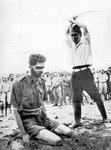


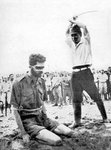
 I wrote back and pointed out Japan's "rape" of Korea and China, the treatment of POWs and other war crimes, and you know what his response was? WE TEND TO REMEMBER HISTORY IN WAYS THAT SUIT OUR CAUSE!