Not quite. Yes, it involved attacks on British shipping but the Channel phase was more than that. (I know you're not saying it wasn't but at first read it comes across as if you do.) This first phase was called the Channel Phase because it attacked targets along the Channel. So that means attacks on ports and on the coastal radar installations.
There were very few attacks on land targets in July.
Wood and Dempster give a one line summary of each day's operations, for July 10th - July 31st they are:
10 Convoy raids off North Foreland and Dover
11 Convoys attacked off Suffolk. Portland harbour raided.
12 Attacks on convoy off Norfolk-Suffolk coast, shipping off the Isle of Wight and Aberdeen
13 Shipping attacks off Dover and Portland
14 Shipping attacks off Dover and Swanage
15 Shipping attacked off Norfolk coast and the Channel. Yeovil bombed.
16 Very little activity
17 Search for shipping off Scottish and East coasts
18 Shipping off south and east coasts attacked
19 Dover raided. Defiant squadron largely destroyed
20 Convoys and shipping at Dover attacked
21 Raids on convoys in Channel and Straights of Dover
22 Shipping off the south coast attacked
23 East coast shipping raided
24 Convoys and shipping in the Channel attacked
25 Convoys and shipping in the Channel raided
26 Shipping off south coast attacked
27 Raids on shipping and naval targets in Dover harbour and straights
28 Shipping attacked off Dover and south coast ports
29 Convoy off Dover raided
30 Raids on convoys off Orfordness, Clacton and Harwich
31 Widespread attacks on shipping in south, south east and south west coastal waters. Dover balloon barage
Not many attacks on land targets there, and I suspect in the event of invasion, the Luftwaffe are going to have a lot more targets along the coast, and some way inland.
As this was a first probing phase - so only part of the Luftwaffe participated - the Germans still made the error of not escorting all their bombers.
I don't know of many un-escorted bombers at this time in the south east. Small numbers of bombers operated un-escorted in the north and west, beyond the range of Luftwaffe fighters, but they didn't suffer unduly because single aircraft often escaped interception.
Even at this stage of the battle, the Luftwaffe were flying approx 3 fighter sorties for every bomber sortie.
Especially thinking of the tragedy of those Stuka's attacking radar along the coast and getting decimated by RAF fighters. This also stopped further use of the Stuka in the BoB.
That wasn't until the second phase. The big disaster for the Stuka's was on the 18th August, when just over 100 set out to bomb several targets on the Isle of Wight and around Southampton. 16 were destroyed, several more seriously damaged.
And they weren't unescorted. They had no less than 150 Bf 109s as escort.
The Royal Navy was never attacked by a thousand bombers.
Never would be, either.
Historically, the Germans found that 3 fighters per bomber was the minimum escort force needed. Bomber sorties were limited by fighter availability. It's going to be the same in 1942, as well.
Coupled with that, there are limits to how many bombers you can send against warships, which are constantly moving. Trying to find a moving target with a thousand bombers, and a few thousand fighters in escort, is not going to be easy. You'd be lucky to get a fraction of your force bombing.
And don't forget my point on training on naval targets since BoB.
Don't forget the large increases in AA armament for warships, and the fitting of air gunnery radar.
Oh no, that's not what is meant by navigation problems. Read the classic 'Bomber offensive' by Noble Frankland.
What you're saying should indicate that the BC bombers were less accurate over (for instance) Brest and (most) inaccurate over Berlin. That's obviously not the case as was shown in the BC offensive against Brest in late 1941 and early 1942 when they failed to destroy the Scharnhorst and Gneisenau.
They damaged them both, though. And Prinz Eugen.
Attacking warships in dock, camouflaged and heavily protected by AA, is far harder than attacking enemy merchant ships lying off your beaches.
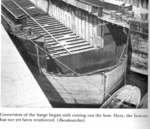
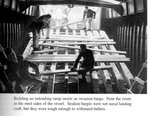
A better example would be the German barges in the channel ports in 1940, with up to 80 being sunk on some nights, and the KM describing the situation as "unacceptable".
And again, attacks on the same barges off British beaches would be easier.
I never said they would be defending the landing site. I specifically said that the KM would stay close to the FRENCH coast to draw away Royal Navy ships, and only engage in favourable circumstances, after which they would retreat to the French coast again.
You either launch your invasion, or you don't. Embarking the troops, sending them out, then calling them back, is a recipe for disaster even in a well organised fleet. When you have civilians and poorly trained soldiers manning towed barges, it's going to turn in to a farce.
The RN are not going to jump the gun. The German invasion "fleet" is slow, it will takes many, many hours to cross the channel and get in to position. Indeed, German planning was for the western elements to set out 24 hours before the landing, and spend the entire day at sea. The RN will undoubtedly send some destroyers to investigate at night, in 1940 they were even entering the outer harbours at Calais etc to see what was going on. But they are not going to commit substantial forces until the targets are at sea.
And you haven't explained what is going to happen at night. Just how good were the Luftwaffe at sinking warships at night? Can you name some?
And the third point is target identification. When the RN forces get close to the German forces, it's going to be hard for the Luftwaffe to tell them apart, and it's certain that every ship in the German "fleet" is going to be firing at every aircraft they see.
That makes me conclude that the British would definitely hold back several BBs and other warships to counter the German BCs.
No doubt. But on the other hand, if the Germans do manage to land, expect the battleships to sortie against the German beachheads. Tirpitz loose in the Atlantic is far less a threat than the Germans advancing on London.
What do the Germans do about battleships shelling their beachheads at night? What do you think is going to happen to the merchant ships and tugs and barges anchored off shore waiting their turn to land, or run up on the beaches as they are off loaded?
So far I have relied on two elements: surprise and local Kriegsmarine strength. As the bulk of the Royal Navy wasn't in the Channel, I think the Kriegsmarine should have been able to deal with them.
Are you aware of just how few KM warships were serviceable in the summer of 1942? And the size of the RN Home Fleet, and American reinforcements?
To give an example, the escort force for convoy "pedestal" to Malta:
2 battleships
4 aircraft carriers
7 cruisers
16 destroyers
That single convoy escort force was more powerful than the entire seaworthy Kreigsmarine fleet.
But all I have to say is: Channel Dash. 250 German fighters managed to hold off 75 RAF squadrons.
No. The RAF didn't use anything like that force.
What happened in the Channel Dash is that the Germans took advantage of poor weather that restricted operations. Some of the planned RAF bombers couldn't take off because they were snowed in.
There is a huge difference between a surprise operation in early February, and an invasion, which has to be conducted in good weather.
The first British aircraft to attack were 6 Swordfish of the FAA. They were supposed to have 3 squadrons of Spitfires as cover, but due to delays they actually had an escort of 11 Spitfires, which were engaged by the Luftwaffe.
All 6 Swordfish were lost. The Spitfires claimed 3 Fw190s for no loss.
By the time the RAF bombers arrived on the scene, the cloud layer was down to 600ft, and visibility at sea level was around 1,000 yards. Only torpedo bombers have a chance of attacking in those circumstances, and none of the allocated torpedo bomber squadrons arrived in time.
5 old British destroyers (WW1 vintage, I believe) attacked with torpedoes and gunfire, 1 of the British ships was damaged, but all returned to port. It's a measure of the weather conditions that the 5 destroyers got to within 4,000 yeards of a German battleship and heavy cruiser, escorted by several much larger German destroyers, and all 5 survived.
The invasion could only have happened in good weather in the late spring or summer, and it's silly to take the RAF performance in appalling weather conditions in February, and apply it to the good conditions the invasion required.