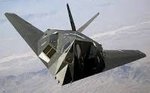
The US government put forth the specification. Both L-M and Northrop responded. When the L-M product didn't meet the spec, they LOWERED it so they could buy L-M, and never gave Northrop the chance to degrade their specs and maybe change things a bit. The YF-23 MET the original spec and the YF-22 never did ... and still doesn't.
The YF-23 met some of the original specs, not all of them. Some supporters of the F-23 tend to cherry pick the ones it did meet while ignoring the ones it did not. But during selection you do not only consider if the asset meets spec or not, you also must look at risks associated with transition from prototype to production. Which design is more likely to be able to produced and come closest to the requirements of the force in the form presented.
As tested the YF-23 was the faster of the two. It had the longer range. It potentially had the greater maneuvering envelope although in actual flight testing it did not. The shape might have resulted in greater all aspect RCS reduction. It had IR suppression that the -22 did not. Those are pretty strong positives, no doubt.
Because of packaging, not raw size, the YF-23 had little room for expansion / enhancement over how the prototype performed.
The YF-23 did not meet the internal carriage requirement for the number of weapons the Air Force wanted. Neither did the YF-22, but the -22 came closer. The -23 could only meet this requirement at the cost of internal space already used for fuel, reducing the range and potentially impacting other performance figures.
The YF-23 was very tight on space for the required sensors and tactical systems, the -22 had more room and reduced the risk if footprint grew during development.
Although the -23 probably had the better airframe design with regards to RCS (as far as I know no actual numbers have been released) the engine fan blades were partially exposed, probably meaning JEM lines were going to be a real issue. That can be a tough issue to tackle without major redesign of the engine / intake.
Although not a requirement at the time, the YF-22 actually fired a weapon from an internal bay before down select, the -23 never did.
From published data it appears the YF-22 was a more mature design than the YF-23. It appears to have had the greater potential to transition from prototype to production with fewer changes. We have all seen the issues with the F-22 program, what would the issues have been with the F-23? No one knows, but I can think of several major problems that would have had to be addressed that did not with the F-22.
Yet here we are, flying them.
Another triumph of the procurement function. If it weren't so tragic, it might be funny.
My country is being run by idiots. The ONLY consolation is the idiocy of other countries' procurement systems.
Like it or not, the procurement process is a distillation of decades of experience. If it was not done the way it is a vendor could design a demonstrator that met the spec as presented exactly, but was difficult to build, was inflexible, and could not accept changes during the post selection process.
With the procurement process being as long as it is the systems on board the aircraft go through many changes from concept to IOC. Data links, sensors, weapons systems, all tend to change over time, particularly new / proposed versions of each of these. Any proposed aircraft must have some adaptability to support realistic changes to these systems.
T!



 .. what fans of the F-35 need to stress is that the F-35 to a "two-fer" ... for your big $$$$ you get a next generation F-117 and, when not in 'stealth' you get a next generation F-16 (as a total system). Not a bad bargin but ... losses will be costly.