DerAdlerIstGelandet said:
Does anyone have any kind of info als on the 190D. That would be interesting to see.
Yes Adler, it also seems to me that people have forgotten them. Here they are:
Fw-190D-9 statistics:
Empty weight: 3,490 kg (7,694 lbs)
Fully Loaded weight *Clean*: 4,293 kg (9,464 lbs)
Maximum loaded weight: 4,839 kg (10,670 lbs)
Internal fuel capacity: 524 L + 111 L auxiliary - 635 L total.
Ammunitions weight total: Ca. 145 - 150 kg. (319 - 330 lbs)
Fw-190D-9 dimensions:
Wing span: 10.50 m (34.44 ft)
Wing area: 18.3 m2 (197 sq.ft)
Length: 10.20 m (33.46 ft)
Height: 3.35 m (10.99 ft)
Fw-190D-9 aerodynamic statistics:
Wing aspect ratio: 6.02
Airfoil profile: NACA 23015.3 - NACA 23009
Wing thickness ratio: Root= 15.3% Tip= 9%
Wing Cl-max *Freeflow*: 1.58
Jumo 213A-1 engine power output:
Normal takeoff: 1,755 PS
Takeoff w/ increased boost pressure : 1,900 PS (Start u. Notleistung)
Emergency w/ MW50 and B4: 2,100 PS. (Notleistung mit MW50)
Special emergency w/ MW50 and C3: 2,100 + PS (Sonder Notleistung)
Special emergency w/ Compressor, C3 and MW50: 2240 PS (Sonder Notleistung mit A Lader als Bodenmotor)
Additionally I remember some time ago, a German mechanic who talked about how they could quite easily get 2,300 HP out of the Jumo 213, it only took abit of tinkering with the engine. And these field modifications weren't a rare occurrence, it was done quite often he said. Has anyone else got any info one this ?
______________________________________________________
And about all of those turn charts and so on, well has even a single one of them figured power-loading figures into their calculations ? Cause you know power-loading is a critical factor to how well a plane turns.
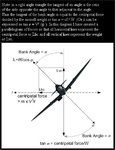
The greater the power, the steeper the bank angle an aircraft can turn at a given speed. This is why the FW-190D9 outturns the FW-190A. (Along with the Dora-9's significantly lower body drag ofcause!)
Also the P-51's wing has a CL-max of 1.28 *Freeflow*, at idle that is probably 1.47, while the Fw-190's is probably around 1.80.
There's no doubt what so ever that the Fw-190D-9 will outturn the P-51D, although not by a whole lot, but the Dora-9 does turn tighter nonetheless. The reason being that the Dora-9 has both a lower lift-loading and power-loading, as-well as lighter elevator stick forces at high speeds.
Oscar Boesch from Sturmstaffel 1, also stated that in a very tight and high speed turn the Fw-190 only required one hand on the stick. This allowed the pilot to get a much better feel for what the aircraft was doing, allowing him to fly at the edge of the envelope at all speeds. As a matter of fact, the FW-190 experienced an almost dangerous reduction of stick forces at high speeds. No loss of control, just an increased chance to stress the airframe.
The P-51 however experienced stability issues in dives and compressed at any speed above the POH limits. In fact the P-51 exhibited stability issues in high-speed level flight that were never completely eliminated. Other than that, the Merlin powered P-51's have stall characteristics very similar to the FW-190's but lacks the instant recovery. Typically a P-51 lost 7000-9000 feet in recovery. The source for many P-51 pilots death when stalled at low altitude. It still gets modern P-51 pilots, causing quite a few tragedies:
http://www.mustangsmustangs.net/p-51/p51news/shuttleworth.shtml
_____________________________________________________
The Kommandogerät
Soren, there is an extensive American report on the Kommandogerat which says the same as what Lunitic says.
http://naca.larc.nasa.gov/reports/1945/naca-wr-e-192/index.cgi?thumbnail1#start
I know Krazi, but those are with an Fw-190A wich has a malfunctioning engine, and since the Kommandogerät controls both engine settings and prop pitch, that effectively renders those tests worthless. And thats not all that was wrong with the Anton tested by the US, the ailerons on that aircraft were badly out of adjustment exhibiting aileron flutter and reversal leading to premature stalling in turns.(It was the same story with Faber's A-3 btw) It is written about in this report as the first peculiarity of the FW-190(Below). And despite having both engine troubles and ill adjusted ailerons leading to premature stalling, the Navy's Fw-190A (Which wasn't a fighter version btw) turned just as well as the light P-47 it was pitted against. (Quite impressive..)
http://www.terra.es/personal2/matias.s/aleirons.jpg
And to answer many people's questions about the Kommandogerat:
No, a pilot could not manage the engine and propeller as well as the Kommandogerät. This is backed up by both allied and Luftwaffe pilots who have flown with the system.
And about the US Navy test pilots who at first disliked the kommandogerat, their reasoning was: "because they felt manual control gave better engine response". Those same pilots who flew those tests reversed their position 60 years later. In their words: "Perhaps we had an overinflated opinion of our abilities".
The Kommandogerat was really an ingenious device, for example if the pilot wanted to dive, all he had to do was to shove the throttle to the firewall and point his nose down. The Kommandogerät adjusted the engine and prop to optimum setting based on real world real time conditions, and all the pilot had to do was to sit back and enjoy the ride.
In the P-51 however, "the pilot had to yank and pull levers working his prop and engine, so as not to burn up a crank bearing by over speeding the prop. The auto function on the CSP simply did not take into account all the environmental factors. It adjusted based off a manifold pressure relationship. The Kommandogerät on the other hand, took into account everything from spark advance to fuel delivery. It did it according to the actual altitude and airspeed as measured by barometric sensors. It was not a "recipe" calculator. Inputs did not happen according to a preset table but rather changed based on real world conditions to optimum performance considering multiple factors. These settings were calibrated at sea level and checked according to a chart by the pilot before takeoff."
Some pictures of this engineering marvel:



 but I don't think I'll join, yet; as for me, I'm still playing here, in these forums, not quite 'setteled in' yet. Besides remembering two screen names, passwords would be taxing... PS > You are correct about the Stuka's markings. I'll fix this soon, thanks again.