highest kill ratio (4 Viewers)

Ad: This forum contains affiliate links to products on Amazon and eBay. More information in Terms and rules

Soviet records are incredibly accurate.

- Soviet records contain a list of the tasks carried out so if there are 7 tasks but only 5 task reports then we know records are missing. This has never happened to me personally and the records of the tasks are always there. So the records are all there and we would know if they aren't there.

- EVEN If hypothetically some records are lost, it still doesn't matter because losses are recorded at multiple levels and there are multiple copies of those records. There will always be a trace of the loss. It's too far fetched to say every trace of the loss will get lost. There are just too many documents that would have to go.

-Losses are always documented. If an aircraft becomes a loss, there is always a record of that loss.

-Soviets can't lie about records because everything is accounted for. Pilots, planes, ammunition, fuel, etc. are all documented as being used or lost. If the Soviets lost loads of stuff and didn't report it they would be questioned as to why it wasn't reported.

- Soviet records also explain the circumstances of the loss and the type of mission that was being flown when the loss happened

-All ww2 aviation historians that analyse victories always look at opposing losses.

Henry Sakaida
Michael Claringbould
John Lundstrom
Edward Young
Gábor and Dániel Horváth
Nikita Egorov
Christer Bergström
Ivan Lavrinenko

And many more

Plus all the people that do research and post their findings online


But still, if one didn't report the losses, he could not ask for replacements. If your unit is understreght because of that, at some point one was not able to carry out the missions one was ordered to and you'll be exposed at the latest, probably earlier because the lack of planes would have been easily noticed. A lot of combat losses could not be attributed to technical faults, because then the TO of the unit would have been suddenly brought in for questioning and would hardly have accepted the charge of sabotage to save the unit's commander's ass. The sentence for sabotage was easily death.

This quote by J Juha3 is another perfect explanation why Soviets cannot just lie
 
Last edited:
Since this is a thread about kill ratios, the Croatian 15./JG52 victory claims on the eastern front were pretty appalling in 1943 and early 1944. The worst ratio of any individual pilot I have seen is Franz Stigler.

As for some impressive kill ratios of individual pilots off the top of my head there is:

Sasai Junichi
Ota Toshio
Otto Fönnekold
Otto Schulz
Helmut Lipfert
Walter Wolfrum
Helmut Lent
Anton Resch
Hand Arnold Stahlschmidt
Otto Kittel
Szentgyörgyi Dezső
Molnár László
Debrődy György
Stanley J Lustic
Delmar Johannsen
Ellis C Baker

As for some impressive kill ratios of units or squadrons off the top of my head:

VF-17 in 1945
VF-9 in 1945
VF-16
318 FG in 1945
5/2 Vadászszázad
JG 51 as a whole wing was pretty good
 
Right. This is the sort of work that is helpful for reconstructing an accurate historical record and why cross referencing both sources is necessary for this.

Just as lots of claims do not correspond to any actual enemy losses, sometimes claims explain enemy losses that were incorrectly recorded as being operational losses rather than combat losses.
I doubt here are "both" sources in Soviet/Russia records...only the one own countrys and enemys records.

Clearly several folks intrepeting soviet archives could not read the soviet "accurate" records like they should have been read.

I still think soviets were using Spitfires and Mustangs in our front. But I could be wrong as for those people all new aircraft on the front could have been Mustang or Spitfire they knew rumours about.
 
Of course, the folks that actually lived under Soviet rule have no idea what they're talking about...
That is why there were politruks that no double account could exist. Had there been such...all keeping it would have gotten a neck shot. Correct me if I am wrong and show a thread of evidence.
 
Last edited:
Of course, the folks that actually lived under Soviet rule have no idea what they're talking about...
My post #241 explains it all.

And the folks that lived under Soviet rule did not have access to Soviet records so in that regard, yes they literally don't know what they're talking about. Of course that isn't their fault, they simply couldn't see the records.
 
I still think soviets were using Spitfires and Mustangs in our front.
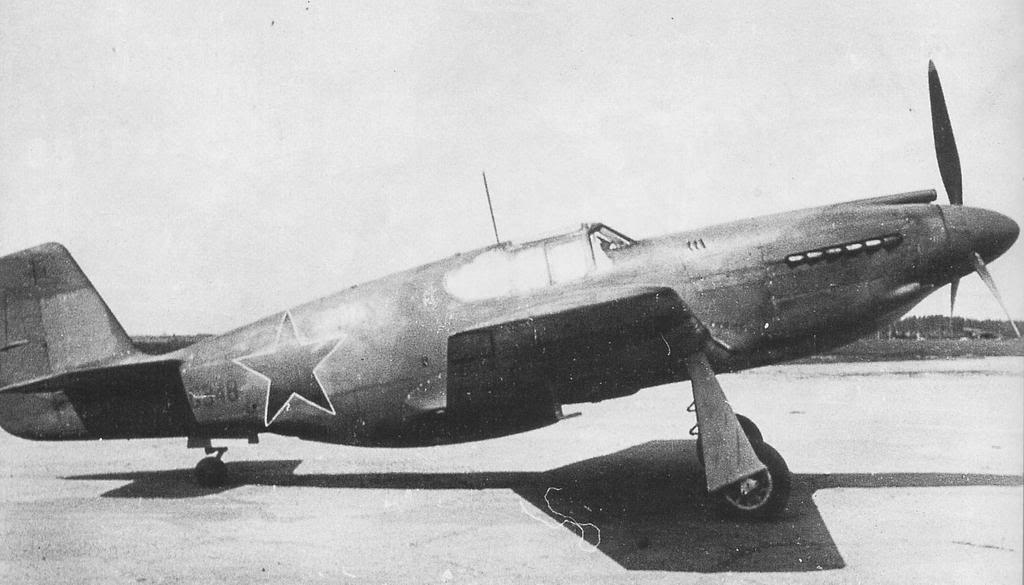
No the Soviets did not use P-51 Mustangs at all against the Finnish. Any time a Finnish pilot claimed they fought against a Soviet Mustang they were actually misidentifying another Soviet fighter as a Mustang. None of the 10 Soviet Mustangs entered operational service and instead were just tested, with the Soviets disliking the Mustang.


IMG_6687.jpeg


IMG_6689.jpeg

 
My post #241 explains it all.

And the folks that lived under Soviet rule did not have access to Soviet records so in that regard, yes they literally don't know what they're talking about. Of course that isn't their fault, they simply couldn't see the records.
Propaganda in USSR was even tougher than in Nazi-Germany....exponentially.
 
No the Soviets did not use P-51 Mustangs at all against the Finnish. Any time a Finnish pilot claimed they fought against a Soviet Mustang they were actually misidentifying another Soviet fighter as a Mustang. None of the 10 Soviet Mustangs entered operational service and instead were just tested, with the Soviets disliking the Mustang.


View attachment 897174


View attachment 897175
I bet our pilots had no knowlegde if they were fighting Airacobras or Kingcobras.


In the summer of 1944, a worn-out Messerschmitt Bf 109 G-2 would likely achieve a maximum top speed of roughly 560 to 590 km/h (348 to 366 mph) at its rated altitude of around 7,000 meters. At sea level, this would drop to roughly 470 to 490 km/h (292 to 304 mph).
While a factory-fresh, clean Bf 109 G-2 had a theoretical maximum speed of 660 km/h (410 mph) at 7,000 meters and 537 km/h (334 mph) at sea level, several real-world degradation factors during the late-war period explain this significant performance drop: [1]

Why a 1944 "Gustav-2" Lost So Much Speed
    • Severe Warping and Finish Degradation: By mid-1944, a surviving G-2 was an aging airframe (produced between May 1942 and February 1943). Years of hard field utilization resulted in warped paneling, dented cowlings, misaligned gear doors, and chipped, rough camouflage paint. This aerodynamic wear drastically increased drag, easily shaving off 15–20 km/h. [1]
    • Engine Wear and Restricted Boost: The Daimler-Benz DB 605 A engine in the G-2 suffered from reliability issues early on, prompting strict limitations on manifold pressure. A heavily worn engine in 1944 would suffer from compression loss, piston wear, and fouled plugs. Pilots would be highly reluctant—or mechanically unable—to push the engine to its maximum 1.3 ata combat rating for fear of catastrophic mechanical breakdown. Running at a safer "cruise" power level or suffering from a degraded supercharger meant a massive drop in horsepower. [1, 2, 3, 4]
    • Late-War Fuel Quality: By the summer of 1944, Allied bombing campaigns against Germany's synthetic fuel plants caused a severe drop in aviation fuel quality and availability. Running lower-octane or contaminated fuel severely limited the engine's output and forced pilots to run leaner or lower power settings to avoid destructive engine knocking.
    • Field Modifications and Non-Retractable Tailwheels: Many mid-to-late production G-2s featured the larger, non-retractable tailwheel, which historical Finnish Air Force test logs note caused a fixed 12 km/h speed penalty by itself. If the aircraft was fitted with underwing gun pods (Rüstsätze) or tropical sand filters to keep it flying in harsh conditions, the top speed fell even further. [1, 2]
By mid-1944, a worn G-2 was dangerously obsolete compared to newer Allied fighters like the P-51D Mustang or Tempest V, which routinely exceeded 700 km/h.
 
Last edited:
Once again, to quote myself:

These kinds of feelings-based claims are typical to what I call the dilettante crowd (people with only superficial knowledge and interest in a topic); the gist being that Russian records are unreliable because they're Russian. I am however yet to see a single aviation historian claim or even insinuate that internal Russian (Soviet) recordkeeping on the occurrance of losses is unreliable. We're talking of figures the Soviet military required reported in order to function, the kind which if a Soviet officer lied about would likely see him shot. For people interested in this topic it's important to be able to differentiate between Soviet propaganda meant for the public and their internal recordkeeping.

Perhaps the most ridiculous part of taking Finnish kill claims at face value, or even with just a little bit of air, while still acknowledging that there was a lot of air in the kill claims of the air forces of other countries, is that it would make Finnish pilots exceptional super soldiers the like which the world hasn't seen before or since. Proponents of this line of thinking never seem to be able to explain what would explain this fantastical Finnish exceptionalism. [...]

At any rate, the academic consensus is that Soviet records on the occurrance of losses are reliable. The reason for the loss can be wrong in the records, but the loss itself is recorded. [...]

If there is even a shred of evidence that Soviet military records intentionally omitted aircraft losses, and that this was widespread enough to warrant consideration, then please present it. I'll be sure to forward it to Carl-Fredrik Geust and other professional military aviation historians who have studied the Russian archives since the '90s. I'm sure they'll appreciate the discovery.

That is why there were politruks that no double account could exist. Had there been such...all keeping it would have gotten a neck shot. Correct me if I am wrong and show a thread of evidence.

You're the one presenting claims no historian in the field seems to know about; the burden of proof is on you. Thus far between accusing people of being Russian bots, copy-pasting AI slop and making baseless claims about "politruks hiding Soviet air losses", you've substantiated exactly zilch in the way of evidence or argument to back up your claims.

No the Soviets did not use P-51 Mustangs at all against the Finnish. Any time a Finnish pilot claimed they fought against a Soviet Mustang they were actually misidentifying another Soviet fighter as a Mustang.

What's more, the fact there weren't any Mustangs or Spitfires on the Finnish Front has been common knowledge among even the most superficial of Finnish military aviation history enthusiasts since the '90s or early '00s at the latest.


Anyway, to write about something more productive, I went over Finnish Fokker D.XXI claims and losses:

There were 217.66 (217 and one 2/3) kill claims:

-189.66 claims credited to pilots with a witness (T), including a tethered balloon and 10 aircraft on the ground
-26 claims credited to pilots without a witness (E), including 2 barrage balloons
-0 claims credited to the regiment (R)
-38 damaged enemy aircraft (V)

Of these 150.66 claims and a total of 152.66 cases have been verified shot down:

-136.66 T claims have been verified, all of them winged motor aircraft shot down from the air
-14 E claims have been verified, all of them winged motor aircraft shot down from the air
-2 damaged enemy aircraft have been verified shot down, both winged motor aircraft

Fokker D.XXI losses divide as follows:

Fokker D.XXI (Mercury): 11 to accidents, 15 in aerial combat, 7 to AA, 1 in an air raid, 8 were scrapped post-war, for a total of 42 aircraft. The accidents include some pre- and post-WW2 cases.
Fokker D.XXI (Wasp): 18 to accidents, 5 in aerial combat, 5 to AA, 3 in air raids, 23 were scrapped post-war, and 1 was lost to an enemy infantry patrol on the ground, for a total of 55 aircraft. The accidents include some post-WW2 cases.

There were 97 Finnish Fokker D.XXIs in total.

For KLRs we can only factor in aircraft vs. aircraft, therefore 217.66 claims or 152.66 verified kills vs. 20 or 24 losses depending on whether air raids are included.

KLR based on claims: 9:1 or 11:1.
KLR based on archival evidence (i.e. verified kills): 6:1 or 8:1.

The verification rate with the Fokker D.XXI is exceptionally high, and it has a very good verified KLR, considering the aircraft was essentially obsolete even in 1939. This can be explained with the overwhelming majority of the claims coming from the Winter War, and the aircraft being relegated largely to reconnaissance duties for much, if not most, of the Continuation War.

Sources used:

Kalevi Keskinen, Kari Stenman (2006): Suomen Ilmavoimien Historia 26: Ilmavoitot, Aerial Victories, osa 1, 1st edition
Kalevi Keskinen, Kari Stenman (2006): Suomen Ilmavoimien Historia 27: Ilmavoitot, Aerial Victories, osa 2, 1st edition
Kalevi Keskinen, Kari Stenman (2002): Suomen Ilmavoimien Historia 20: LeR 1, 1st edition
Kalevi Keskinen, Kari Stenman (2001): Suomen Ilmavoimien Historia 17: LeR 2, 1st edition
Kalevi Keskinen, Kari Stenman (2001): Suomen Ilmavoimien Historia 18: LeR 3, 1st edition
Kalevi Keskinen, Kari Stenman (2000): Suomen Ilmavoimien Historia 3A: Fokker D.XXI (Mercury), 4th edition
Kalevi Keskinen, Kari Stenman (2000): Suomen Ilmavoimien Historia 3B: Fokker D.XXI (Wasp), 4th edition
Kari Stenman, Karolina Holda (2015): Suomen Ilmavoimien hävittäjät I
Jaakko Hyvönen (1982): Kohtalokkaat lennot: 1939-1944
 
Last edited:

Users who are viewing this thread

Back